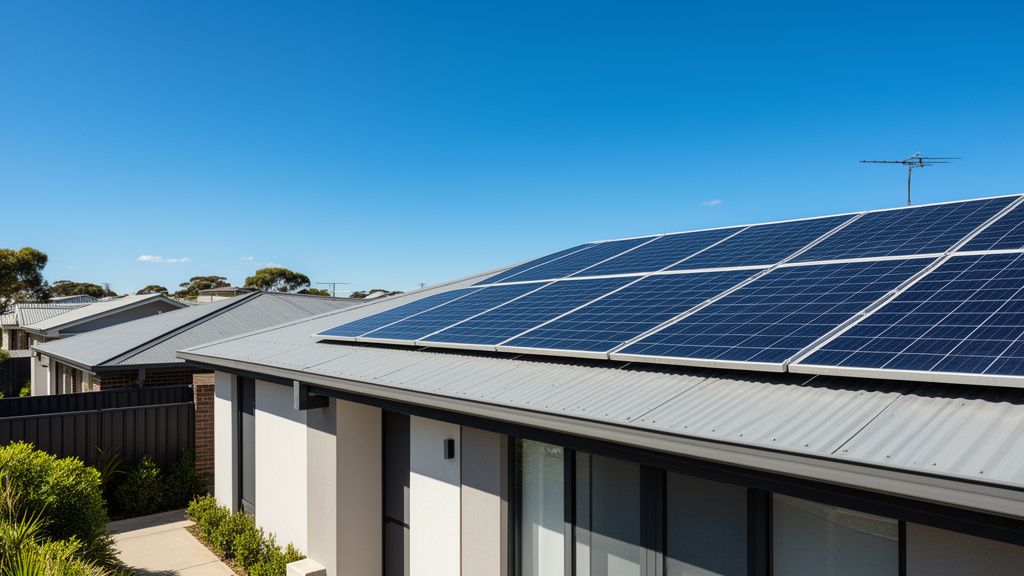
TL;DR: The Clean Energy Council (CEC) recently sounded the alarm, acknowledging Australia's strong growth in household batteries but highlighting a critical slowdown in large-scale wind and solar farm development. We are not building enough new generation capacity to meet our 2030 emissions targets, and this gap poses a significant risk to the energy transition and future electricity prices.
Why Is the Clean Energy Council Concerned About Australia's Renewable Progress?
The Clean Energy Council (CEC) recently raised concerns because Australia's rate of building large-scale renewable projects, particularly wind and solar farms, falls significantly short of what is needed to meet our 2030 emissions reduction targets. Australia has committed to 82% renewable energy by 2030, a goal that requires adding an average of 6 gigawatts (GW) of new wind and solar capacity every single year until then. The reality is stark: in 2023, only 2.9 GW of large-scale renewable energy was built and connected to the grid. This output is less than half the required annual rate. Adding to the challenge, several major coal-fired power stations will retire in the coming years, including Eraring in NSW by 2025. This means we are not just adding new clean energy, but also replacing a substantial amount of existing fossil fuel generation, making the 6 GW annual target an absolute minimum. If we continue to underperform, we risk higher electricity prices, energy insecurity, and failing our climate commitments.
The Critical Gap in Large-Scale Generation
The shortfall in large-scale generation is a major hurdle. The CEC's latest data shows a consistent decline in new financial commitments for wind and solar farms over the past few years. Investment decisions for projects often involve hundreds of millions or even billions of dollars, and developers need certainty around grid access, power purchase agreements, and regulatory approvals. When these factors are unclear or slow, projects get delayed or shelved. The current pace means Australia needs to triple its annual installation rate to stay on track. This isn't just about meeting a target; it is about ensuring a stable, affordable, and clean energy supply for all Australians as our traditional power sources exit the market. Without sufficient new generation, even with widespread battery storage, we face an energy crunch.
How Have Household Batteries Boosted Australia's Energy Transition?
Household battery uptake in Australia has been a huge success, giving homeowners more energy independence and helping to stabilise the grid at a local level. More than 150,000 Australian homes now have a battery system, often paired with rooftop solar panels. This surge is driven by several factors: decreasing battery costs, government incentives, and homeowners wanting to maximise their solar investments as feed-in tariffs drop. A typical 10kWh home battery system, for example, costs anywhere from $10,000 to $15,000 installed, before any state rebates. Homeowners with batteries can store excess solar power generated during the day and use it at night, reducing their reliance on expensive grid electricity and potentially exporting power during peak demand periods for a better return. This distributed storage adds resilience to the network, particularly in areas with high solar penetration, by managing local supply and demand fluctuations.
Financial and Grid Benefits for Homeowners
For the average Australian household, a battery significantly improves the financial payback of a solar system. Most retailers now pay under 5c/kWh for exported solar power, but they charge 25-40c/kWh for electricity drawn from the grid. By storing and using their own solar, homeowners effectively "buy" their electricity at the cost of production, rather than the higher retail rate. This arbitrage makes batteries attractive. Beyond individual savings, batteries contribute to broader grid stability. Through virtual power plants (VPPs), aggregated home batteries can act as a collective resource, discharging electricity to the grid when demand is high or storing it when supply is abundant. This reduces the need for expensive peaker plants and can help prevent localised brownouts, demonstrating the significant value of decentralised storage.
What Obstacles Impede New Wind and Solar Farm Construction?
Building large new wind and solar farms faces several significant hurdles, including slow planning approvals, challenges connecting to the grid, and gaining community support. Project developers encounter a complex web of state and federal regulations, often with lengthy environmental impact assessments and land-use planning processes. These approvals can take years, adding substantial costs and uncertainty to projects. A major issue lies with Australia's ageing and inadequate transmission network. Many of the best renewable resources are located far from existing grid infrastructure, requiring new poles and wires. Connecting a new large-scale project often involves long queues for grid connection studies and upgrades, which can also delay projects for years. Furthermore, community acceptance is not guaranteed. Local residents sometimes have concerns about the visual impact of wind turbines, the scale of solar farms, or potential environmental effects, leading to opposition that can slow or even halt projects.
Navigating Planning and Grid Connection Delays
Planning delays are a constant headache for developers. A single wind or solar farm can require dozens of permits from various government departments, each with its own review timeline. The current fragmented system means different states have different rules, creating inconsistencies and slowing down national progress. Grid connection is equally problematic. The Australian Energy Market Operator (AEMO) manages a congested grid. New projects seeking to connect often find themselves in a queue, waiting for necessary network upgrades to be completed. These upgrades, outlined in AEMO's Integrated System Plan (ISP), are crucial but take time and significant investment. Without a modernised and expanded grid, even fully approved projects cannot send their power to homes and businesses, bottlenecking the entire transition.


What Steps Can Accelerate Large-Scale Renewable Development?
To get large-scale renewables built faster, the CEC calls for streamlined planning approvals, major investment in new transmission infrastructure, and better engagement with local communities. They propose a national approach to planning and environmental assessments, reducing duplication between state and federal processes. This could involve "single window" application systems or clearer national guidelines. Substantial, accelerated investment in new transmission lines is also critical. Projects like those identified in AEMO's ISP for Renewable Energy Zones (REZs) need rapid funding and construction to unlock new renewable generation capacity. Finally, early and genuine community engagement is essential. This means involving local communities from the start of a project, sharing benefits like local jobs, community funds, or cheaper power, and addressing concerns proactively to build social licence rather than battling opposition.
CEC's Strategy for a Stronger Grid
The CEC's strategy for a stronger grid focuses on removing these systemic blockages. They advocate for faster rollout of the transmission projects identified in the ISP, which connect high-quality renewable resource areas to major demand centres. This includes overcoming supply chain issues for critical components like transformers and ensuring enough skilled labour. They also push for clearer, more consistent regulatory frameworks that support investment rather than deterring it. This means providing developers with certainty and predictability. By addressing these core issues – speeding up approvals, building the grid, and securing community buy-in – Australia can significantly ramp up its large-scale renewable energy installations. This combination of policy and infrastructure development is the only way to meet our 2030 targets and ensure a reliable, affordable, and clean energy future for everyone.
Key Takeaways
- Australia is falling significantly behind its large-scale wind and solar build targets, risking 2030 renewable energy goals.
- Household battery uptake is strong and provides valuable distributed energy benefits, but it cannot replace the need for new large-scale generation.
- Slow planning approvals, inadequate grid infrastructure, and community engagement challenges are major impediments to new projects.
- The Clean Energy Council urges streamlined approvals, accelerated grid investment (especially for REZs), and improved community benefit-sharing to speed up development.
- Meeting our 2030 renewable targets requires adding 6 GW of large-scale wind and solar every year, more than double the current pace.
Read More
For a comprehensive overview, check out our master guide: Read the Full Guide Here.