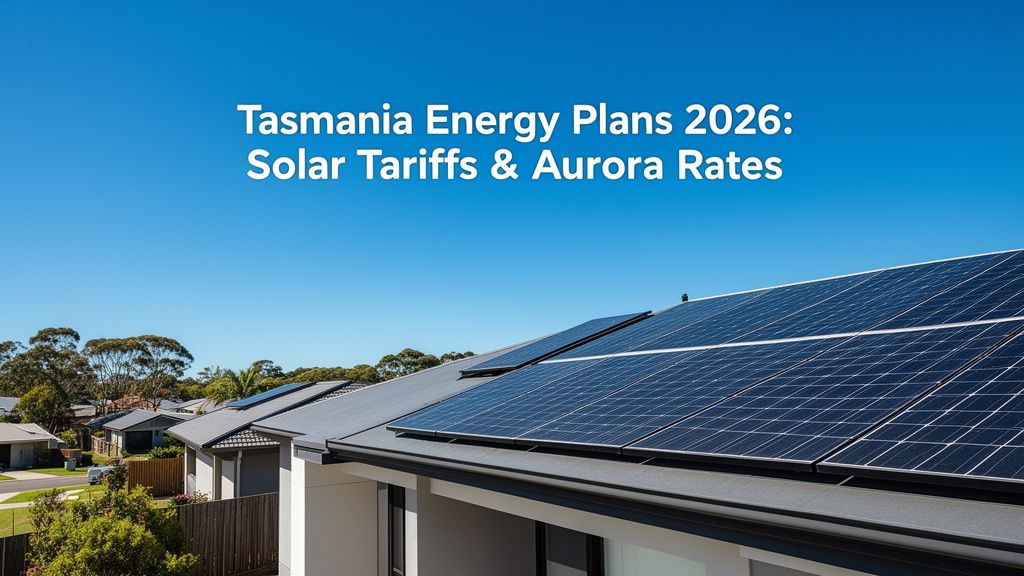
TL;DR: Tasmania's energy market is deregulated in 2026, offering some choice of retailers, with Energy Locals currently providing competitive rates. While specific 2026 solar feed-in tariffs require checking with individual retailers, households benefit from federal and state government rebates that reduce overall electricity costs. Aurora Energy, a state-owned entity, remains a significant player, operating on a grid largely powered by hydroelectricity.
Is Tasmania's Electricity Market Deregulated, and What Does That Mean for You?
Tasmania's energy market operates under deregulation, meaning residents have options when choosing their electricity retailer. However, the choice is more limited compared to larger mainland states. This deregulation means retailers compete on price and plan offerings, allowing consumers to shop around for a better deal. When you receive your electricity bill, you will see two main charges: a usage charge and a supply charge. The usage charge covers the amount of electricity your household consumes, and this varies based on your chosen tariff and actual consumption. As of June 2026, average flat-rate tariff plans in Tasmania have a usage rate around 27.97 cents per kilowatt-hour (kWh). The average supply charge, a fixed daily fee for maintaining your connection to the grid, hovers around 135.26 cents per day. Certain tariffs, like the off-peak afternoon boost (tariff 61) and residential flat rate (tariffs 31 and 41), became obsolete on 1 July 2024. If your household was already on one of these tariffs before that date, you can continue with it. This structure directly impacts solar owners, as competitive retail rates can influence the financial benefit of either reducing grid consumption or exporting excess power.
Who Are the Key Electricity Retailers in Tasmania, and How Do Their Rates Stack Up?
As of June 2026, Energy Locals offers some of the most competitive electricity plans available in Tasmania. All three of their plans currently provide rates lower than other providers compared in market databases. For example, their "Online Member" plan is 12% less than the reference price, while the "Home Classic" plan is 11% less. Energy Locals' "Residential Flat Rate Contract" also delivers a 10% saving below the reference price. Aurora Energy remains a major player in the Tasmanian market. It operates as a state-owned enterprise, managed by the Tasmanian government since 1997, with profits directed back into the state to benefit the community. Tasmania's electricity grid relies heavily on hydroelectric power, which accounts for 80% of the state's energy supply. This hydro dominance provides a consistent, renewable base load for the state. Solstice Energy, previously known as Tas Gas until December 2023, also provides both electricity and gas plans for households in areas like Hobart where natural gas is available. When comparing plans, solar owners should consider not just the usage rates for imported electricity but also any available feed-in tariffs, which vary between retailers and affect the overall value of their solar investment.
Aurora Energy's Role in Tasmania's Energy Sector
Aurora Energy's position as a state-owned entity means its operations and pricing policies often align with broader government objectives for Tasmania's energy future. While it competes with other retailers in the deregulated market, its long-standing presence and connection to the state's hydro-powered grid provide a stable option for many residents. For solar customers, Aurora's specific feed-in tariff offers are a key factor when calculating payback periods and overall savings. Although the reference material does not detail Aurora's 2026 feed-in tariffs, it is important for solar owners to consult Aurora Energy directly for their latest rates, alongside comparing other retailers. The state government's ownership means that decisions regarding energy plans and pricing, including those relevant to solar, consider the broader community and economic impacts for Tasmania.
Understanding Solar Feed-in Tariffs and Government Support in Tasmania for 2026
Specific 2026 solar feed-in tariffs (FiTs) for Tasmania are not universally published, as they vary by retailer and are subject to change. A feed-in tariff is the credit your electricity retailer pays you for excess solar power your system generates and exports to the grid. In Australia, the general trend shows feed-in tariffs are typically lower than the price you pay to buy electricity from the grid, often below 5 cents per kWh from many mainland retailers in 2024. This means maximising self-consumption of your generated solar power often delivers the greatest financial benefit. Households can also access various government support programs that reduce overall energy costs, indirectly improving the financial case for solar. The federal government provides a $150 energy rebate to every Australian household, paid in two quarterly instalments of $75. These credits apply directly to your electricity account without any action required from you.


Government Rebates and Concessions for Tasmanian Households
In addition to federal support, Tasmania offers several state-based electricity concessions. These include the medical cooling or heating concession, which provides a daily discount for eligible Tasmanians who need specific temperature control at home due to a medical condition. The latest rate for this concession is 52.975 cents per day. To qualify, you generally need a Services Australia or DVA Pensioner Concession Card, or a Services Australia Health Care Card. It is advisable to contact your chosen electricity retailer to confirm eligibility and application details for any available concessions. TasNetworks plays a crucial role in Tasmania's energy landscape, managing the state's electricity distribution, including poles, wires, and other infrastructure. They are responsible for network maintenance, connections, and fault repairs, ensuring that electricity, including your solar power, reaches its destination efficiently. These rebates and concessions, by reducing your overall bill, can make the initial investment in solar more manageable and speed up the payback period by decreasing the total grid electricity you need to purchase.
Key Takeaways
- Tasmania's electricity market is deregulated, offering choices beyond Aurora Energy, with Energy Locals currently presenting highly competitive rates in June 2026.
- Your electricity bill comprises a usage charge (around 27.97 c/kWh for flat rates) and a supply charge (approximately 135.26 cents per day), both impacting your solar savings.
- Solar feed-in tariffs vary by retailer; directly contact providers for their specific 2026 rates, as maximising self-consumption usually offers greater value than exporting.
- Tasmanian households benefit from a federal $150 energy rebate and state concessions like the medical cooling/heating discount (52.975 cents/day), which reduce overall energy expenses.
- Aurora Energy is a state-owned retailer, operating on a grid that is 80% hydroelectric, and its rates remain a significant option for solar owners to evaluate.
Read More
For a comprehensive overview, check out our master guide: Read the Full Guide Here.


