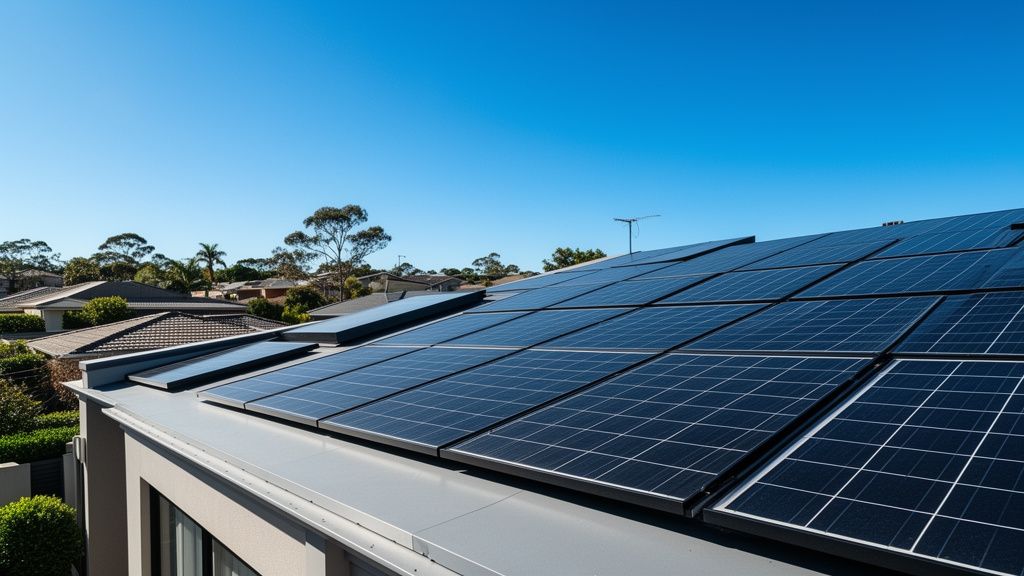
TL;DR: Solarwatt introduced the world's first glass-on-glass solar panels in 1998, revolutionising module durability over traditional designs. This German manufacturer consistently developed its technology, producing robust panels that now exceed 300W, offering long-term reliability and high performance for Australian homes under harsh conditions.
When Did Solarwatt Introduce Glass-on-Glass Technology?
Solarwatt introduced the first glass-on-glass solar panels in 1998, significantly improving module durability and setting a new industry standard. Before this innovation, most solar panels used a glass-on-foil design, meaning a sheet of glass protected the front of the cells, while a polymer backsheet covered the rear. While effective for a time, these backsheets often degraded when exposed to intense UV radiation and extreme temperature fluctuations, common issues in Australia. This degradation could lead to delamination, microcracks in the cells, and ultimately, a reduced lifespan and performance of the panel. Solarwatt’s solution was to encapsulate the solar cells completely between two sheets of tempered glass, creating a much more robust and weather-resistant module. This design dramatically reduced the ingress of moisture and oxygen, two primary causes of panel degradation, making the solar cells far more secure and protected over decades of operation.
What Problems Did Early Solar Panels Face?
Early solar panels, typically of the glass-on-foil construction, faced several degradation issues, especially in harsh climates like Australia. The polymer backsheet, often made of PET or PVF, was vulnerable to UV light, high temperatures, and humidity. Over time, these environmental factors caused the backsheet to yellow, crack, or delaminate from the EVA encapsulant protecting the cells. This exposed the delicate solar cells to moisture and air, leading to corrosion of the electrical contacts and potential-induced degradation (PID). These failures meant many systems experienced significant power loss within 10 to 15 years, falling short of their expected 20 to 25-year lifespan. For Australian homeowners, this translated directly to lower energy yields and less financial return on their solar investment.
How Did Glass-on-Glass Panels Solve These Issues?
Solarwatt’s glass-on-glass design directly addressed the weaknesses of traditional glass-on-foil panels by replacing the degradable polymer backsheet with another durable sheet of glass. Tempered glass provides an impermeable barrier against moisture and oxygen, preventing the chemical degradation that affects backsheets. Its inherent rigidity also offers superior mechanical stability, protecting the cells from microcracks caused by thermal expansion, contraction, or external impacts like hail. This full encapsulation means the cells operate in a much more stable environment, drastically slowing down degradation rates. The enhanced protection results in panels that maintain their performance for longer, offering a 30-year product warranty, far exceeding the industry standard 12-15 years for conventional panels. For an Australian household, this means sustained high performance and greater peace of mind for decades.
Why Is Glass-on-Glass Construction Superior for Australian Conditions?
Glass-on-glass construction excels in Australia because it offers superior protection against extreme temperatures, intense UV radiation, and physical stress, factors that severely challenge standard solar panels. Australia's harsh climate, with its blistering summers and frequent severe weather events, demands a level of resilience that traditional glass-on-foil panels often struggle to provide long-term. The double-glass structure shields the delicate solar cells and encapsulants from direct exposure to the elements, preventing the rapid degradation seen in backsheet materials. This means better performance over time, reduced risk of failure, and a much longer operational lifespan, translating to more consistent energy production and a stronger return on investment for homeowners.
How Does Glass-on-Glass Protect Against UV and Heat?
The dual layers of tempered glass in Solarwatt panels act as a robust shield against Australia's high UV index and extreme heat. Unlike polymer backsheets, glass does not degrade under prolonged UV exposure. This prevents the yellowing and cracking that typically compromise the integrity of standard panels, ensuring the cells remain fully protected from moisture and oxygen ingress. Furthermore, the glass-on-glass design handles thermal expansion and contraction more effectively. With glass on both sides, the module experiences more uniform thermal stress, reducing the likelihood of microcracks forming in the cells due to repeated heating and cooling cycles. This thermal stability helps maintain cell efficiency, especially during hot Australian afternoons, and prevents the "potential-induced degradation" (PID) that can plague less robust panels.
What Impact Does This Have on Panel Lifespan and Warranty?
The superior protection offered by glass-on-glass construction significantly extends the operational lifespan of solar panels. While standard solar panels typically come with a 12-15 year product warranty and a 25-year performance warranty, Solarwatt's glass-on-glass panels offer an industry-leading 30-year product warranty. This extensive warranty reflects the manufacturer's confidence in the panel's long-term durability and resistance to environmental stressors. For Australian consumers, this means their solar system will continue generating power efficiently for decades, often outliving conventional panels by 10-15 years. The extended lifespan translates directly to lower lifetime energy costs, more reliable power generation, and enhanced system resilience against the tough Australian climate, offering greater value over the long run.


How Has Solarwatt Increased Panel Power Output to 300W and Beyond?
Solarwatt increased panel power output to 300W and beyond by integrating advanced cell technologies, improving encapsulation methods, and refining module design within their established glass-on-glass framework. While their initial glass-on-glass panels in the late 1990s were focused on durability rather than peak wattage, the company continually evolved. Early panels might have been in the 100-150W range. As solar cell technology progressed, Solarwatt adopted innovations like PERC (Passivated Emitter Rear Cell) technology and half-cut cell configurations. These advancements improve light absorption, reduce electrical resistance, and minimise shading losses. By combining these higher-efficiency cells with their ultra-durable glass-on-glass encapsulation, Solarwatt now offers modules like their Vision range that deliver 300W-400W outputs, maximising energy generation from a smaller roof footprint.
What Cell Technologies Drive Higher Wattage?
Higher wattage in Solarwatt panels comes from integrating several advanced cell technologies. PERC cells, for example, have an additional passivation layer on the rear surface that reflects unabsorbed light back into the cell, allowing for a second absorption attempt and improving efficiency. Half-cut cells reduce current loss by halving the distance electrons need to travel, thereby lowering resistive losses and increasing overall module power. These cells also perform better under partial shading conditions, as the panel functions as two independent halves. Furthermore, larger wafer sizes and multi-busbar designs reduce internal resistance and improve current collection, all contributing to a higher power output per module. Solarwatt incorporates these innovations into its highly protective glass-on-glass package, ensuring high efficiency is maintained throughout the panel's extended life.
How Does Higher Wattage Translate to Better Value for Australian Homes?
Higher wattage panels from Solarwatt provide better value for Australian homes by generating more electricity per square metre of roof space, especially crucial for properties with limited roof area. For example, replacing a 270W panel with a 330W model means a 6.6kW system requires fewer panels, potentially reducing installation time and overall cost per watt for a similar energy output. This increased efficiency translates to higher annual energy production, which directly offsets more of your electricity bill. In Australia, where retail electricity prices can range from $0.25 to $0.40 per kWh, maximising self-consumption through higher-output panels directly improves your payback period. A system equipped with 330W Solarwatt panels, while potentially costing slightly more upfront – perhaps $0.30-$0.50/W more than a budget option – provides superior long-term performance and durability, ensuring a stronger financial return over its 30-year lifespan.
Key Takeaways
- Solarwatt pioneered glass-on-glass solar panels in 1998, significantly enhancing durability over traditional glass-on-foil designs.
- Glass-on-glass construction provides superior protection against Australian UV, heat, and physical impacts, drastically extending panel lifespan.
- Solarwatt offers an industry-leading 30-year product warranty due to the robust nature of its double-glass modules.
- Modern Solarwatt panels achieve 300W-400W outputs by integrating advanced cell technologies like PERC and half-cut cells.
- Higher wattage and durability from Solarwatt panels translate to greater energy production and better long-term value for Australian homeowners.
Read More
For a comprehensive overview, check out our master guide: Read the Full Guide Here.