Thinking of going solar? You're not alone! More and more Aussie households are turning to the sun to power their homes and reduce their electricity bills. One of the most popular choices is a 6.6kW solar system. But how much do these systems actually cost, and how have prices changed over time? This blog post, brought to you by SolarInsights, delves into our Solar PV Price Index, specifically focusing on the trends in 6.6kW solar system costs across Australia. If you are interested in learning more, check out our Complete Guide to 6kW and 6.6kW systems.
Why 6.6kW Solar?
A 6.6kW solar system has become a sweet spot for many Australian homes. It offers a good balance of affordability, energy production, and ease of grid connection. These systems are generally large enough to significantly offset your energy consumption, while still being relatively straightforward to install and get approved by your local electricity network.
In 2025, you can expect a 6.6kW system to generate roughly 19 to 30 kWh of electricity per day, depending on your location and the time of year. This is often enough to cover a significant portion of a typical household's energy needs.
Components of a 6.6kW Solar System
A typical 6.6kW system consists of several key components:
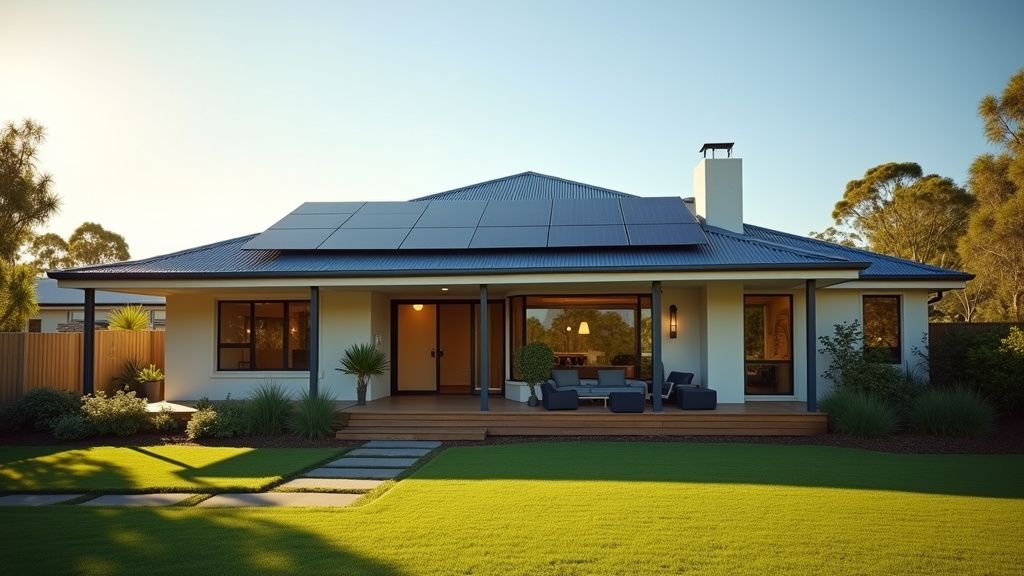
- Solar Panels: Expect to have approximately 15-20 solar panels, depending on their individual wattage. Newer, more powerful panels (around 430-460W) require fewer panels overall compared to older panels (330-400W). Each panel takes up around 1.7 square metres of roof space, so you'll need roughly 34-38 square metres of clear, unshaded roof area. This estimate might increase depending on the roof layout and whether tilt frames are necessary.
- Inverter: The inverter converts the direct current (DC) electricity produced by the solar panels into alternating current (AC) electricity that can be used in your home. Many 6.6kW systems are paired with a 5kW inverter. This might seem strange, but it’s a common practice called "overclocking." Most electricity networks readily approve 5kW inverters for grid connection, making them a popular choice.
- Mounting System: This secures the panels to your roof.
- Wiring and Electrical Components: Essential for connecting the system and ensuring safety.
Understanding "Overclocking"
You might be wondering why a 6.6kW solar system would use a 5kW inverter. It comes down to network regulations and optimizing energy yield. Electricity networks often have streamlined approval processes for 5kW inverters. "Overclocking" within guidelines allows the system to produce more energy in the mornings and afternoons, even if the inverter's output is capped at 5kW during peak sunlight hours. The Clean Energy Council allows an inverter to be overclocked by a maximum of 33%.


Solar PV Price Index: Tracking the Costs
SolarInsights has been monitoring residential solar system prices through our Solar PV Price Index. We've observed that, on average, a 6.6kW solar system costs around $0.89 per watt, or approximately $5,800 after the federal STC rebate has been applied (as of 2025).
While overall pricing has remained relatively stable, some variations exist depending on your location within Australia.
Factors Affecting System Output
The actual energy generated by a 6.6kW solar system depends on several factors:
- Location: The amount of sunlight your location receives is the most significant factor.
- Panel Orientation and Tilt: Facing north and at an optimal angle maximises sunlight capture.
- Shading: Avoid shading from trees or other buildings.
- System Efficiency: A well-designed and installed system will operate more efficiently.
Solar Battery Considerations
A 6.6kW solar system is an excellent option if you're thinking about adding battery storage in the future. The excess energy produced can be stored in a battery for use at night or during periods of low sunlight.
Payback Period and Return on Investment
A crucial factor for many solar shoppers is the payback period – the time it takes for the system to pay for itself through savings on electricity bills and feed-in tariff credits.
Keep in mind that payback periods and returns can vary widely based on factors such as system price, your energy consumption habits, and the feed-in tariff offered by your electricity retailer. Use a solar payback calculator to explore with your own numbers.
Final Thoughts
Investing in a 6.6kW solar system can be a smart move for Australian homeowners looking to reduce their energy bills and environmental impact. By understanding the components, costs, and factors affecting system output, you can make an informed decision and find the best solar solution for your needs.
Be sure to get multiple quotes from reputable installers, compare the components being offered, and consider your long-term energy goals. Remember, the cheapest option isn't always the best! Choosing quality components and a reliable installer will ensure you get the most out of your solar investment for years to come.