Smart Meters and Solar Power: Why They're a Mandatory Requirement for Rooftop Systems
G'day, fellow Aussies! Are you one of the millions of Australians enjoying the benefits of rooftop solar, or perhaps considering joining the solar revolution? With our abundant sunshine, it’s no wonder Australia boasts one of the highest per capita rates of solar adoption globally. However, as you embark on your solar journey, you'll quickly realise that installing a new solar power system today almost always comes with a mandatory requirement: a smart meter.
You might be wondering why this digital device is so crucial. Isn't a traditional meter good enough? In short, no. Smart meters are not just an optional upgrade; they are a fundamental component of modern solar installations, ensuring accurate billing, grid stability, and opening up a world of future energy possibilities. Let's dive into why smart meters are an indispensable part of your solar-powered home.
What is a Smart Meter?
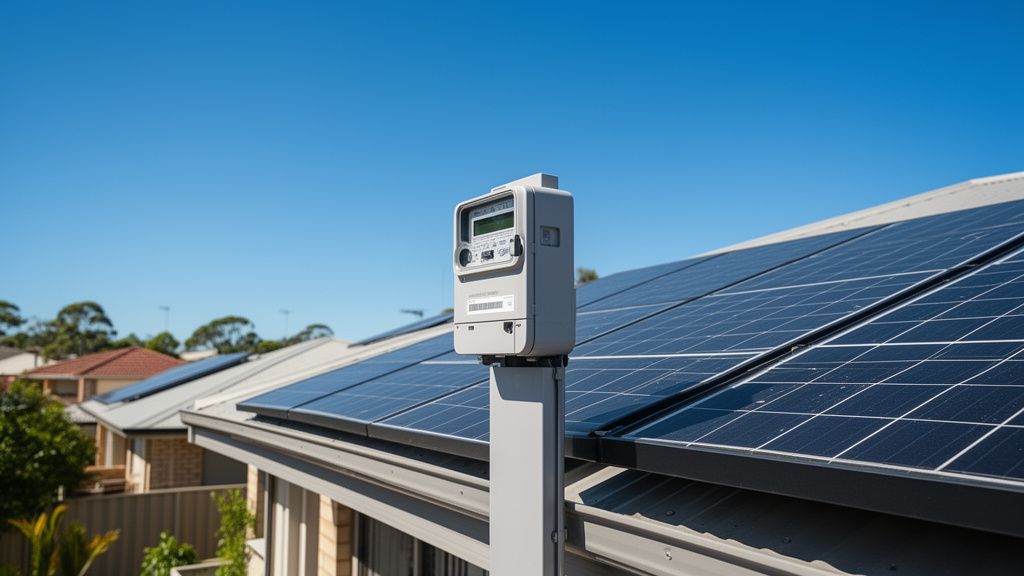
Before we get into the "why," let's clarify "what." A smart meter is an advanced electronic device that records your energy consumption and, crucially for solar owners, the electricity you export back to the grid. Unlike older, 'spinning disc' meters that require a human to manually read them, smart meters communicate wirelessly and automatically with your energy retailer.
This two-way communication allows for real-time data collection, remote meter reading, and even remote service connections or disconnections. It's a significant leap from the analogue meters of the past, offering precision and responsiveness that traditional meters simply cannot match in our dynamic energy landscape.
The Solar Revolution in Australia
Australia's love affair with solar is well-documented. With over three million homes now generating their own clean electricity, our sun-drenched continent is at the forefront of renewable energy adoption. This incredible uptake has placed unique demands on our electricity grid, which was originally designed for a one-way flow of power from large, centralised power stations to homes.
Now, with countless rooftops feeding electricity into the grid, managing this complex, decentralised energy network requires sophisticated tools. This is where the smart meter becomes not just convenient, but absolutely essential for integrating solar seamlessly and efficiently.
Why Smart Meters Are Essential for Solar Power
There are several compelling reasons why smart meters are a non-negotiable part of a new solar installation in Australia.
Accurate Billing and Net Metering
One of the primary benefits of solar is the ability to export excess electricity you generate back to the grid, earning you a feed-in tariff (FiT). Traditional meters are typically uni-directional, meaning they only measure the electricity you consume. They can't accurately differentiate between power drawn from the grid and power sent back into it.
Smart meters, however, are bi-directional. They precisely measure both your electricity import (what you draw from the grid) and your electricity export (what your solar panels send back). This accurate measurement is vital for 'net metering' – a system where your bill reflects the net difference between your consumption and export. Without a smart meter, calculating your feed-in tariff entitlements accurately would be impossible, potentially leaving you out of pocket.
Grid Stability and Management
Australia's grid faces increasing challenges with the rapid growth of rooftop solar. On sunny days, particularly in residential areas, a surge of solar power can create imbalances, potentially leading to voltage fluctuations or even localised blackouts if not managed properly.
Smart meters play a crucial role in maintaining grid stability. By providing real-time data on energy flows, they allow network operators to monitor and react to conditions across the grid with unprecedented detail. This enables better load balancing, helps prevent overloading, and ensures a more reliable electricity supply for everyone, even as more solar comes online. They are a foundational technology for a smarter, more resilient grid.
Remote Monitoring and Diagnostics
For both homeowners and energy retailers, smart meters offer significant advantages in monitoring and diagnostics. As a solar owner, the data from your smart meter (often accessible via online portals or apps) can help you understand your energy consumption patterns, maximise self-consumption of your solar power, and identify potential issues with your system.
For energy companies, smart meters enable remote identification of faults and outages, reducing response times and improving service. They can also facilitate remote meter updates and tariff changes, eliminating the need for technician visits and streamlining administrative processes.
Future-Proofing for Energy Management
The installation of a smart meter isn't just about current needs; it's about preparing your home for the energy future. They are the backbone for advanced energy management technologies, including:
- Virtual Power Plants (VPPs): Smart meters enable your solar and battery system to potentially join a VPP, where your stored energy can be aggregated with others to support the grid during peak demand or emergencies, earning you further incentives.
- Dynamic Pricing: As electricity tariffs become more complex and time-of-use based, smart meters will allow for accurate billing that reflects different prices at different times of the day, encouraging consumers to shift consumption to off-peak periods or when solar generation is high.
- Battery Storage Integration: For homes considering battery storage, smart meters are essential for optimising charge/discharge cycles and ensuring seamless integration with your solar panels and the grid.
The Mandate: Australian Regulations
Across Australia, the transition to smart meters is well underway. While Victoria was an early adopter with a state-wide rollout, a national framework now dictates that new or significantly upgraded electricity connections, including those with new solar installations, generally require the installation of a smart meter (officially known as an 'advanced metering infrastructure' or AMI meter).
This means that if you're getting solar panels installed today in most states like NSW, Queensland, or SA, your installer will almost certainly coordinate the upgrade of your existing meter to a smart meter. This isn't a choice; it's a regulatory requirement designed to support the modern grid and enable the full benefits of renewable energy.
Cost and Installation
You might be wondering about the cost. Often, the expense of upgrading to a smart meter for a new solar installation is absorbed by your electricity retailer or included as part of your overall solar installation cost. Sometimes, a small, one-off fee might apply, typically in the range of a couple of hundred dollars. The actual installation is usually straightforward, performed by a certified meter installer, and can take as little as 30 minutes to an hour.
Dispelling Myths and Addressing Concerns
Some concerns around smart meters have included data privacy and potential health impacts. Rest assured, data collected by smart meters is subject to strict privacy regulations, and the electromagnetic fields they emit are well within Australian safety standards, comparable to your mobile phone. The benefits for individual households and the broader energy system far outweigh these often-misinformed concerns.
Conclusion
Smart meters are far more than just fancy gadgets; they are foundational technology for every solar-powered home in Australia. They enable accurate billing for your solar exports, bolster grid stability, provide valuable insights into your energy use, and future-proof your home for an increasingly smart and renewable energy landscape.
If you're considering going solar, embrace the smart meter as an essential partner in your journey towards energy independence and a sustainable future. It’s not just a mandatory requirement; it’s an empowering tool that unlocks the full potential of your rooftop solar system. Contact a local solar installer today to understand how a smart meter will integrate seamlessly with your new system and help you make the most of Australia's abundant sunshine.
Read More
For a comprehensive overview, check out our master guide: Read the Full Guide Here.