TL;DR: The Solar Sharer Offer allows solar homeowners to receive credits for their excess solar energy, which can then be used by others, sometimes equating to "free power" for the sharer. Eligibility typically requires a smart meter, an adequately sized solar system (often 5kW or larger), and participation with specific energy retailers or platforms offering these innovative programs across Australia.
What is the Solar Sharer Offer and How Does it Work?
The Solar Sharer Offer is an innovative energy program that allows households with rooftop solar to share their excess generated electricity with other customers, often resulting in credits that can offset their own grid usage, effectively providing "free power" for a portion of their consumption. Unlike traditional feed-in tariffs (FiTs) where you simply sell your excess solar back to the grid for a small payment (e.g., 5-10c/kWh in most states), these sharer offers typically involve a more direct credit system. Solar sharer programs often function like a peer-to-peer energy exchange facilitated by an energy retailer or a third-party platform. Your solar exports are credited at a higher rate than standard FiTs, sometimes at or near the retail electricity purchase price, which allows those credits to significantly reduce or even eliminate your power bill up to a certain threshold.
How Does a 'Free Power' Model Operate?
The "free power" aspect in a Solar Sharer Offer isn't about getting unlimited grid electricity for nothing, but rather about maximising the value of your exported solar. Instead of a modest cash payment, your excess solar energy is valued highly, often at a rate close to what you'd pay for electricity from the grid (e.g., 20-25c/kWh). These high-value credits accumulate and are then applied to your bill to offset any electricity you draw from the grid. This means if you export enough solar, your accumulated credits can cover your entire electricity consumption for a billing period, leading to a $0 bill. The underlying principle is that your generated renewable energy is directly offsetting what you would have paid for fossil fuel-generated grid power, making your net electricity cost zero.
Who Provides These Offers?
Currently, various energy retailers and new energy tech companies across Australia are pioneering or participating in solar sharer or equivalent high-value export credit programs. Major retailers like Origin Energy, EnergyAustralia, and AGL, alongside newer players or specific green energy providers, are trialling or offering these types of incentives. The availability and specific terms can vary significantly by state and even by postcode, so it's crucial for interested homeowners to check with their current or potential energy providers. Some programs might brand themselves differently, but the core concept of providing elevated credit for solar exports to offset consumption remains similar. These offers are part of a broader shift towards more dynamic and customer-centric energy solutions.
Do You Need a Smart Meter to Participate in Solar Sharer Offers?
Yes, a smart meter is almost always a non-negotiable requirement for participating in any sophisticated solar sharer offer or high-value solar export program in Australia. Unlike older accumulation meters that simply tally total consumption, a smart meter (also known as an advanced meter) measures electricity usage and generation in short intervals, typically every 30 minutes, and can send this data directly to your energy retailer. This real-time, bidirectional data is absolutely critical for accurately tracking how much solar energy your system exports to the grid and how much electricity you import. Without precise, time-stamped data, it's impossible for retailers to implement complex billing structures that value your exports differently from imports or apply credits based on real-time energy flows, which is fundamental to how solar sharer offers function.
The Role of Smart Meters in Solar Sharing
Smart meters are the backbone of modern energy sharing and smart grid initiatives because they provide the granular data necessary for accurate billing and innovative tariffs. For solar sharer offers, the smart meter meticulously records exactly when your solar system is exporting energy and when your home is drawing power from the grid. This allows the energy retailer to precisely calculate the high-value credits for your exports and deduct them against your imports on a time-of-use basis. It ensures fairness and accuracy, as both the customer and the retailer have transparent access to the precise energy flows. Without this capability, traditional meters would only show net usage over a long period, making it impossible to differentiate between high-value exports and lower-value grid imports, or to apply specific tariffs based on time of day.
How to Check If You Have a Smart Meter
Checking if you have a smart meter installed is relatively straightforward. The easiest way is to look at your electricity meter itself; smart meters often have a digital display that cycles through various readings and might show a "Type 4" or "Advanced Meter" designation. They also typically have communications technology built-in, so you might see additional components compared to older analogue meters. If you're unsure, the most definitive method is to contact your electricity retailer or distributor. They can confirm your meter type based on your address and customer details. In many parts of Australia, particularly Victoria, smart meter rollout has been mandatory, so many homes already have them. In other states like NSW or Queensland, they are increasingly common, especially for homes with solar or new connections.
What Are the Eligibility Requirements for Solar Sharer Offers in Australia?
Eligibility for Solar Sharer Offers in Australia typically hinges on a few key factors: having a suitable solar PV system, possessing a smart meter, and residing in a region serviced by a participating energy retailer. Firstly, you must own a grid-connected rooftop solar system. While there isn't a universal minimum size, most offers target systems that reliably generate a significant surplus of energy during the day. This usually means systems of at least 5kW, as smaller systems may not export enough to make the high-value credit scheme financially impactful after covering your own household usage. Secondly, as previously established, a smart meter is essential for the precise, time-of-use tracking required for these complex tariffs. Without it, the retailer cannot accurately determine your export credits. Finally, these offers are not universally available; they are specific products offered by certain energy retailers and may only be available in particular states or networks.
Minimum Solar System Size and Export
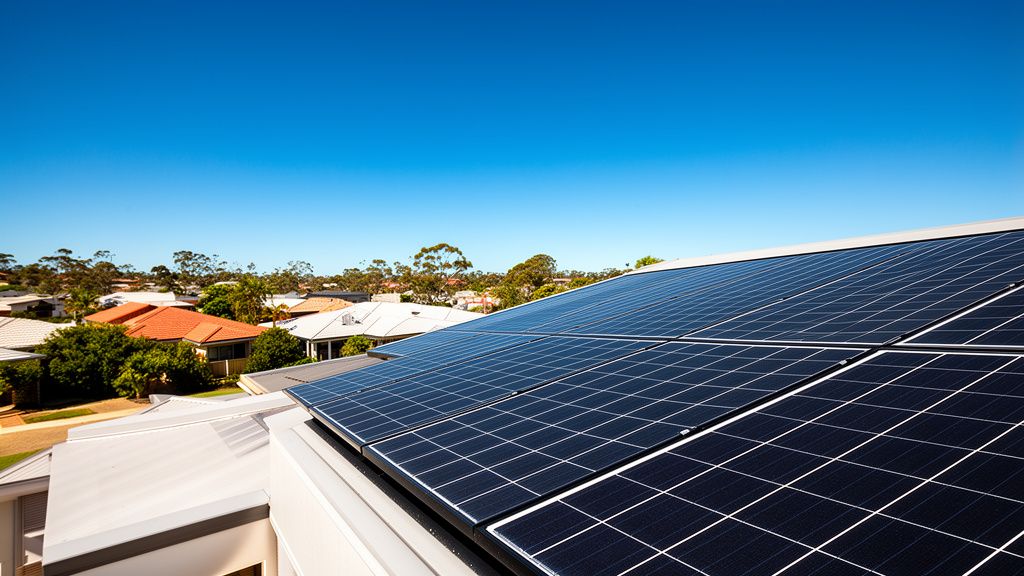
For most Solar Sharer Offers to be genuinely beneficial, your solar system needs to be of a sufficient size to consistently generate more electricity than your household consumes during daylight hours. While smaller systems (e.g., 3kW) can reduce bills, they might not produce enough surplus to unlock the full potential of a "free power" offer, which relies on significant exports. Typically, a 5kW, 6.6kW, or larger system is recommended. A 6.6kW system, for example, often generates around 25-30 kWh per day in good sunshine, and if your daytime consumption is low, a substantial portion of this can be exported. Retailers want to credit exports, so the more you can reliably send back to the grid, the more valuable these programs become for you.
Geographic and Retailer Constraints
The availability of Solar Sharer Offers is highly dependent on your geographical location within Australia and the specific energy retailers operating in that region. These aren't government-mandated schemes; they are competitive products offered by individual electricity providers. This means an offer available in Sydney might not be accessible in Perth, or even across different network areas within the same state. Furthermore, you will need to be a customer of the specific retailer offering the Solar Sharer program. It's crucial to compare offers from various providers in your area, as terms, credit rates, and any associated fees can differ significantly. Always read the Product Disclosure Statement (PDS) or Critical Information Summary (CIS) carefully to understand the exact conditions and benefits for your specific location.
Is the Solar Sharer Offer Truly 'Free Power' and Is It Worth It?
The term "free power" in the context of Solar Sharer Offers is generally a simplification used to highlight the potential for zero electricity bills, rather than implying unlimited access to grid power without cost. It's more accurately described as a high-value credit system where your solar exports are highly compensated, effectively offsetting the cost of your grid imports. If your household exports enough surplus solar power to accumulate credits equal to or exceeding your total grid consumption charges (including supply charges and GST), then your electricity bill can indeed be $0 for that period. The worth of these offers depends entirely on your solar generation, household consumption patterns, and the specific terms of the offer compared to traditional feed-in tariffs and time-of-use pricing. For many, especially those with larger solar systems and low daytime energy use, these offers can be significantly more financially beneficial than standard FiTs.
Comparing Solar Sharer to Traditional Feed-in Tariffs
Comparing Solar Sharer Offers to traditional Feed-in Tariffs (FiTs) reveals their key advantage: the valuation of your exported solar. Typical FiT rates across Australia often range from a low 5c/kWh up to about 10-15c/kWh, depending on your retailer and state. In contrast, Solar Sharer Offers can credit your exports at a rate closer to the retail purchase price of electricity, which might be anywhere from 20c/kWh to 35c/kWh depending on your location and tariff. This means every kilowatt-hour you export is worth potentially two to four times more than with a standard FiT. For example, if you export 10 kWh per day, a traditional FiT might give you $1.00 (at 10c/kWh), while a Solar Sharer Offer might give you $2.50 (at 25c/kWh in credit). This higher valuation directly translates into a much faster reduction of your overall electricity bill.
Potential Savings and Limitations
The potential savings from a Solar Sharer Offer can be substantial, often leading to significantly lower or even zero electricity bills for solar homeowners who consistently export excess power. This is particularly impactful for households where residents are out during the day, meaning most solar generation is exported. Your savings will depend on your solar system's output, your consumption habits, and the specific credit rates and any caps imposed by the retailer. Some offers might have a cap on the maximum credits you can earn or the amount of "free power" you can receive. For example, a retailer might offer free power up to a certain kWh limit per month, or only for a specific portion of your bill. It’s crucial to understand these limitations. While not truly "free" in an unlimited sense, these offers can represent a powerful way to maximise your solar investment and significantly reduce your annual energy costs.
Key Takeaways
- You likely need a smart meter to qualify for Solar Sharer Offers due to their reliance on detailed, time-based energy data.
- Solar Sharer Offers credit your exported solar at a significantly higher rate than traditional Feed-in Tariffs, often close to retail electricity prices.
- Eligibility typically requires a reasonably sized solar system (e.g., 5kW+) and varies by specific energy retailer and geographical location.
- "Free power" means your high-value solar export credits can offset your entire electricity bill, potentially resulting in a $0 bill.
- Compare offers from multiple retailers in your area to find the best terms, considering any caps or specific conditions that may apply.
Read More
For a comprehensive overview, check out our master guide: Read the Full Guide Here.