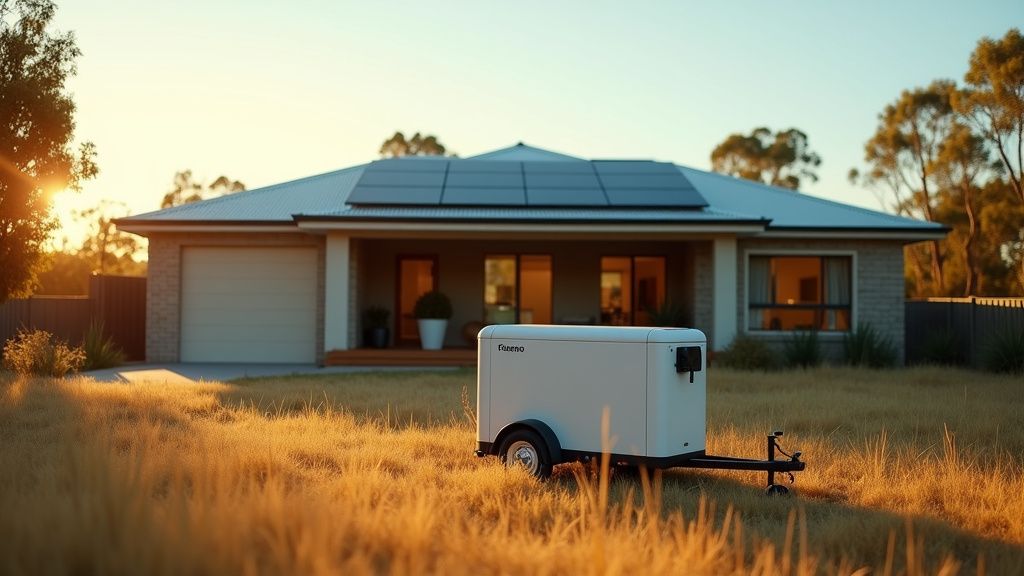
There's nothing quite like that first sip of coffee to kickstart your day. For many Australians, it's a sacred ritual. But what if you're far from home, deep in the bush, or facing an unexpected power outage? Does your caffeine fix have to wait? Not anymore! Enter the portable power station – your new best mate for ensuring your beloved coffee maker (and many other appliances) can operate wherever life takes you. For a deeper dive into making the perfect brew on the go, check out our Complete Guide.
What Exactly is a Portable Power Station?
Imagine a robust, rechargeable battery pack equipped with standard household power outlets (like your 240-volt wall socket) and often 12-volt DC ports, just like in your car. That's essentially a portable power station. Sometimes referred to as a "solar generator" (when paired with solar panels for charging), these units are designed to provide clean, reliable electricity for your electronic devices and small appliances when mains power isn't available.
Unlike noisy, fume-emitting petrol generators that demand regular servicing and flammable fuel, portable power stations offer a silent, emissions-free alternative. They're safe to use indoors during blackouts and incredibly versatile outdoors, whether you're camping, working on a remote job site, or just enjoying your backyard.
Beyond the Barista: The Versatility You Didn't Know You Needed
While we're talking about coffee, the utility of a portable power station stretches far beyond your morning brew. These devices are rapidly becoming essential for:
- Camping & Caravanning: Run your 12-volt fridge, recharge phones, drones, or even power a portable TV to catch the footy.
- Home Backup: Keep critical medical devices like CPAP machines or even a small refrigerator running during power cuts.
- Tradies & Remote Work: Power a 240-volt saw, recharge cordless tool batteries, or keep your laptop going when there's no grid access.
- Outdoor Events: Light up a party, power DJ equipment, or keep a blender whirring for smoothies.
- Everyday Convenience: From hair dryers and kettles to microwaves and air fryers, the possibilities are vast.
Crucially, most portable power stations produce a pure sine wave output. This is vital for sensitive electronics like laptops and coffee machines, ensuring they operate safely without risk of damage.
The Heart of the Matter: LiFePO4 Battery Technology
At the core of modern portable power stations lies advanced battery technology, most commonly Lithium Iron Phosphate (LiFePO4). Developed over the last decade, LiFePO4 batteries are celebrated for being:
- Safe and Reliable: Designed with stability in mind, minimising risks compared to older lithium chemistries.
- Lightweight: Making the units truly portable.
- Powerful: Delivering consistent energy output.
- Long-lasting: Capable of thousands of recharge cycles, significantly extending their operational life.
For added peace of mind, a sophisticated Battery Management System (BMS) acts as the unit's "brain." It constantly monitors critical data like temperature and voltage, ensuring the battery operates safely and can even shut itself down if conditions become unsafe. While the upfront cost of LiFePO4 technology might be higher than older battery types, their extended lifespan and superior performance often result in a lower total cost of ownership over time. They also hold their charge much better when not in use, so you're not left with a flat battery when you need it most.


Powering Your Coffee Maker: What You Need to Know
To successfully power your coffee maker, you need to understand two key specifications of any portable power station:
-
Battery Capacity (Watt-hours - Wh): This tells you how much total energy the battery can store. Think of it like the size of your fuel tank. A higher Wh rating means more run time. It's important to note that the usable capacity is typically around 80% of the stated Wh.
- Example: If your coffee maker uses 1000 watts for 5 minutes (which is 0.083 hours), it consumes approximately 83 Wh (1000W * 0.083h). A power station with 500Wh usable capacity could make about 6 cups of coffee of that intensity. Always check the label on your specific coffee machine for its exact wattage!
-
AC Output Power (Watts - W): This indicates the maximum amount of power the power station can deliver at any one time. Think of this as the size of the engine.
- Example: If your coffee maker has a heating element that draws 1200 watts, you'll need a portable power station with an AC output rating of at least 1200 watts (ideally with some headroom). If your power station only has a 1000W output, it simply won't be able to run that 1200W coffee machine.
Before you buy, always check the wattage of the appliance you intend to power. This is usually printed on a label on the appliance itself.
Keeping Your Power Station Charged
One of the great advantages of these units is their flexible charging options:
- 240-volt Mains Power: The fastest way to recharge your unit from home or any standard power point.
- 12-volt Car Socket: Charge up on the go while driving to your destination.
- Solar Panels: Harness the sun's energy for a truly off-grid power solution, extending your run time indefinitely, especially useful for longer trips.
Any charging you can do while using the power station will effectively extend the available power for your devices.
Choosing the Right Portable Power Station for Your Needs
When you're ready to invest, consider these features:
- Capacity (Wh): Evaluate your power needs. More capacity means more power and longer run times, but also increases the unit's size and weight.
- Battery Type: Prioritise LiFePO4 for its safety, longevity, and performance. Look for the number of recharge cycles – a higher number indicates a longer life.
- Charging Time: How quickly can it recharge from empty using 240V mains power?
- 12-volt Car Charging: Does it include the necessary cable and plug for in-car charging?
The Future is Portable
With a portable power station, the days of lukewarm instant coffee on a camping trip are long gone. You can now enjoy all the comforts of home, from that perfectly brewed coffee to powering essential tools or devices, no matter how far off the beaten track you venture. Do your research, understand your power needs, and get ready to experience true energy independence.


