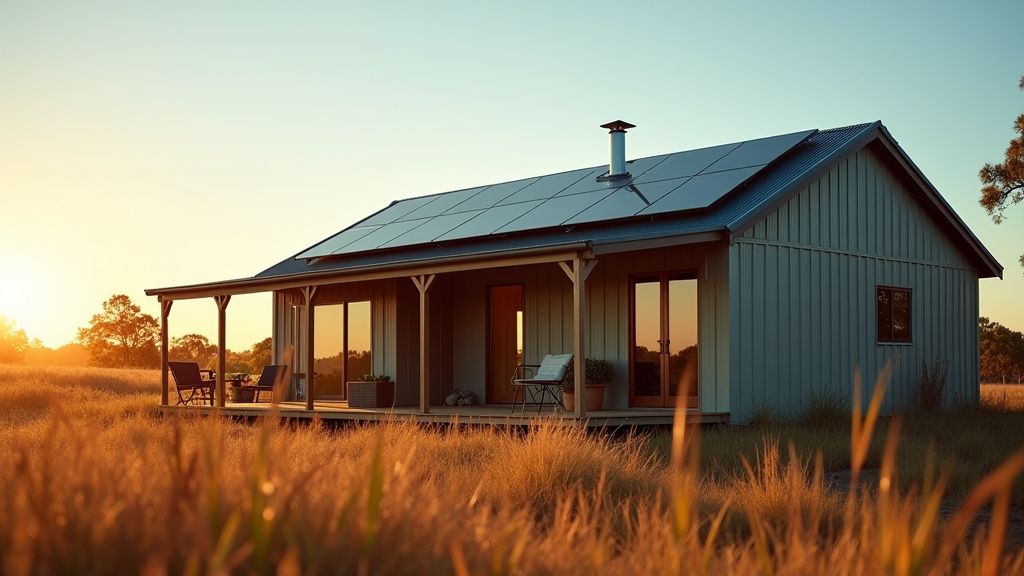
G'day, adventurers! There’s nothing quite like the freedom of the open road, exploring Australia's stunning landscapes, far from the hustle and bustle. But while you might be keen to leave the city behind, leaving your creature comforts completely often isn't part of the plan. That's where a trusty portable power station comes in. Imagine keeping your esky fridge humming with ice-cold beverages, charging your drone to capture those epic aerial shots, or even powering a projector for an outdoor movie night under the stars – all kilometres from the nearest power point.
Choosing the right portable power station can make all the difference between a seamless outdoor experience and a frustrating one. You don't want to invest a stack of cash only to find your new gadget can't keep up with Aussie demands. This guide will help you understand what truly matters when selecting a unit that's ready for life off the beaten track. For a more detailed breakdown of budget-friendly options, check out our Complete Guide.
What to Look For in Your Portable Power Partner
Not all portable power stations are created equal. To ensure you're making a smart choice for your off-grid escapades, consider these key factors:
1. Capacity: Your Power Tank Size (Watt-hours - Wh)
Think of this as the size of your vehicle's fuel tank. The higher the Watt-hour (Wh) rating, the more energy your power station can store, allowing you to run more devices for longer.
- Basic Needs: For simple tasks like charging phones, cameras, or powering a few camp lights, a unit in the 300-500Wh range might suffice.
- Serious Off-Grid: If you're planning to run a fridge, a CPAP machine overnight, or other power-hungry appliances, you'll want at least 1000Wh, and often more, to avoid running out of juice.
2. Output Versatility: Plug-and-Play Options
A good power station should be a hub for all your devices. Look for a mix of output types:
- 12V DC ports: Essential for running your camping fridge or other vehicle accessories.
- 240V AC outlets: For powering standard household appliances like laptops, small blenders, or portable fans.
- USB-A and USB-C ports: Crucial for charging all your modern gadgets, from phones and tablets to drones and cameras. More ports mean greater flexibility for your entire kit.
3. Recharging Flexibility: Getting Juiced Up
How you recharge your power station is just as important as how it discharges. Ideally, your unit should support multiple charging methods:
- Solar Panels: Perfect for truly off-grid situations, harnessing the abundant Australian sunshine.
- Car's 12V Socket: Useful for topping up while you're driving between locations.
- Mains Power (AC): For quick charging at home or caravan parks before heading out.
Also, check the charging speed. Some advanced units can go from empty to 80% in under an hour from a wall socket, while others can take half a day. Fast charging can be a game-changer when time is tight.
4. Portability & Durability: Built for Aussie Conditions
Your power station needs to be able to handle the rigours of the Australian bush.

- Weight and Handles: If you're constantly lifting it in and out of your ute or tent, a lighter model with robust handles or even wheels will save your back.
- Rugged Design: Look for reinforced corners, shock-resistant housing, and good IP (Ingress Protection) ratings for dust and water resistance. These aren't luxuries; they're necessities when facing red dust and unexpected downpours.
5. Battery Chemistry: LiFePO4 for Longevity
When it comes to the battery itself, Lithium Iron Phosphate (LiFePO4) is the gold standard for off-grid use.
- Benefits: These batteries offer superior longevity (more charge cycles) and enhanced stability compared to standard lithium-ion batteries.
- Consideration: They tend to be heavier, but their durability and lifespan often outweigh this drawback for frequent adventurers.
6. Scalability: Growing with Your Needs
Some advanced systems allow you to expand your power setup over time. Brands like EcoFlow and Bluetti, for instance, offer models where you can connect additional battery packs or integrate more solar panels. If you anticipate your power demands increasing, investing in a scalable system could be a smart move.
7. Value for Money: Beyond the Brand Name
Finally, consider what you're truly getting for your dollar. Don't just pay for a brand name; compare the capacity, output options, charging speeds, and durability features across different models. Real value comes from a unit that perfectly matches your needs without breaking the bank.
Spotlighting Some Top Performers
While your ideal choice will depend on your specific needs, let's look at a few examples of portable power stations that exemplify different feature sets:
-
For the Power-Hungry & Long-Haul Adventurer: Some high-capacity units, like the Bluetti AC200L, offer capacities around 2048Wh, making them excellent for extended off-grid stays, powering RVs, or even as a home backup during power outages. Many boast impressively fast AC charging (e.g., 80% in under an hour) and versatile charging options including solar, vehicle, and even alternator charging. These units often come with app control for convenience and offer expandable battery options.
-
For the Feature-Packed Mid-Ranger: Models such as the Companion Rover 1300 demonstrate a strong middle ground, providing around 1344Wh – ample power for most camping needs. While not always the absolute fastest to charge (e.g., 80% in 90 minutes via AC), they often include desirable integrated features like pure sine wave inverters for sensitive electronics, built-in MPPT controllers for efficient direct solar charging, and even integrated LED lighting. These units are typically robustly built, offering reliability on the road.
-
For the Specialised & Compact User: If your primary need is to power a specific appliance, like a portable fridge, compact units like the Dometic PLB40 are designed with that in mind. These smaller, often lighter, power stations are engineered to work seamlessly with specific camping gear, providing dedicated power for extended periods without taking up too much space. They might offer capacities around 40Ah (equivalent to roughly 500-600Wh), making them ideal for targeted tasks where portability is key.
Ultimately, the 'best' portable power station is the one that perfectly aligns with your off-grid aspirations and power requirements. Take the time to assess what you need to power, for how long, and under what conditions. With the right unit by your side, your next Aussie adventure will be powered up and truly unforgettable. Safe travels!