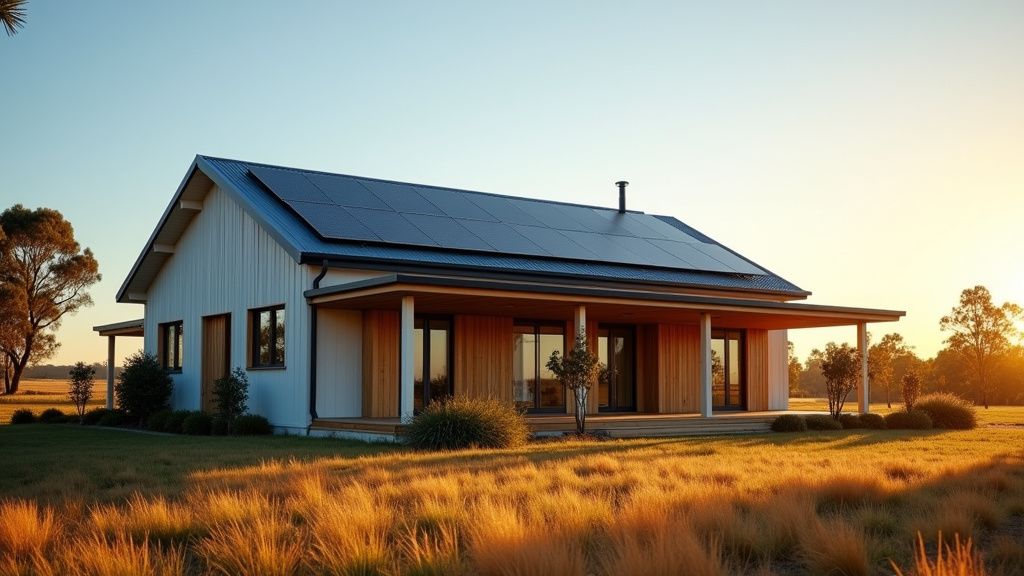
Thinking of Going Off-Grid? Exploring Partial Off-Grid 10kW Solar in Australia
Considering disconnecting from the grid and embracing solar power? While a fully off-grid lifestyle is a significant commitment, a partial off-grid 10kW solar system offers a compelling alternative for many Australian homeowners. It allows you to reduce your reliance on the electricity grid, lower your power bills, and enjoy greater energy independence, without completely cutting ties. Before diving in, be sure to check out our Complete Guide for a broader overview of 10kW systems.
So, what does a partial off-grid 10kW system entail, and is it the right choice for you? Let's explore.
Understanding a 10kW Solar System
First, let's break down the basics. A 10kW solar system refers to the total power-generating capacity of the solar panels themselves, not the inverter. It's a substantial system typically suited for larger households with significant energy demands or small businesses looking to offset a considerable portion of their electricity consumption.
The system comprises several key components:
- Solar Panels: These convert sunlight into direct current (DC) electricity. A 10kW system generally requires 25 to 30 panels, depending on the wattage of each panel. For example, using 400W panels, you'd need around 25; with 330W panels, closer to 30.
- Inverter: This crucial piece of equipment converts the DC electricity from the panels into alternating current (AC) electricity, which powers your home appliances. For a 10kW system, inverters are usually rated between 8kW and 10kW.
- Mounting Hardware: This secures the panels to your roof.
- Battery Storage (Crucial for Partial Off-Grid): This is where the "partial off-grid" aspect comes in. Batteries store excess solar energy generated during the day, allowing you to use it at night or during periods of low sunlight.
Why Choose a Partial Off-Grid System?
A partial off-grid system, powered by a 10kW solar array, offers several advantages:
- Reduced Electricity Bills: By generating your own electricity, you significantly decrease your dependence on the grid, leading to lower monthly bills.
- Energy Independence: You become less vulnerable to rising electricity prices and grid outages. A battery backup ensures you have power even when the grid goes down.
- Environmental Benefits: Solar power is a clean, renewable energy source, reducing your carbon footprint.
- Feed-in Tariffs: Any excess energy you generate that isn't used or stored can be fed back into the grid, earning you credits on your electricity bill (feed-in tariffs).
Key Considerations for a 10kW Partial Off-Grid System


- Energy Consumption: Analyse your household's energy usage patterns to determine if a 10kW system is appropriately sized. Consider your peak demand, average daily consumption, and seasonal variations.
- Roof Space: A 10kW system requires approximately 50 to 65 square meters of roof space.
- Panel Orientation and Shading: In Australia, north-facing panels generally capture the most sunlight. Minimise shading from trees, buildings, or other obstructions, as even partial shading can significantly reduce efficiency.
- Battery Capacity: Choose a battery capacity that aligns with your energy needs and usage patterns. Consider how much power you typically use at night and during cloudy days.
- Inverter Sizing and Oversizing: It's common practice in Australia to "oversize" the solar panel capacity relative to the inverter's rated output. This allows you to maximise energy production, especially during peak sunlight hours. Australian standards permit oversizing up to 133% of the inverter capacity.
- Cost: A 10kW solar system in Australia typically costs between $9,000 and $14,000 after government rebates. The price varies depending on the quality of components, the complexity of the installation, and your location. Battery storage will add significantly to the upfront cost but can provide substantial long-term savings and energy independence.
- Rebates and Incentives: The Australian Government's Small-Scale Renewable Energy Scheme provides STCs (Small-scale Technology Certificates), which reduce the upfront cost of your system. Additionally, you may be eligible for state-based rebates or incentives.
- Feed-in Tariffs: Research the feed-in tariffs offered by different electricity retailers in your area. These tariffs can help offset the cost of your system by paying you for excess energy exported to the grid. However, some network providers may limit how much power you can export.
Performance Expectations
A 10kW solar system in Australia can produce between 35 and 44 kilowatt-hours (kWh) of electricity per day on average, depending on your location and weather conditions. This translates to approximately 12,775 to 16,060 kWh per year. Remember that Northern regions of Australia receive more sunlight, increasing potential energy production.
Is a Partial Off-Grid 10kW System Right for You?
A partial off-grid 10kW system is a viable option for homeowners who:
- Have high energy consumption.
- Want to reduce their reliance on the grid.
- Seek greater energy independence.
- Are environmentally conscious.
- Are prepared to invest in battery storage.
Before making a decision, obtain multiple quotes from reputable solar installers. Discuss your specific energy needs and roof characteristics to ensure you get a system tailored to your requirements. A partial off-grid 10kW solar system can be a significant investment, but it can also provide substantial long-term savings and peace of mind.


