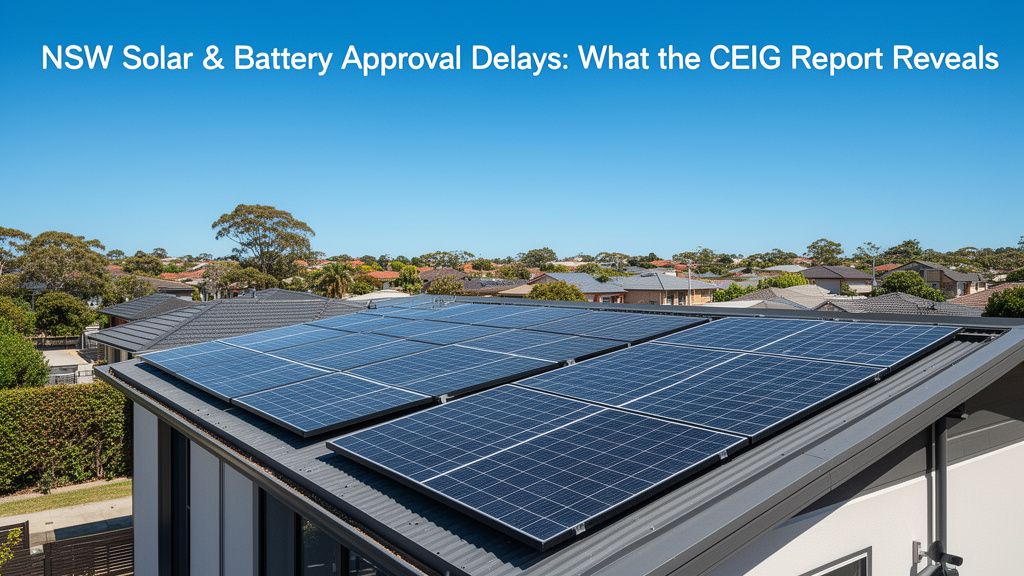
TL;DR: A recent report by the Clean Energy Industry Group (CEIG) exposes significant, worsening delays in network approval processes for solar and battery installations across New South Wales. These backlogs leave homeowners waiting months to activate their systems and impose substantial financial and operational burdens on solar installers.
What is the CEIG Report and what does it reveal about NSW solar approvals?
The Clean Energy Industry Group (CEIG) report, released in early 2024, shines a bright, unflattering light on the state of network approvals for solar and battery storage systems across New South Wales. This comprehensive industry survey and analysis reveals a system under strain, characterised by widespread delays, inconsistent processes, and poor communication from network service providers (NSPs). CEIG surveyed over 100 installers, revealing that approval times have ballooned, with many applications taking months to process, not weeks. This directly impacts how quickly a household can connect their new solar system to the grid and begin generating their own power.
How long are installers and homeowners waiting for approvals?
Installers reported average waiting periods for grid connection approvals ranging from six weeks to over four months, depending on the network area and system complexity. Some projects experience delays stretching significantly longer, with homeowners paying off a new system but unable to use it at full capacity. For instance, a basic 6.6kW rooftop solar installation in some parts of regional NSW might face a two-month delay for initial approval, followed by further waits for meter changes or export limit authorisations. This lengthy process means customers cannot offset their electricity bills as expected, turning an exciting clean energy investment into a frustrating waiting game. It also creates a pipeline bottleneck for installation businesses, impacting their scheduling and cash flow.
How do these approval delays impact NSW homeowners and solar installers?
Approval delays mean homeowners wait longer to activate their systems, missing out on immediate bill savings, while installers face project bottlenecks and increased administrative burden. For a household investing $6,000-$10,000 in a 6.6kW solar system, every month of delay represents lost savings that could easily reach $150-$250, depending on their consumption and current electricity tariff. Over a typical two to three-month delay, this amounts to hundreds of dollars in lost value. Homeowners remain stuck on full grid power tariffs, effectively paying for a system they cannot fully use. This erodes trust in the solar industry and disincentivises future clean energy investments, particularly for battery storage, where payback periods are already sensitive to immediate activation.
What are the financial costs of approval backlogs?
The financial strain extends beyond homeowners. Solar installers often incur holding costs for equipment, face difficulties managing installation schedules, and spend significant unpaid hours chasing approvals. A delayed installation means delayed final payments, impacting an installer's cash flow and ability to take on new projects. Some businesses report needing to re-send applications multiple times due to communication breakdowns or lost paperwork, effectively doubling their administrative overhead. For an average installer completing 10-20 systems per month, even one or two delayed projects can create significant financial ripples, potentially impacting wages or future business investments. The CEIG report estimates these delays could add hundreds of dollars per project in hidden costs for installers.
What are the CEIG Report's recommendations for fixing NSW's approval process?
The CEIG report suggests several key improvements, including standardising application processes, improving communication channels, and increasing resources for network providers to process applications efficiently. A unified, state-wide online portal for all grid connection applications features as a primary recommendation. This would replace the current patchwork of different forms, submission methods, and varying requirements across Essential Energy, Ausgrid, and Endeavour Energy, which currently cause much confusion and error. Clearer, more consistent guidelines for export limits and technical requirements would also streamline the initial application stage, reducing the need for back-and-forth queries.


Can standardisation and better communication fix the issue?
Implementing standardised application forms and a single submission portal would drastically cut down on administrative errors and misinterpretations for installers. This means fewer rejected applications and faster initial processing. Better communication from NSPs is also critical; the report calls for clearer service level agreements (SLAs) with specific timeframes for application responses and approvals. Installers need to know where an application sits in the queue and receive timely updates, rather than waiting indefinitely. Furthermore, the CEIG report highlights the need for NSPs to allocate more staff and training to their grid connection teams. With solar and battery installations continuing to grow across NSW, the current under-resourced system cannot keep pace, and investing in human capital is a direct path to reducing the current blow-out in approval times.
Key Takeaways
- The CEIG report confirms significant, increasing delays for solar and battery grid connection approvals across NSW network areas.
- Homeowners face hundreds of dollars in lost bill savings due to systems being inactive for months after installation.
- Solar installers incur substantial financial and administrative burdens from project delays, impacting cash flow and operational efficiency.
- The report recommends a standardised, unified online application portal for all NSW network providers to streamline processes.
- Improving communication, establishing clear service level agreements, and increasing network provider resources are crucial steps to resolve the backlog.
Read More
For a comprehensive overview, check out our master guide: Read the Full Guide Here.