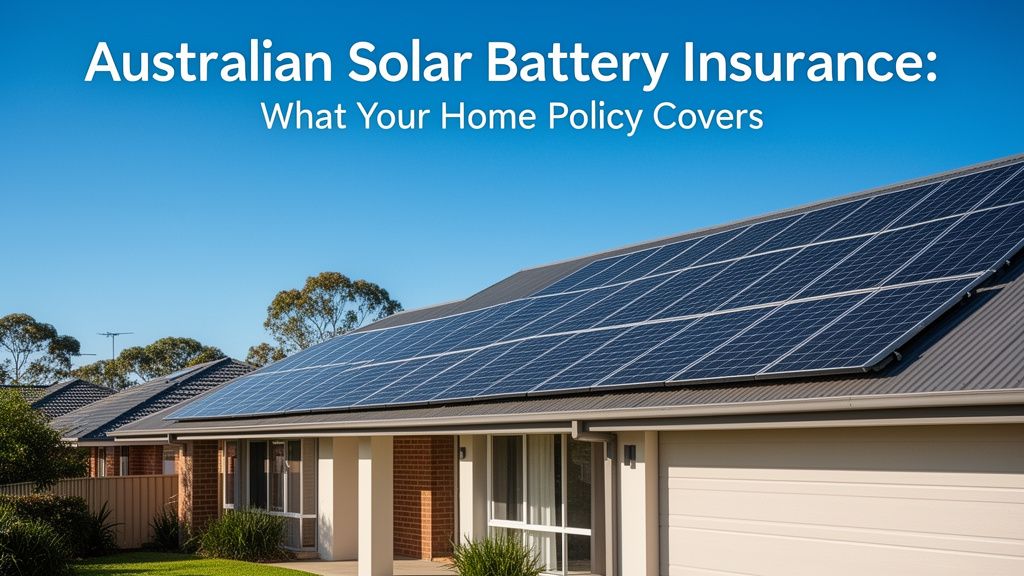
TL;DR: Your standard Australian building insurance policy often covers solar batteries as a fixture, protecting them against common perils like fire or storm damage. However, specific exclusions for things like faulty installation, manufacturing defects, or wear and tear are common, so it's crucial to review your policy for exact coverage and consider specific endorsements for comprehensive protection.
Does a Standard Australian Building Insurance Policy Cover Solar Batteries?
A standard Australian building insurance policy typically does provide some level of coverage for solar batteries, as they are generally considered a permanent fixture of your home. This means that if your solar battery system is physically attached to your property and essential for its function, it's often included under the 'building' component of your policy, much like your solar panels, hot water system, or air conditioning unit. Coverage usually extends to damage caused by common perils such as fire, storms, lightning strikes, impact from vehicles, malicious damage, and theft. However, the extent of this coverage can vary significantly between insurers and policies. It's not a universal guarantee, so understanding the specifics of your own policy wording is paramount to confirm whether your costly energy storage solution is adequately protected.
Understanding 'Fixtures' in Your Policy
For insurance purposes, a 'fixture' is an item permanently attached to the building or land, intended to remain with the property indefinitely, even if ownership changes. Your solar battery, typically installed in a garage, utility room, or outdoor shed and hardwired into your home's electrical system, usually meets this definition. This classification is vital because 'contents' insurance, the other main component of a home insurance policy, covers movable items within your home. By being classified as a fixture, your solar battery falls under your building insurance sum insured, meaning its value contributes to the total cost to rebuild or repair your home following a covered event. Confirming this classification with your insurer or by carefully reading your Product Disclosure Statement (PDS) is a smart move to avoid any surprises down the line.
Common Perils Covered for Solar Batteries
When your solar battery is covered under your building policy, it generally benefits from protection against a range of common perils. These typically include damage from bushfires, severe storms (including hail and high winds), lightning strikes, and floods (though flood coverage can be an optional extra in some policies). Theft of the entire unit or significant components is also usually covered, provided there's evidence of forced entry or malicious intent. Furthermore, accidental damage, such as a vehicle impact if the battery is housed in a garage, might also fall under the scope of your policy. However, it's critical to note that 'common perils' do not cover every possible scenario, and policies always have specific exclusions that limit the types of damage an insurer will compensate for.
What Common Exclusions Might Affect Your Solar Battery Coverage?
Despite general inclusion, building policies often have specific exclusions or limitations that can impact solar battery claims, meaning not every type of damage will be covered. Insurers commonly exclude damage arising from poor installation, manufacturing defects, or the general wear and tear that occurs over time. Power surges are another tricky area; some policies might cover damage from direct lightning strikes but exclude damage from grid-related power fluctuations unless specific optional cover is added. Additionally, damage resulting from inadequate maintenance, such as water ingress due to a poorly sealed external installation, could also be denied. Always check the 'What is Not Covered' section of your policy's Product Disclosure Statement (PDS) to understand these crucial limitations before you need to make a claim.
Damage from Faulty Installation or Maintenance
A significant exclusion to be aware of is damage caused by faulty installation or inadequate maintenance. If your solar battery system is damaged due to errors made during its initial setup, such as incorrect wiring, insufficient structural support, or improper weatherproofing, your building insurance policy is unlikely to cover the repair or replacement costs. Insurers generally expect that all installations are carried out by qualified professionals according to Australian standards. Similarly, if damage results from your failure to perform reasonable maintenance – for example, neglecting to clear debris from cooling vents leading to overheating, or failing to address a known leak that subsequently damages the battery – your claim could be denied. It’s crucial to ensure your system is installed correctly and regularly maintained by certified technicians.
The Impact of Manufacturing Defects and Wear and Tear
Another common set of exclusions revolves around manufacturing defects and natural wear and tear. Your building insurance policy is designed to cover sudden, unforeseen damage, not issues that stem from the inherent quality of the product itself or its natural degradation over time. If your solar battery fails due to a fault in its design or construction that existed from the moment it was manufactured, this would typically fall under the manufacturer's warranty, not your home insurance. Similarly, as batteries age, their performance naturally diminishes, and components can wear out. Damage attributable to this gradual deterioration or expected lifespan expiry will not be covered. These types of issues are considered part of owning the product and are generally the responsibility of the manufacturer or the homeowner.
How Can You Ensure Adequate Insurance for Your Solar Battery System?
Ensuring adequate insurance for your solar battery system often requires a proactive approach, including thoroughly reviewing your policy documents and potentially seeking specific endorsements or additional coverage. The primary step is to confirm that your solar battery system has been correctly included in the 'sum insured' value for your building. If you've installed a new battery, it's essential to notify your insurer so they can adjust your policy to reflect the increased value of your home. Failing to do so could result in underinsurance, where you wouldn't receive the full replacement cost if damage occurred. Don't assume; always verify directly with your insurance provider. Understanding your policy's limits, excesses, and any specific terms relating to renewable energy systems is crucial for peace of mind.
Reviewing Your Policy Documents and Sum Insured
The first and most critical step in confirming your solar battery's coverage is to meticulously review your building insurance policy documents, specifically the Product Disclosure Statement (PDS). Look for clauses related to "fixtures," "permanent installations," or "renewable energy systems." Ensure that the value of your solar battery system (which can be substantial, often ranging from $8,000 to $15,000 for a typical Australian home) is included in your building's overall sum insured. If you installed your battery after purchasing your policy, you must notify your insurer to update your sum insured, otherwise, you risk being underinsured in the event of a total loss. Many policies have automatic allowances for renovations or new installations, but these often have limits, so direct communication is always best.


Seeking Specific Endorsements for Enhanced Protection
For enhanced peace of mind, or if your standard policy has significant exclusions, you might consider seeking specific endorsements or optional extras from your insurer. Some insurers offer "machinery breakdown" or "electrical plant" cover that can extend protection to the internal workings of your battery system, covering failures not typically included under standard perils. This can be particularly useful for protecting against issues like internal electrical faults or mechanical breakdowns. While these endorsements come at an additional premium, they can significantly broaden your coverage, offering protection beyond what a basic building policy provides. Always discuss these options with your insurer to understand what they offer and if it aligns with your specific needs and the value of your solar battery investment.
What Steps Should You Take When Making a Claim for Solar Battery Damage?
When damage occurs to your solar battery system, follow your insurer's prescribed claims process diligently, starting with immediate documentation of the incident. The first priority is to ensure safety, disconnecting the system if it's safe to do so, and contacting your installer if there's an electrical fault or obvious physical damage. Once safe, thoroughly document the damage with photographs and videos from various angles, capturing the extent of the issue. Note down the date and time of the incident, and gather any relevant information such as weather reports if it's storm-related. Contact your insurer as soon as reasonably possible to report the damage and initiate the claims process. They will guide you through the next steps, which typically involve providing evidence and obtaining quotes for repair or replacement.
Documenting Damage and Initiating Your Claim
Upon discovering damage to your solar battery, detailed documentation is paramount for a successful insurance claim. Use your smartphone to take clear, well-lit photos and videos of the damaged battery, its surrounding area, and any related property damage. Include close-ups of specific faults and broader shots showing the installation context. Make a written record of exactly what happened, when it occurred, and any potential causes. As soon as you have this initial documentation, contact your insurance provider. You can typically do this online, over the phone, or via their app. Provide them with all the details you’ve gathered, and they will assign a claims assessor who will advise you on whether further inspections or quotes are required. Do not commence repairs until your insurer has authorised them, unless it’s an emergency for safety reasons.
Understanding 'New for Old' vs. Market Value for Replacements
When it comes to replacing your damaged solar battery, understanding how your policy values the item is critical. Most comprehensive building policies offer 'new for old' replacement, meaning the insurer will pay the cost of replacing your damaged battery with a brand new one of similar quality and capacity, without deducting for depreciation. This is generally the most desirable outcome, as solar batteries are a significant investment. However, some older or more basic policies might only offer 'market value' (also known as 'indemnity' cover), which pays out the depreciated value of your battery at the time of loss, leaving you to cover the difference for a new replacement. Always confirm whether your policy provides 'new for old' replacement for fixtures like solar batteries to ensure you're adequately covered for the full replacement cost.
Key Takeaways
- Always check your building insurance policy's Product Disclosure Statement (PDS) to confirm if your solar battery is covered as a fixture.
- Notify your insurer when you install a solar battery to ensure its value is included in your building's sum insured, preventing underinsurance.
- Be aware of common exclusions like faulty installation, manufacturing defects, or general wear and tear, which are typically not covered.
- Consider specific endorsements or optional extras, such as 'machinery breakdown' cover, for broader protection against internal faults.
- In case of damage, immediately document everything with photos/videos and contact your insurer before arranging any repairs.
Read More
For a comprehensive overview, check out our master guide: Read the Full Guide Here.