Six Months Off-Grid in Australia: My Solar Power Station Experiment
G’day folks! For the past six months, I've been experimenting with complete energy independence using solar power stations here in the Aussie bush. With electricity prices constantly climbing and the grid becoming less reliable in certain areas, I wanted to see if living entirely off-grid was a realistic and sustainable option. It’s been a steep learning curve, but I’m excited to share my experiences, the challenges, and the unexpected rewards.
Before I dive in, if you are thinking about buying a portable solar generator, you should consider the value. Here is a Complete Guide on the value of these generators.
Why Go Off-Grid?
Now, many people assume the primary motivation for disconnecting from the grid is to save money on electricity bills. While that’s a definite perk, my reasons were twofold. Firstly, my property is in a relatively remote location, and the cost of connecting to the grid was exorbitant – think tens of thousands of dollars. Secondly, I was drawn to the idea of energy independence and reducing my environmental footprint.
For many Australians living in rural or remote areas, going off-grid isn't a lifestyle choice; it's a necessity. Around 2% of the population resides in areas where grid access is either unavailable or prohibitively expensive. In these situations, renewable energy solutions like solar power become the most practical and cost-effective option.
Setting Up My Off-Grid System
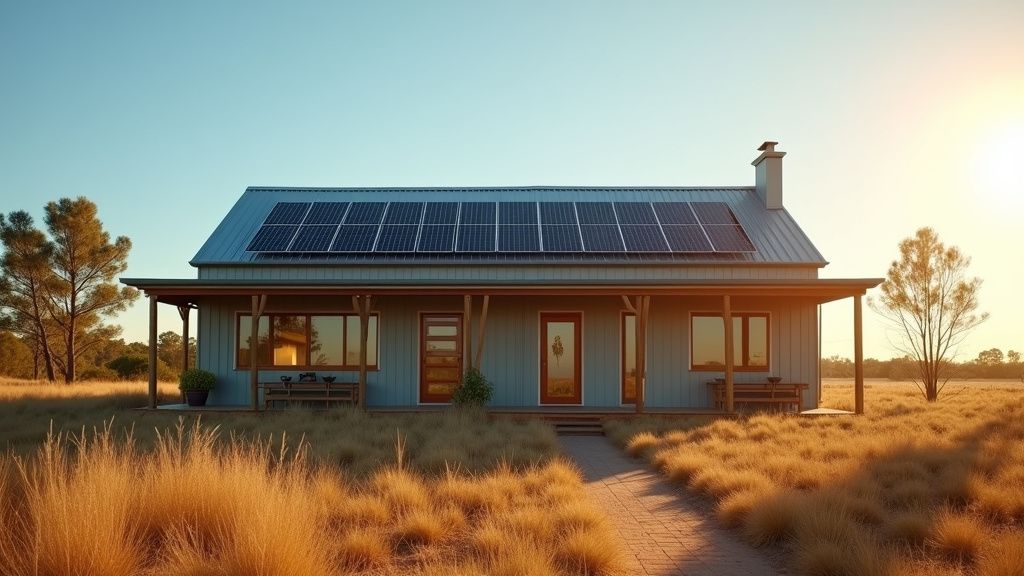
Going completely off-grid means disconnecting entirely from the main electricity grid. All your energy needs must be met on-site, using a combination of solar panels, battery storage, and a backup generator. This means careful planning and investment in the right equipment.
My system comprises:
- Solar Panels: A decent array of panels on my roof to capture the glorious Aussie sunshine.
- Battery Storage: A bank of batteries to store the solar energy generated during the day for use at night and on cloudy days.
- Inverter: To convert the DC electricity from the panels and batteries into AC electricity for household use.
- Backup Generator: A petrol generator for those extended periods when solar production is low (essential for peace of mind).
It's important to understand that components in an off-grid system needs to be robust. Because off-grid systems must be self-sufficient and highly dependable, their components are typically more resilient than those used in grid-connected or hybrid setups.

The First Six Months: A Rollercoaster of Sun and Savings
The first few months were all about monitoring and adjusting. I meticulously tracked my energy consumption, identified areas where I could reduce usage, and fine-tuned the system's settings. Living off-grid forces you to be much more conscious of your energy usage. You quickly learn to switch off lights, minimise appliance use during peak times, and prioritise energy-efficient devices.
I quickly learned that those long sunny days were pure gold. My batteries would be fully charged by early afternoon, and I could power my entire household with ease. However, overcast days presented a challenge. I had to be strategic with my energy consumption and rely more on the battery storage. Thankfully, my backup generator has only been used a handful of times.
Costs and Considerations
The upfront cost of going off-grid is significant. You need to factor in the cost of solar panels, batteries, an inverter, a generator, installation, and potentially site preparation. However, it’s crucial to consider this as a long-term investment. While I don’t have hard data yet, systems like mine tend to pay for themselves in about 15 years, which also coincides with when many components need replacing.
However, don’t let the upfront cost deter you. Government rebates and incentives, such as the Solar Battery Rebate, can significantly reduce the initial expense. These rebates make investing in a reliable, self-sufficient power system more affordable than ever.
Beyond the initial investment, there are ongoing maintenance costs to consider. These include occasional generator servicing, battery maintenance (depending on the type of battery), and potential inverter replacement down the track.
The Verdict: Is Off-Grid Living Worth It?
After six months of living off-grid, I can confidently say that it's been a worthwhile experience. It's not without its challenges, but the benefits far outweigh the drawbacks.
Here’s what I've learned:
- Energy independence is empowering. Knowing that I'm not reliant on the grid gives me a sense of control and security.
- Off-grid living promotes sustainability. I'm much more mindful of my energy consumption and actively seek ways to reduce my environmental footprint.
- Cost savings are real. While the initial investment is significant, I'm already seeing a reduction in my energy bills.
- Reliability is key. A well-designed and maintained off-grid system can be just as reliable as the grid, if not more so.
Going off-grid isn’t for everyone. It requires a significant upfront investment, a willingness to adapt your lifestyle, and a commitment to monitoring and maintaining your system. However, if you live in a remote area, are passionate about sustainability, and value energy independence, it's definitely worth considering.