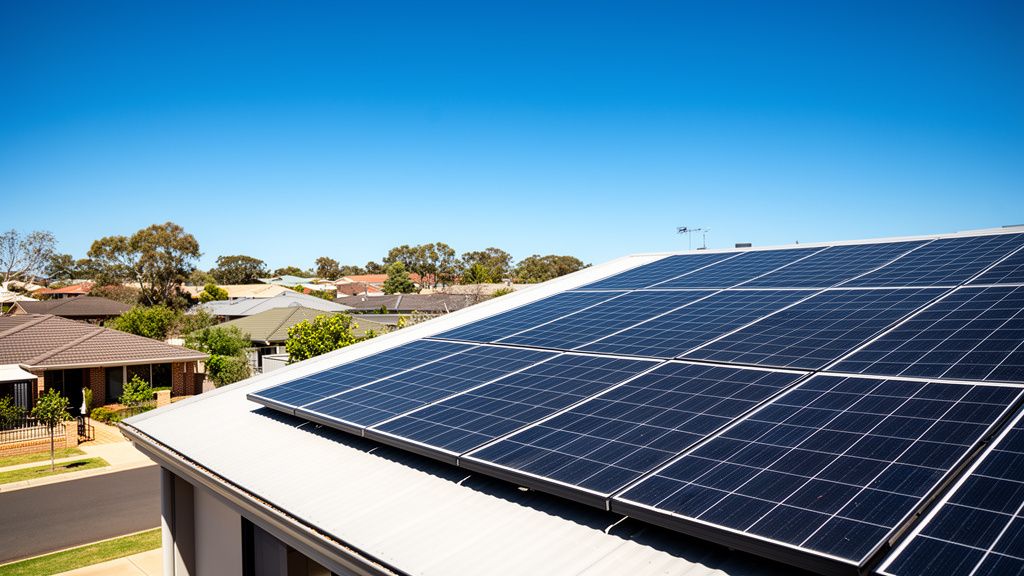
TL;DR: Yes, solar remains a highly affordable and financially astute investment for South Australian homes, particularly when opting for larger system sizes. Significant reductions in installation costs, coupled with robust federal rebates and high SA electricity prices, ensure quick payback periods and substantial long-term savings.
Is Solar Still an Affordable Investment for South Australian Homes?
Yes, solar remains a highly affordable and financially savvy investment for South Australian homeowners, especially when considering larger system sizes. Over the past decade, the cost of installing solar power has plummeted dramatically across Australia, transforming it from a luxury item into a mainstream, accessible energy solution. While energy prices from the grid continue to climb in SA, the initial outlay for a quality solar system has consistently decreased, making the decision to go solar more compelling than ever. This trend means that the initial sticker price, while an investment, delivers significant and rapid returns in one of the country's most expensive electricity markets.
How Have Solar System Costs Changed Over Time in SA?
Solar system costs in South Australia, much like the rest of the nation, have seen a massive decline. What might have cost $20,000 for a 5kW system ten years ago can now fetch a larger, more efficient 6.6kW system for a fraction of that price. This reduction is primarily due to advancements in manufacturing, economies of scale, and fierce competition among installers. This affordability shift means more households can now access the benefits of solar without breaking the bank, enhancing energy independence and reducing reliance on the grid's volatile pricing.
What Are the Current Average Costs for Large Residential Systems in SA?
For large residential systems in South Australia, homeowners can expect competitive pricing, particularly after government rebates. A popular 6.6kW system, suitable for many family homes, typically ranges from $5,000 to $8,000 fully installed, depending on component quality and installer. For those with higher energy demands or larger roof spaces, a 10kW system might cost between $8,000 and $12,000. These figures represent the out-of-pocket expense after the federal Small-scale Technology Certificates (STCs) have been applied, making substantial solar power well within reach for the average South Australian household.
How Do Government Incentives and Rebates Keep SA Solar Affordable?
Government incentives, particularly the federal Small-scale Technology Certificates (STCs), significantly reduce the upfront cost of solar installations in South Australia, making them highly accessible. These certificates act as an upfront discount on your system's purchase price, directly cutting down the financial barrier to entry. Rather than applying for a rebate post-installation, your solar installer typically handles the STC creation and sale, passing the value directly onto you as a discount on your invoice. This streamlined process ensures that the benefits of government support are immediate and tangible, making larger systems particularly attractive.
Understanding the Federal STC Rebate for Solar Systems
The STC rebate system is a cornerstone of Australia's renewable energy policy, designed to encourage the uptake of solar power. The number of STCs you receive depends on your system's size, its geographical location (SA is in Zone 3 or 4, offering a good number of certificates), and the deeming period (currently until 2030, but the value of each certificate fluctuates). For example, a 6.6kW system in Adelaide might generate approximately 90-100 STCs, each valued around $30-$40, translating to a substantial discount of $2,700-$4,000 off the gross system price. This effectively makes the solar investment significantly more palatable from day one.
The Financial Advantage of Larger Systems Through STCs
One of the often-overlooked benefits of the STC scheme is how it magnifies the affordability of larger systems. Since STCs are allocated per kilowatt of installed capacity, a larger system automatically generates more certificates, leading to a greater upfront discount. This means that while a 10kW system costs more than a 6.6kW system, the difference in the net price is proportionally smaller because the larger system attracts a significantly higher STC rebate. This economy of scale, enabled by the STCs, encourages homeowners to maximise their roof space and install a system that truly meets their future energy needs, offering superior long-term value.
What Is the Payback Period for Large Solar Systems in SA?
The payback period for large solar systems in South Australia is impressively short, often ranging from 3 to 6 years, driven by low installation costs and high electricity prices. This rapid return on investment makes solar an incredibly compelling financial decision for SA residents. Once the payback period is over, your solar system effectively generates free electricity for the remainder of its 25+ year lifespan, leading to tens of thousands of dollars in savings over the system's lifetime. This financial security against rising energy costs is a primary motivator for many South Australian households.
Estimating Annual Savings from a 6.6kW or 10kW System
Estimating annual savings involves considering a system's generation capacity, your household's electricity consumption patterns, and local electricity rates. A well-placed 6.6kW system in SA can generate approximately 9,000 to 10,000 kWh per year. With current SA electricity rates averaging around $0.35/kWh and feed-in tariffs (FiTs) typically between $0.08-$0.12/kWh for exported power, a significant portion of this generation directly offsets expensive grid power. Assuming 40% self-consumption, a 6.6kW system could save approximately $1,800 to $2,000 annually, translating to a rapid payback given current system costs.

The Role of South Australia's Electricity Prices in Accelerating Payback
South Australia consistently experiences some of the highest retail electricity prices in the country. This unfortunate reality for consumers, however, creates a powerful incentive and accelerates the payback period for solar investments. Every kilowatt-hour generated and consumed directly from your solar system means one less kilowatt-hour purchased at these high rates. The greater the disparity between the retail electricity price and the feed-in tariff, the more valuable your self-consumed solar power becomes, significantly shortening the time it takes for your system to pay for itself through avoided electricity purchases.
Why Are Larger Solar Systems Often More Cost-Effective Per Kilowatt?
Larger solar systems in South Australia achieve a superior cost-effectiveness per kilowatt due to significant economies of scale in installation and fixed overheads being spread across more panels. The upfront costs associated with installing any solar system—regardless of size—include a range of fixed expenses that do not increase proportionally with the number of panels. This means that while a 10kW system is more expensive than a 5kW system, it is rarely double the price, making the larger option a better value per unit of power generated.
The Fixed Costs That Don't Grow with System Size
Several key components and labour aspects contribute to the fixed costs of a solar installation. These include the main inverter (which might be slightly larger but not proportionally more expensive for a few extra kilowatts of panels), wiring, electrical safety equipment, scaffolding hire, installation labour (a larger system might take an extra half-day or full day, but not double the time), project management, and grid connection approvals. These costs form a significant baseline for any installation. Spreading these fixed expenses across a greater number of panels in a larger system reduces the per-watt cost, making each additional kilowatt significantly cheaper than the initial ones.
Maximising Your Roof Space for Greater Long-Term Value
Opting for the largest solar system your roof space and budget allow is often the most strategic move for South Australian homeowners seeking long-term value. While the initial investment is higher, the marginal cost per additional kilowatt is often much lower due to the economies of scale. This allows you to generate more power for a comparatively small increase in upfront cost. With the potential for future increases in electricity demand (e.g., electric vehicles, battery storage, air conditioning use) and continued high electricity prices, maximising your solar generation capability now ensures greater savings and energy independence for decades to come.
Key Takeaways
- Solar in SA remains highly affordable, with installation costs significantly lower than a decade ago.
- Federal STC rebates provide a substantial upfront discount, making solar accessible and more attractive for larger systems.
- Payback periods for large solar systems in SA are typically short, often between 3 to 6 years, driven by high electricity prices.
- Larger solar systems offer superior cost-effectiveness per kilowatt due to economies of scale in installation.
- Maximising your roof space with a larger system now secures greater long-term savings and energy independence against rising grid costs.
Read More
For a comprehensive overview, check out our master guide: Read the Full Guide Here.