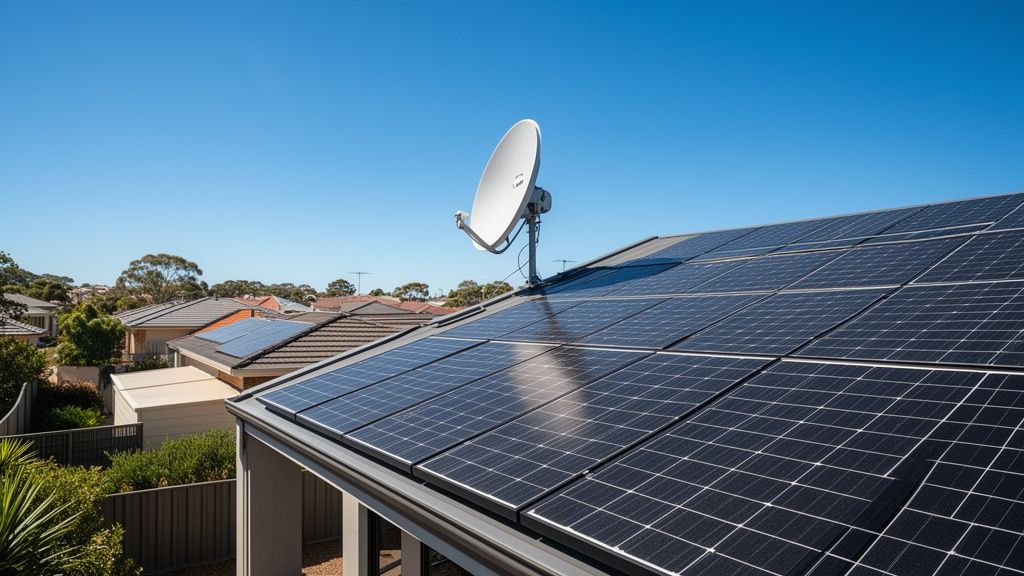
TL;DR: Automated solar monitoring systems constantly track your solar panels' performance, pinpointing issues immediately. This technology ensures your system operates at peak efficiency, maximising electricity generation and your financial returns without manual checks.
Why Does Your Solar System Need Constant Monitoring?
Your solar system needs constant monitoring to identify performance issues early, preventing significant power loss and ensuring you get the most from your investment. Even the best solar installations can encounter problems over time, from individual panel faults to inverter glitches or grid connection issues. Without automated oversight, these problems often go unnoticed for weeks or months, costing you money in lost generation. A homeowner in Brisbane might only notice their bill is higher, not that one string of panels has been underperforming for a quarter, costing them hundreds of dollars in lost exports.
What Happens If You Don't Monitor?
Not monitoring your system often leads to undetected faults that silently reduce your energy output. A common scenario involves a single faulty panel or a micro-inverter failure, which can reduce the output of an entire string of panels. Imagine your 6.6kW system, designed to produce around 25kWh per day, silently dropping to 20kWh. Over a year, this 5kWh daily loss totals 1825kWh. At an average export tariff of 8c/kWh, that's $146 in lost feed-in credits, plus the extra electricity you need to buy from the grid, potentially adding another $400-$600 to your bill. Early detection prevents these avoidable losses.
Catching Issues Early Saves Money
Catching performance issues early directly saves you money and optimises your solar system's payback period. Automated monitoring systems send instant alerts if performance dips below expected levels or if a component reports a fault. This means you can address a problem, like a wiring fault or a blown fuse, within days rather than discovering it only when you receive a surprisingly high electricity bill months later. For example, a cracked panel detected early under warranty costs nothing to replace. If you only notice it two years later, outside the warranty period, a replacement could cost upwards of $300-$500, including labour.
How Does Automated Solar Monitoring Work?
Automated solar monitoring uses smart technology integrated with your system's inverter and an internet connection to continuously track and report its performance. This setup typically involves small data loggers or smart inverters that collect granular data on electricity generation, individual panel performance, and system health. The data then uploads to a cloud-based platform accessible via a mobile app or web portal. This lets you view your system’s output in real-time, anytime, anywhere.
Data Collection and Analysis
Data collection forms the core of automated monitoring, with smart inverters or dedicated monitoring devices continuously logging key metrics. These metrics include how much power your system produces in kilowatts, its total energy generation in kilowatt-hours (kWh) for the day, week, or month, and even individual panel performance if you use optimisers or micro-inverters. The system also tracks grid interactions, such as how much power you export to the grid and how much you import. Cloud software then analyses this data, comparing it against historical performance, weather conditions, and expected output to flag any anomalies.
Alerts and Reporting
Automated systems provide instant alerts and detailed reports, keeping you informed without needing manual checks. If a panel stops producing, an inverter faults, or your system's output unexpectedly drops, the monitoring system immediately sends a notification to your phone or email. Most platforms also offer regular summaries, like weekly or monthly performance reports. These reports often show energy generated, savings achieved, and even environmental impacts. This keeps you fully across your solar system’s health and financial contribution, allowing you to quickly authorise maintenance if necessary.


What Are the Real Benefits for Australian Homeowners?
Automated monitoring directly translates to more reliable power, bigger savings, and greater peace of mind for Australian homeowners who have invested in solar. You bought solar to save money and reduce your environmental footprint; automated monitoring ensures you achieve those goals consistently. It removes the guesswork from solar ownership, offering transparency and control over your energy generation. This peace of mind alone holds significant value for many.
Maximising Your Solar Investment
Automated monitoring maximises your solar investment by ensuring your system consistently delivers its full potential. Every kilowatt-hour your system fails to produce due to an undetected fault is a lost saving or a missed feed-in tariff payment. For a homeowner in Perth with a typical 6.6kW system, an issue that halves daily output from 25kWh to 12.5kWh could cost them around $3.50 per day in lost savings and export credits. Over a year, this totals over $1,200. Monitoring helps you achieve a faster return on your initial $5,000-$9,000 investment by keeping your system producing at its best.
Proactive Maintenance and Support
Proactive maintenance and support become standard with automated monitoring, extending your system's lifespan and reducing unexpected costs. Instead of waiting for a total system failure, you receive an alert about a specific component acting up. This allows your solar installer or service provider to diagnose the problem remotely, often before scheduling a visit. This targeted approach reduces downtime and allows for scheduled repairs, rather than emergency call-outs. It means fewer large repair bills and more consistent electricity generation for years to come.
Key Takeaways
- Automated solar monitoring detects performance issues immediately, preventing silent energy losses.
- Early detection of faults saves homeowners hundreds of dollars annually in lost generation and higher electricity bills.
- Monitoring systems provide real-time data on energy production, grid interaction, and component health via apps.
- Instant alerts for faults and regular performance reports keep you informed and in control.
- Maximising system uptime ensures faster payback on your solar investment and greater long-term savings.
Read More
For a comprehensive overview, check out our master guide: Read the Full Guide Here.