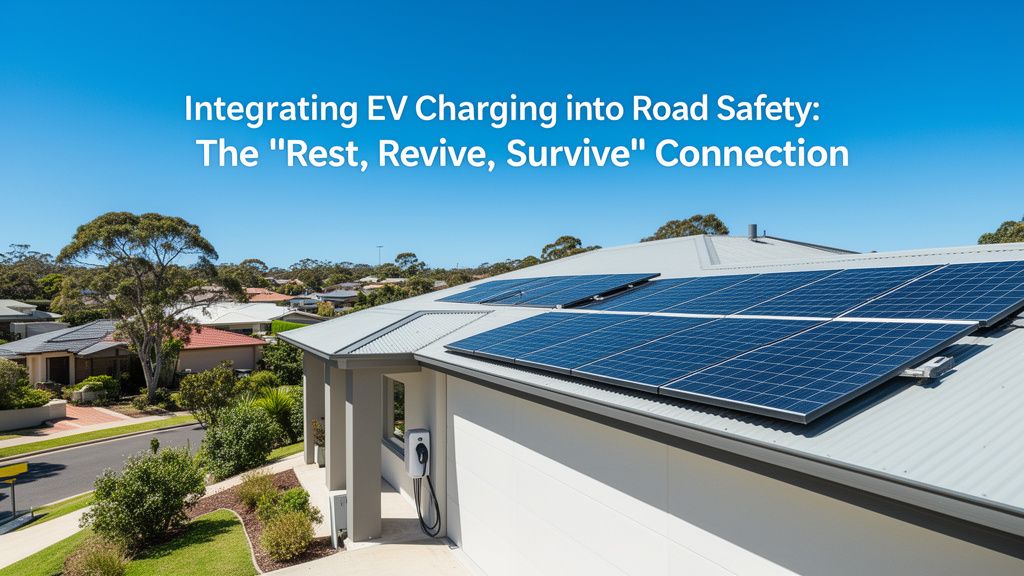
G'day, fellow Aussies and solar enthusiasts! Have you ever hit the highway, heading for a weekend getaway or a long-awaited family visit, and seen those stark reminders: "Fatigue Kills – Rest, Revive, Survive"? It’s a message that’s etched into our driving psyche, a vital warning about the dangers of driver fatigue on our vast, beautiful roads. But as we accelerate into an electric future, with more EVs buzzing around our cities and countryside, how does this critical safety message evolve? The answer, I believe, lies in intelligently integrating EV charging infrastructure, especially when powered by our glorious Aussie sun, into the very fabric of our road safety strategy.
The 'Rest, Revive, Survive' Imperative in an Electric Age
For decades, the "Rest, Revive, Survive" campaign, pioneered by Transport for NSW and echoed nationwide, has drilled home the importance of taking breaks. Pull over for a power nap, stretch your legs, grab a cuppa, or swap drivers every couple of hours. This isn't just good advice; it's a lifeline on our often long and monotonous stretches of road. With petrol cars, refuelling is quick, but our internal battery (the driver) needs a much longer recharge.
Enter the electric vehicle. One of the common concerns for new EV owners, or those considering the switch, is "range anxiety." While modern EVs boast impressive ranges – many can easily cover 400-500 kilometres on a single charge – long trips still require planned charging stops. Instead of viewing these stops as an inconvenience, what if we reframed them as an integral part of our "Rest, Revive, Survive" strategy?
Imagine pulling into a charging station not just to top up your battery, but to actively top up your own energy levels. This is where the magic happens. A 20-30 minute fast charge becomes the perfect excuse to stretch, grab a healthy snack, make a call, or simply close your eyes for a brief refresh. It encourages the very behaviour road safety advocates have been promoting for years, but now with a built-in incentive – charging your vehicle.
Solar Power: The Sustainable Backbone of Our EV Charging Network
Australia, with its abundant sunshine, is perfectly positioned to lead the world in solar-powered EV charging. We're already world leaders in rooftop solar adoption, with millions of homes harnessing the sun's energy. Extending this to our public and commercial charging infrastructure isn't just smart; it's essential for a truly sustainable transport future.
Imagine dedicated charging hubs, strategically located along major highways and regional routes, powered entirely by solar arrays. These 'solar servos' would offer not just charging points, but also well-lit, safe rest areas with amenities. Think picnic tables under shade sails (also solar panels!), clean restrooms, perhaps even local information centres or small kiosks selling local produce. The energy they provide would be clean, renewable, and help reduce our reliance on fossil fuels, contributing to a healthier environment for all. Moreover, generating power locally at charging stations reduces strain on the grid and offers energy resilience, particularly in remote areas.
Strategically Placed Charging Hubs: More Than Just a Power Point


The geographical placement of these solar-powered charging hubs is paramount. They shouldn't just be where the grid is convenient, but where drivers need to stop. Think about the fatigue hotspots along our major arteries like the Hume Highway, Pacific Highway, or crossing the Nullarbor.
Each charging hub could be designed as a bona fide rest stop, promoting driver wellbeing. This means:
- Amenities: Clean toilets, drinking water, shaded picnic areas.
- Information: Displays about local attractions, road conditions, and fatigue management tips.
- Safety Features: Well-lit areas, CCTV, and potentially even emergency call points.
- Connectivity: Free Wi-Fi to allow drivers to check messages or plan the next leg of their journey.
By making these stops appealing and comfortable, drivers will be more inclined to take regular breaks, reducing the risk of fatigue-related accidents. The 20-30 minutes it takes for an EV to get a significant charge is precisely the amount of time recommended for a power nap or a decent stretch break.
Economic and Environmental Benefits for Australia
Beyond road safety, a solar-integrated EV charging network offers immense benefits for Australia. It creates jobs in renewable energy installation and maintenance, boosts regional economies through increased stops in smaller towns, and strengthens our energy independence. With the cost of solar continuing to fall, and the sun being free, powering our transport network this way is not just green, but also economically savvy in the long run. Imagine paying less per 'fill-up' because the energy comes from our backyard! A typical fast charger might cost you around $0.50-$0.60 per kWh, but for home solar owners, charging can be nearly free during the day. Scaling this up for public infrastructure presents significant economic advantages.
Overcoming Challenges, Embracing the Future
Of course, rolling out such an extensive network across our vast continent presents challenges. We need significant investment, smart grid integration, and public education. But the vision is clear: a safer, cleaner, and more efficient road network for all Australians. Governments, local councils, and private industry must collaborate to identify optimal locations, secure funding, and ensure a seamless user experience. We need clear signage, easy payment systems, and reliable infrastructure that gives drivers confidence.
A Vision for a Safer, Greener Journey
The integration of EV charging into road safety isn't just about plugging in; it's about a holistic approach to sustainable travel. It's about designing our infrastructure to actively encourage safe driving habits. When we embrace solar-powered EV charging as a vital component of our "Rest, Revive, Survive" strategy, we're not just building charging stations; we're building a safer, more sustainable future for every driver on our roads.
So next time you're planning a long drive in your EV, remember that your charging stops are your built-in opportunities to "Rest, Revive, Survive." And hopefully, soon, many of those stops will be powered by the brilliant Aussie sun, making every journey a little bit greener, and a whole lot safer. Let's make it happen, Australia!
Read More
For a comprehensive overview, check out our master guide: Read the Full Guide Here.