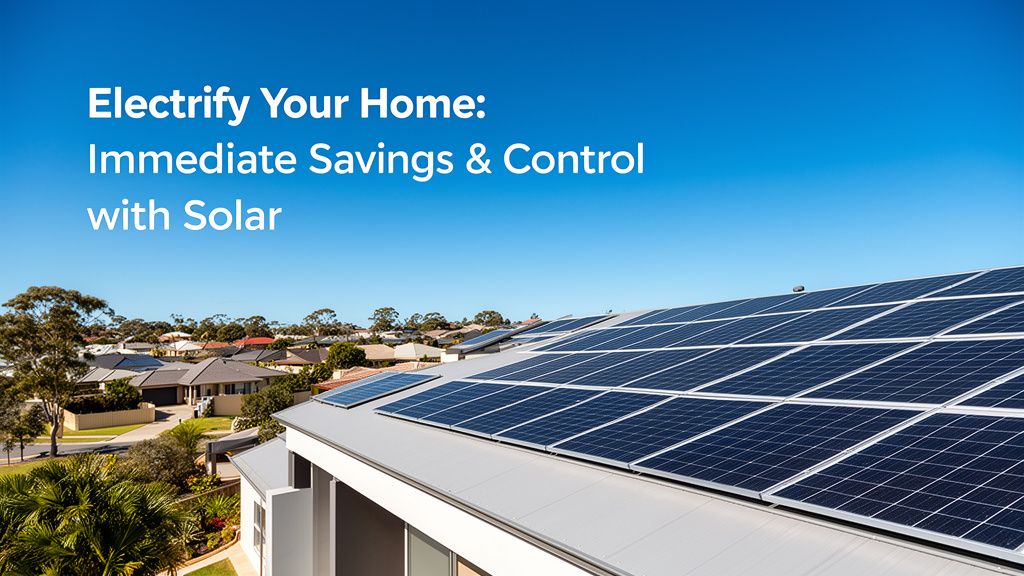
TL;DR: Electrifying your home with solar power immediately cuts power bills by shifting energy use from the grid to cheaper, self-generated electricity. This transition gives you greater control over your energy costs and consumption, protecting you from future grid price increases while reducing your environmental impact.
How Does Electrifying Your Home Reduce Your Power Bills Immediately?
Electrifying your home shifts a significant portion of your energy consumption from expensive grid electricity to cheaper, self-generated solar power, resulting in immediate savings on your power bills. Instead of paying peak rates for hot water or heating, you power these appliances with the free energy your rooftop solar system produces. For instance, a household in Brisbane installing a 6.6kW solar system with a heat pump hot water system could expect to reduce their hot water energy costs by up to 80%, saving hundreds of dollars annually depending on usage habits. This direct conversion from grid energy to solar energy for major loads like water heating, cooking, and climate control has an immediate, noticeable impact on monthly statements.
Cutting Peak Grid Dependency
By installing electric appliances such as heat pump hot water systems, reverse-cycle air conditioners, and induction cooktops, you directly reduce your reliance on the grid during peak demand times. These are the periods when electricity is most expensive, often fetching prices upwards of 40-50 cents per kilowatt-hour (c/kWh) in many parts of Australia. Pairing these efficient electric appliances with a solar system allows you to generate and consume your own power during the day. This strategy bypasses high peak tariffs entirely. Homeowners in Sydney, for example, often find their largest energy costs come from hot water and heating/cooling. Replacing an old electric resistive hot water heater with a heat pump, powered by solar, can reduce the energy required for hot water by up to two-thirds.
Optimising Appliance Usage with Solar
Electrification also enables smart optimisation of your appliance usage, further maximising your savings. Modern electric appliances, especially when integrated with smart home energy management systems, can be programmed to operate when your solar panels are producing the most electricity. You can set your washing machine or dishwasher to run mid-morning, or pre-heat your home's hot water tank during sunny periods. This intentional timing ensures you use your self-generated solar energy instead of drawing from the grid. This approach is far more efficient than waiting until the evening to use appliances, when you would otherwise pay grid rates, often while your solar system sits idle. Shifting even modest loads can add up to substantial annual savings.
What Control Does Electrification Give Over Your Home's Energy Use?
Electrification gives homeowners unprecedented control over their home's energy use, enabling them to actively manage costs, reduce reliance on grid price fluctuations, and take charge of their energy independence. When your home primarily uses electricity for all its needs, and a significant portion of that electricity comes from your own solar panels, you move from being a passive consumer to an active energy manager. You can see precisely how much energy you generate, how much you consume, and where it goes. This level of insight empowers you to make informed decisions about your energy habits and investments, like adding a battery.
Maximising Self-Consumption and Minimising Exports
With an electrified home, you gain direct control over maximising your self-consumption of solar energy and minimising reliance on low feed-in tariffs. Most Australian electricity retailers now offer feed-in tariffs (FiTs) below 5c/kWh, sometimes even as low as 2-3c/kWh. This means exporting excess solar power is not nearly as financially rewarding as using it yourself. Electrifying your home by switching to electric vehicles, heat pump hot water systems, or induction cooking gives you more ways to use your own solar energy directly. Instead of exporting cheap power, you use it to run your home, charge your car, or heat your water, which offsets grid electricity that can cost upwards of 30c/kWh or more.
Future-Proofing Against Rising Grid Prices
Electrification offers a powerful shield against the volatility of grid electricity prices. By making your home largely self-sufficient through solar and efficient electric appliances, you become less exposed to the wholesale market fluctuations that drive up electricity bills. The Australian Energy Regulator consistently approves annual price increases for network charges and general electricity costs. As you electrify, your home becomes a semi-independent energy entity, producing a significant portion of its own power. This significantly reduces the impact of future price hikes. It gives you the long-term certainty of knowing a substantial portion of your energy needs are met by a stable, predictable, and free source: the sun.
Are There Financial Incentives for Electrifying Australian Homes?
Yes, various financial incentives exist to support Australian homeowners in electrifying their homes, making the transition more affordable and attractive. These incentives primarily come in the form of federal rebates for solar installations and, in some states, specific schemes for energy-efficient electric appliances. These financial supports reduce the upfront cost of going electric, accelerating the payback period for your investment. Beyond direct financial benefits, choosing to electrify also provides a significant environmental advantage, directly reducing your household's carbon footprint.
Navigating Australian Rebates and Feed-in Tariffs
Australian homeowners benefit from the Small-scale Renewable Energy Scheme (SRES), which provides Small-scale Technology Certificates (STCs) for solar PV systems, solar hot water systems, and heat pumps. These STCs translate into an upfront discount on your installation cost. For example, a typical 6.6kW solar system might receive STCs worth $2,500 to $3,500, significantly lowering the out-of-pocket expense. States like Victoria also offer additional rebates for solar panels, batteries, and hot water heat pumps through their Solar Homes Program. While feed-in tariffs have decreased over time, they still offer a credit for any excess solar power you export to the grid, further offsetting your overall electricity costs.
Reducing Your Carbon Footprint Directly
Electrifying your home with solar power directly reduces your carbon footprint, moving away from fossil fuel-dependent grid electricity. Every kilowatt-hour of solar energy you generate and consume instead of drawing from the grid prevents about 0.8-1 kg of CO2 emissions, depending on your state's energy mix. For a household generating 10,000 kWh annually from solar, this equates to preventing 8-10 tonnes of CO2 from entering the atmosphere each year. This is a tangible contribution to environmental sustainability, aligning your home's energy use with Australia's broader emissions reduction targets. Choosing a heat pump hot water system over a gas heater, or an induction cooktop over a gas stove, eliminates direct fossil fuel consumption in your home.
Key Takeaways
- Electrifying your home with solar power immediately lowers power bills by shifting energy use away from the grid to cheaper, self-generated electricity.
- You gain significant control over your energy costs by maximising self-consumption and reducing reliance on volatile grid pricing.
- Federal STCs and various state-based rebates reduce the upfront cost of solar and efficient electric appliances, making the transition more accessible.
- Electrification directly reduces your household's carbon footprint, contributing to environmental sustainability by displacing fossil fuel use.
Read More
For a comprehensive overview, check out our master guide: Read the Full Guide Here.