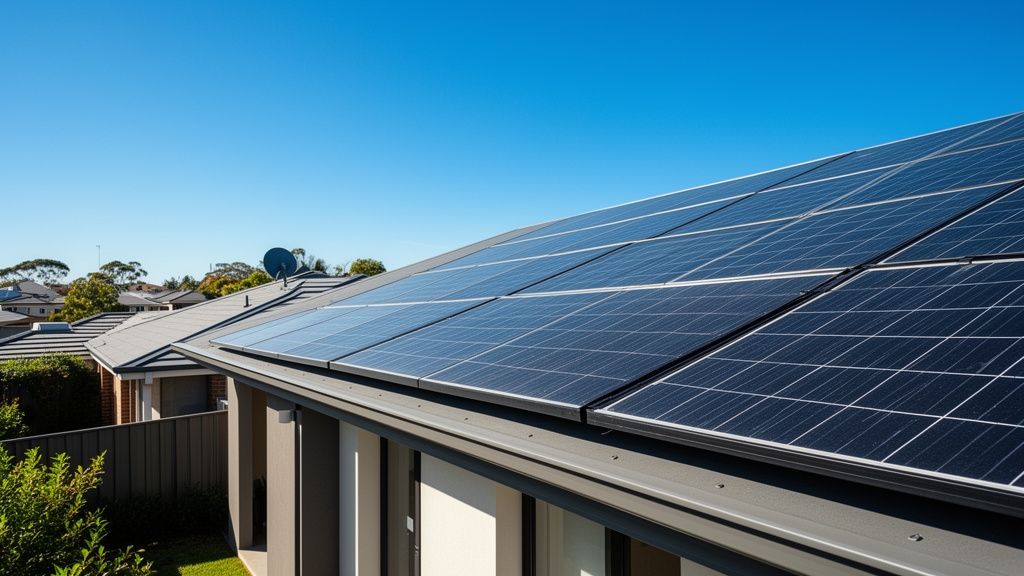
In the sun-drenched land of Australia, harnessing solar power has become a national pastime for homeowners looking to slash their electricity bills and contribute to a greener future. While a rooftop solar system is undoubtedly a fantastic start, did you know there's another crucial piece of technology that can supercharge your savings and give you unprecedented control over your energy costs? We're talking about smart meters, and how they unlock a world of flexible tariffs that are especially beneficial for solar households.
For years, many of us have paid a flat rate for our electricity, regardless of when we used it. This "one price fits all" model is slowly becoming a relic of the past. Enter the smart meter – a digital marvel that's transforming how we buy and sell power. If you've got solar, understanding and leveraging your smart meter could be the difference between good savings and truly exceptional ones.
What is a Smart Meter, Anyway?
Forget the old spinning disk meter tucked away in your meter box that required a manual read every quarter. A smart meter is a modern, digital electricity meter that records your energy consumption (and generation, if you have solar) at frequent intervals – often every 30 minutes. More importantly, it communicates this data directly and automatically to your electricity retailer, eliminating the need for manual reads.
Think of it as the brain of your home's energy system. This two-way communication capability means your retailer gets near real-time insights into your usage patterns. For you, it means accurate billing, remote meter readings, and, most excitingly, access to a new generation of electricity tariffs designed to reward smart energy choices. Across Australia, smart meter rollouts are progressing, with some states like Victoria having a full rollout, and others like NSW, Queensland, and SA seeing them installed with new connections or when an existing meter needs replacement. If you're not sure if you have one, your electricity retailer can tell you.
From Dumb to Smart: The Evolution of Electricity Pricing
Historically, electricity tariffs were simple. You paid a set price per kilowatt-hour (kWh) for every unit of electricity you consumed, plus a daily supply charge. This made sense when meters couldn't record usage times. However, it didn't reflect the true cost of generating and delivering electricity, which varies significantly throughout the day.
The grid faces immense pressure during "peak" times – usually late afternoons and evenings when everyone arrives home, turns on air conditioners, cooks dinner, and switches on lights. During these periods, electricity is more expensive to generate and distribute, as extra power plants might need to fire up to meet demand. Conversely, during the middle of the day or late at night, demand is much lower, and electricity is cheaper.
Smart meters bridge this gap by enabling flexible tariffs. These tariffs are designed to reflect the real-time cost of electricity, encouraging consumers to shift their usage away from peak times.
Unlocking Flexible Tariffs with Your Smart Meter (and Solar!)
This is where your smart meter truly shines, especially if you have a solar system. Flexible tariffs allow you to capitalise on your solar generation and consumption habits.
Time-of-Use (TOU) Tariffs
TOU tariffs divide the day into different pricing periods:
- Peak: The most expensive period, typically late afternoon/early evening (e.g., 2 pm - 8 pm). Prices might be around 35-45c/kWh.
- Shoulder: Moderately priced periods before and after peak (e.g., 7 am - 2 pm and 8 pm - 10 pm). Prices might be around 20-30c/kWh.
- Off-Peak: The cheapest period, usually overnight and sometimes on weekends (e.g., 10 pm - 7 am). Prices can be as low as 10-18c/kWh.
How Solar Owners Benefit: With solar, you're already generating electricity during the daytime shoulder and sometimes even into the early peak period. This means:
- Maximising Self-Consumption: Use your solar power directly during the day to avoid buying expensive electricity from the grid, especially during shoulder and peak times. Run your washing machine, dishwasher, or charge your electric vehicle (EV) during the day using your own free solar energy.
- Strategic Export: If your feed-in tariff (the rate you get for exporting excess solar) is higher during peak times, your smart meter ensures you're credited appropriately for every kWh you send back to the grid when it's most valuable.
- Battery Synergy: If you have a home battery, you can charge it with surplus solar during the day, or even from the grid during cheap off-peak hours, and then discharge it during the expensive peak period, further reducing your reliance on high-cost grid power.
Demand Tariffs
Some retailers are introducing demand tariffs, where a portion of your bill is based on your highest peak demand (i.e., the highest amount of power you draw from the grid at any single 30-minute interval) during a specific period, rather than just your total consumption.
How Solar Owners Benefit: Solar power, especially when coupled with a battery, is excellent for "peak shaving." By using your solar to power your home during those high-demand moments (e.g., when the air conditioner and oven are on simultaneously), you reduce the amount of electricity you draw from the grid, thus lowering your peak demand charge. Your smart meter accurately records these spikes, allowing the tariff to be applied correctly.
The Solar Advantage: Supercharging Your Savings
Your rooftop solar system is already a money-saver. A smart meter and flexible tariffs elevate those savings to the next level by:
- Empowering Informed Decisions: With access to your detailed usage data (often through your retailer's app or online portal), you can see exactly when you use electricity and how much it costs. This visibility empowers you to shift usage patterns.
- Optimising Self-Consumption: If you know electricity is 40c/kWh during peak, you're far more likely to run your clothes dryer or charge your EV during the day when your solar is producing, or overnight during off-peak for 15c/kWh.
- Maximising Feed-in Tariffs: In some regions, feed-in tariffs also vary by time of day. Your smart meter ensures you get the best possible price for the power you export when the grid needs it most.
- Future-Proofing: As the energy market evolves, flexible tariffs will become even more sophisticated, potentially integrating with smart home devices for automated energy management. Your smart meter is the gateway to this future.
Real-World Savings: What Could This Look Like?
Imagine this: You're currently paying a flat rate of 30c/kWh. With a smart meter and a TOU tariff, you might pay 15c/kWh off-peak, 25c/kWh shoulder, and 40c/kWh peak. If you actively shift just 30% of your usage from peak to off-peak or use your solar directly during peak, you could easily see a 10-20% reduction on the usage portion of your bill. Add in the benefit of selling excess solar at peak rates, and your savings compound. For many solar households, this could translate into hundreds of dollars saved annually.
Getting Started: What You Need to Do
- Check Your Meter: Contact your electricity retailer to confirm if you have a smart meter installed. If not, ask about getting one. In many cases, it's a straightforward process, often installed free of charge when your old meter needs replacing.
- Explore Tariffs: Discuss flexible tariff options with your electricity retailer. Don't be afraid to shop around – different retailers offer varying plans. Look for tariffs that complement your solar generation patterns and lifestyle.
- Monitor Your Usage: Once on a flexible tariff, use your retailer's online portal or app to monitor your electricity consumption. This data is invaluable for identifying areas where you can shift usage.
- Embrace Smart Habits: Schedule high-consumption appliances (dishwashers, washing machines, pool pumps) for off-peak times or during the day when your solar is producing. Consider smart plugs or timers to automate this.
Embracing smart meters and flexible tariffs isn't just about saving money; it's about taking control of your energy future. For Australian solar households, it's the next logical step in maximising your investment, reducing your carbon footprint, and making your home an even smarter, more sustainable place. It's time to unlock your full savings potential!
Read More
For a comprehensive overview, check out our master guide: Read the Full Guide Here.