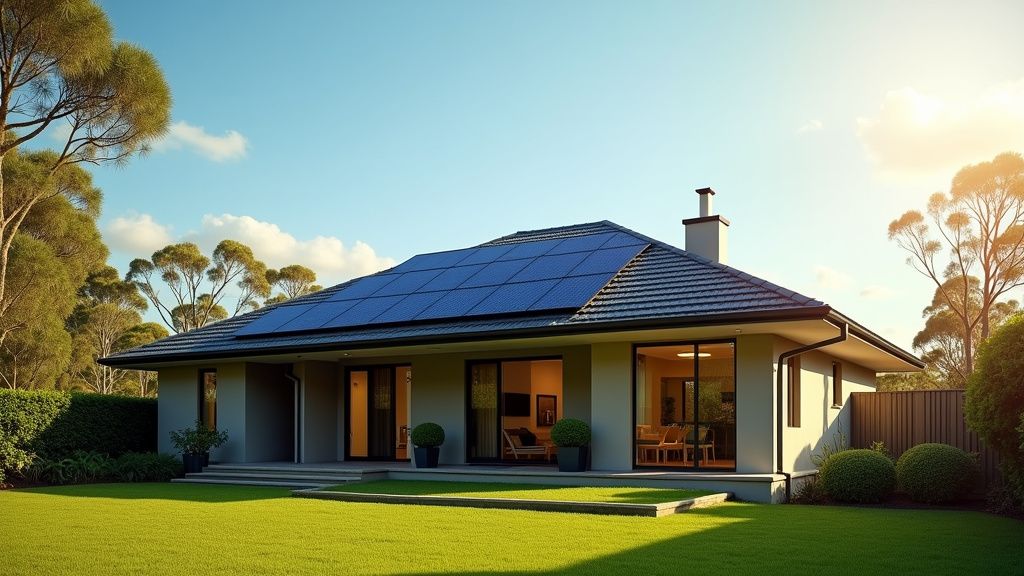
"# Don't Let the Dark Side Win: How Shade Steals Your Solar Power in Australia
G'day, fellow sun-lovers! Here in the Land Down Under, we're blessed with an abundance of sunshine, making Australia a prime candidate for harnessing the incredible power of solar energy. Many Aussies are embracing solar to power their homes and businesses, enjoying cleaner energy and often significant savings. But even in our famously sunny climate, a sneaky villain can lurk, quietly undermining your system's efficiency: shade.
Understanding how shade impacts your solar panels is crucial for maximising your investment and ensuring you get the most out of every ray of sunshine. For a deeper dive into optimising your solar charging, check out our Complete Guide. In this post, we'll explore the science behind shade's disruptive effect, identify common culprits, and discuss smart strategies to keep your solar system performing at its peak.
The Science Behind the Shade: Why a Little Shadow Means a Big Drop
Solar panels operate by converting sunlight into electricity. It sounds straightforward, right? However, the intricate design of most solar panels means that even a small amount of shade can have a disproportionately large impact.
Think of a solar panel as a team of interconnected solar cells, working together in a relay race. These cells are typically wired in a series, meaning the electricity flows from one cell to the next. If even a single cell is partially shaded, it's like one runner in the relay race stumbling. That shaded cell becomes a bottleneck, resisting the flow of electricity and dragging down the performance of the entire panel. The total output of the panel is then limited by the weakest link – the shaded cell. This isn't just a minor dip; it can significantly reduce the panel's overall electricity production, sometimes by a surprising amount, depending on the shade's intensity and duration.
Common Culprits: Where Do These Shadows Come From?
Shade isn't always obvious, and its sources can change throughout the day and year. For Australian homeowners, the most common culprits include:
1. The Green Giants: Trees
While trees offer wonderful environmental benefits, shade, and aesthetic appeal, their leafy canopies can become significant obstacles for solar panels. As trees grow taller or spread wider, their shadows can extend across your rooftop, particularly at different times of the day.
- Mitigation: Strategic placement during installation is key to avoiding existing tree shadows. For established trees, regular, mindful trimming can help keep their branches from encroaching on your solar array. Planning ahead and considering a tree's mature size is vital.
2. Neighbouring Structures: Buildings and Chimneys
The shadows cast by nearby buildings – whether your own chimney, an adjacent storey, or a neighbour's tall structure – can also diminish your solar panel efficiency. These shadows can be particularly problematic in urban or suburban settings with close-knit properties.
- Mitigation: During the planning phase of your solar installation, it's crucial to conduct a thorough shade analysis. This involves understanding the sun's path across your roof throughout the year and identifying potential obstructions from surrounding buildings. This allows installers to position panels optimally, minimising exposure to building-induced shade.
3. The Seasonal Dance: Australia's Changing Sun
Our distinct Australian seasons don't just affect the weather; they also influence how much shade impacts your solar panels.


- Summer: With longer daylight hours and the sun riding higher in the sky, summer typically sees higher electricity generation. Shadows are generally shorter and less pervasive.
- Winter: This is where shade can really become an issue. Shorter days mean less overall sunlight, and the sun's lower angle can cause objects that cast minimal shade in summer to create long, disruptive shadows across your panels. Increased cloud cover also contributes to lower output.
The Ripple Effect: Beyond a Single Panel
It’s not just about one shaded cell; the impact can ripple through your entire solar system. As mentioned, most solar panels are wired in series. Furthermore, many panels within a larger solar array are also connected in series. If one panel in the array is significantly shaded and produces less current, it acts like a bottleneck for all the other panels connected in that string. This can drag down the total electricity output of that entire section of your system, not just the one shaded panel. While shade reduces output, it doesn't entirely eliminate it, but the reduction can be substantial.
Smart Solutions for a Sunnier Outcome
While shade presents challenges, there are effective steps you can take to maximise your solar power generation:
- Strategic Design and Placement: This is paramount. Working with experienced solar professionals who conduct detailed site assessments and shade analyses will ensure your panels are positioned to capture the maximum available sunlight throughout the year. They can advise on optimal tilt angles and locations.
- Regular Maintenance: Keep an eye on your trees! Regular trimming of branches that might grow to shade your panels can make a significant difference.
- Embracing Technology: Shade-Tolerant Panels: The solar industry is constantly innovating. "Shade-tolerant" solar panels are an exciting development designed to minimise the impact of partial shading. These panels often incorporate features like bypass diodes, which can isolate shaded cells or sections, allowing current to flow around them rather than being blocked. This means the unshaded parts of the panel can continue to produce power efficiently, reducing the domino effect of shade. While still evolving, considering these panels could be a smart move for properties with unavoidable partial shading.
- Optimiser or Micro-Inverter Technology: These devices are installed at each individual solar panel. They allow each panel to operate independently, mitigating the system-wide drag caused by a single shaded panel. If one panel is shaded, the others can continue to produce power at their maximum potential, significantly improving overall system efficiency in shaded conditions.
Maximising Your Solar Journey with SolarInsights
Australia's abundant sunshine makes it an ideal place for solar power, but understanding and managing shade is a critical part of a successful solar journey. By being aware of potential shade sources and implementing smart planning and technological solutions, you can ensure your solar system delivers consistent, efficient, and clean energy to your home or business.
Ready to explore your solar options and discuss how to optimise for shade on your property? Consult with experienced solar professionals to get tailored advice and find the best solution for your unique Australian conditions.