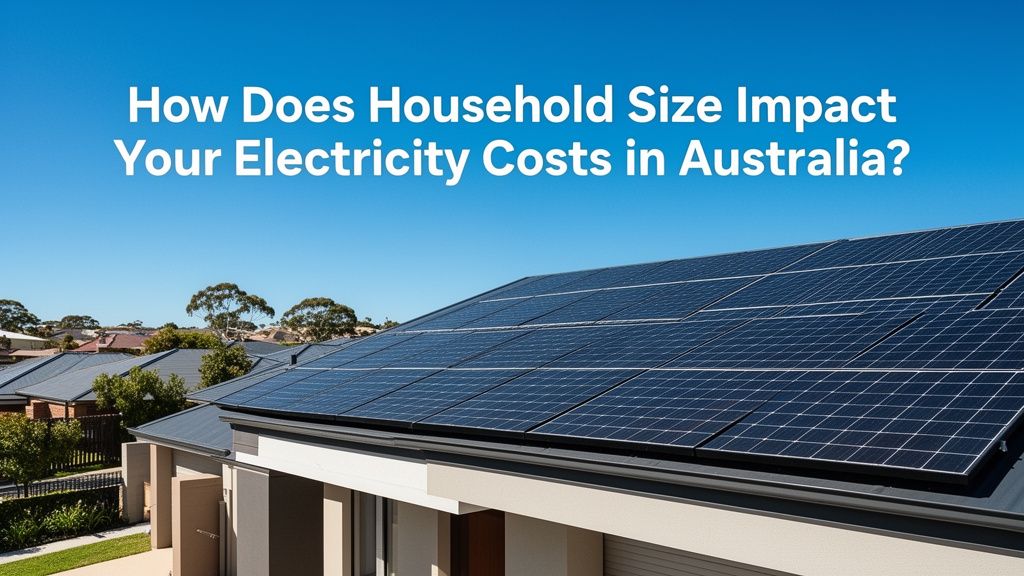
How Does Household Size Impact Your Electricity Costs in Australia?
The hum of the fridge, the whir of the washing machine, the glow of the TV – every appliance in your Aussie home contributes to your electricity bill. But have you ever stopped to consider just how much your household size influences that final figure? In a country known for its sunshine and increasingly for its rising cost of living, understanding this connection is crucial, especially when considering the benefits of solar power.
More People, More Power: The Obvious Connection
It's a simple truth: more people generally mean more electricity consumption. This isn't just about extra bodies in the house; it's about a cascade of related energy use.
Consider the appliances:
- Refrigeration: A larger household often means a larger fridge, or even a second fridge in the garage for extra drinks and food. Both consume more power.
- Laundry: A family of four will generate significantly more washing loads than a single person or a couple. More loads mean more use of the washing machine and dryer (a notorious energy guzzler).
- Hot Water: Showers, dishwashing, and general cleaning all rely on hot water. More people translate directly to more hot water usage, which is one of the biggest energy consumers in most Australian homes.
- Lighting and Entertainment: More rooms are likely to have lights on, more TVs or gaming consoles might be running simultaneously, and charging multiple phones, tablets, and laptops becomes the norm.
- Heating and Cooling: Larger homes often house larger families. Keeping multiple rooms warm in winter or cool in summer requires more energy, especially with multiple occupants having different temperature preferences.
Beyond the Obvious: Behavioural Factors
While the number of people directly influences appliance use, behavioural patterns also play a massive role in your electricity costs.
- Energy Habits: Are your housemates or kids diligent about turning off lights when they leave a room? Do they take excessively long showers? Individual habits, multiplied by household size, can significantly inflate your bill.
- Peak vs. Off-Peak Usage: When are people home? Larger households often have staggered schedules, meaning appliances might be used during expensive peak times. Conversely, a house full of people during the day could be perfectly positioned to maximise solar generation.
- Shared Responsibility: In larger share houses or multi-generational homes, there can sometimes be a 'not my bill' mentality, leading to less conscious energy use.
Typical Australian Household Electricity Costs (Estimates)
Let's look at some indicative monthly electricity costs for different household sizes in Australia, keeping in mind these are broad estimates and vary wildly by state, retailer, tariff, and actual usage habits. Electricity prices generally range from 25 to 40 cents per kilowatt-hour (kWh) across the country.
- Single Person: With mindful usage, a single person might spend $80 - $150 per month. They have a low base load, fewer appliances, and total control over their usage.
- Couple: A couple might see bills between $120 - $250 per month. Shared appliances increase use, but deliberate energy saving can keep costs down.
- Family (2 Adults, 2 Children): This is where costs typically jump significantly. Multiple devices, frequent laundry, hot water for four, and potential for more air conditioning use can push bills to $200 - $400+ per month.
- Larger/Multi-Generational Households: Homes with five or more occupants, or multi-generational living, often face the highest bills, potentially $350 - $600+ per month, due to the sheer volume of consumption.
How Solar Changes the Game for Every Household Size

This is where solar power truly shines as a game-changer for Australian homes. Regardless of your household size, solar offers a powerful way to take control of your electricity costs, but the strategy can differ.
- Smaller Households (Single/Couple): With lower consumption, a smaller solar system might generate more electricity than you use during the day. This excess can be exported back to the grid for a feed-in tariff (FIT), effectively earning you credits on your bill. A well-sized 3kW to 5kW system could drastically reduce or even eliminate your daytime grid usage.
- Family Households (2 Adults, 2 Kids): This size often presents the sweet spot for solar. High daytime usage, driven by school drop-offs and pick-ups, laundry, and general activity, means a larger portion of your generated solar electricity can be directly consumed. A 6.6kW to 8kW system is common for these families, aiming to offset a significant chunk of their daily energy needs.
- Larger/Multi-Generational Households: For these energy-intensive homes, solar is almost essential. A larger system (8kW+) is typically required to make a substantial dent in consumption. The key here is maximising self-consumption during the day. Given the high baseline usage, a significant amount of solar generation can be used directly, reducing reliance on the grid and leading to massive savings.
- The Power of Batteries: For any household, but especially larger ones with significant evening or night-time use, adding a battery storage system elevates solar's benefits. Excess solar generated during the day can be stored and used when the sun isn't shining, further reducing grid purchases and protecting against peak tariffs. This is particularly valuable for families who are often home and using appliances in the evenings.
Tips for Reducing Electricity Costs, No Matter Your Household Size
Even with solar, smart energy habits will maximise your savings:
- Embrace Energy Efficiency: Invest in efficient appliances (look for high star ratings) and LED lighting.
- Be Mindful of Hot Water: Take shorter showers, fix leaks, and consider a timer for your hot water system.
- Optimise Heating and Cooling: Set thermostats wisely, use ceiling fans, and ensure your home is well-insulated.
- Switch Off Standby Power: 'Phantom load' can add up. Turn off appliances at the wall when not in use.
- Monitor Your Usage: Many energy retailers offer apps or smart meters to track your consumption, helping you identify energy guzzlers.
The number of people under your roof undeniably dictates a large part of your electricity costs. From the constant hum of the fridge to the never-ending laundry pile, every extra person adds to your home's energy footprint. However, with strategic solar panel installation and potentially battery storage, Australian households of all sizes can transform their energy consumption from a financial drain into a sustainable, cost-saving asset. It's not just about producing power; it's about smarter living for a brighter, more affordable future.
Read More
For a comprehensive overview, check out our master guide: Read the Full Guide Here.