TL;DR: Australian home battery installations surged by an impressive 260% in the last year as households actively seek greater energy independence and financial savings. High electricity prices, significantly reduced feed-in tariffs, and the falling cost of battery technology drive this rapid adoption, enabling homeowners to store their self-generated solar energy and power their homes after dark.
Why Are Australian Home Battery Installations Surging by 260% Annually?
Australian home battery installations saw a massive 260% increase last year, driven by a combination of economic factors and a desire for greater energy autonomy. This dramatic growth reflects a significant shift in how Australians approach their household electricity consumption. Instead of merely generating power, many are now actively managing it. The value proposition of exporting solar power to the grid has diminished considerably, pushing homeowners towards solutions that maximise self-consumption. People realise that storing their own solar energy provides better financial returns and greater resilience than simply selling it back to the utility at a low rate. This behavioural change, coupled with technological advancements, fuels the current market expansion.
Declining Feed-in Tariffs and Rising Grid Prices
Most Australian energy retailers cut feed-in tariffs (FiTs) below 8c/kWh in 2024, with some even offering less than 5c/kWh. Simultaneously, retail electricity prices for importing power from the grid continue to climb, often reaching 30-45c/kWh, especially during peak evening hours. This creates a substantial discrepancy: you might sell your solar power for 7 cents and buy it back hours later for 35 cents. A home battery eliminates this financial imbalance by allowing you to store your excess daytime solar generation and use it when grid power is most expensive. This turns what would be a low-value export into a high-value self-consumption, directly impacting household budgets.
Improving Battery Technology and Falling Costs
The technology underpinning home battery systems has matured significantly over the past five years. Modern batteries boast longer lifespans, higher efficiency, and improved safety features. This progress allows manufacturers to offer extended warranties, typically 10 years or more, providing homeowners with confidence in their investment. Crucially, the cost of these systems has also decreased. A 10kWh battery system, including installation, that might have cost $15,000-$20,000 five years ago is now commonly available for $8,000-$14,000, depending on the brand and installation complexity. This combination of enhanced performance and reduced price makes batteries an increasingly attractive and accessible option for many Australian households.
How Do Home Batteries Empower Australian Households?
Home batteries empower Australian households by increasing energy self-sufficiency, significantly reducing electricity bills, and providing reliable blackout protection. This multifaceted benefit package appeals to a broad range of homeowners, from those prioritising savings to others seeking grid independence and security. The ability to control your energy flow, rather than simply being a passive consumer or exporter, defines this new level of empowerment. Households can optimise their energy usage based on their specific needs and local tariff structures, a level of control previously unattainable for most residential customers.
Maximising Self-Consumption and Bill Savings
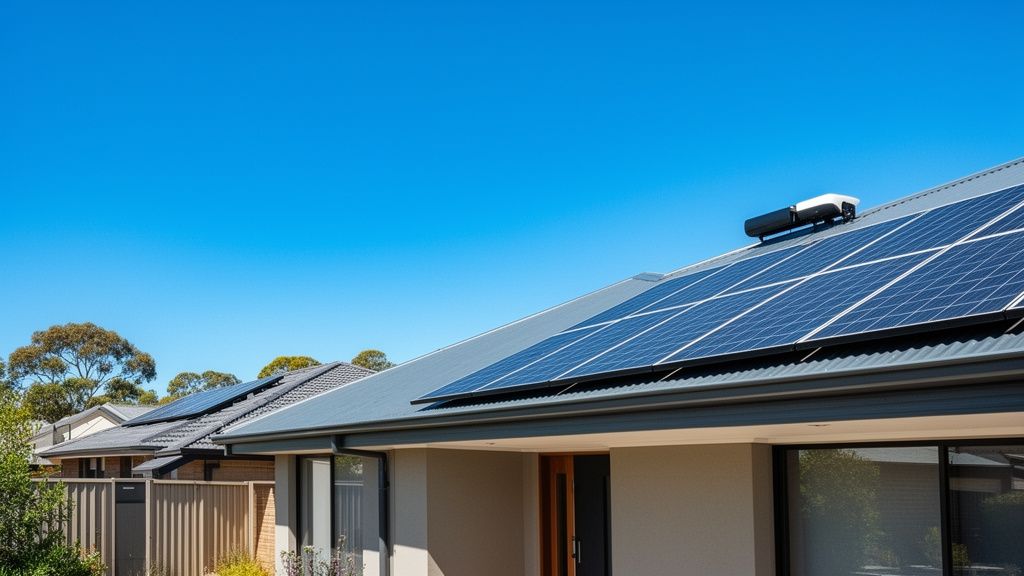
Installing a home battery system allows you to store the excess electricity your solar panels generate during the day, rather than exporting it for a low feed-in tariff. You then use this stored energy to power your home in the evening when the sun has set and electricity prices are typically highest. A household with solar panels alone might offset 40-60% of its grid electricity purchases. Adding a well-sized battery can push this figure to 70-90% or even higher, depending on the household's consumption patterns and system size. This direct reduction in imported grid electricity translates into substantial annual savings on your power bill, often hundreds or thousands of dollars each year.
Providing Backup Power During Outages
Many modern home battery systems offer a backup power function, protecting your household from grid outages. When the mains power supply fails, the battery automatically switches to provide electricity to a select set of essential circuits in your home, such as lights, refrigeration, and Wi-Fi. This means you maintain critical services during blackouts, avoiding spoiled food, lost internet connectivity, or dark evenings. It is important to note that not all battery systems automatically provide blackout protection; it requires specific inverter setups and additional wiring during installation. Homeowners considering this feature must discuss it explicitly with their solar installer to ensure the system is correctly designed and configured for backup functionality.
What Are the Typical Costs and Return on Investment for Home Batteries?
The typical cost for an installed home battery system in Australia ranges from $8,000 to $15,000, influenced by the battery's capacity, brand reputation, and the complexity of the installation. This upfront investment is substantial, but various factors, including government incentives and long-term savings, influence the overall return on investment. Payback periods vary significantly based on individual energy usage, local electricity tariffs, and any available subsidies. Understanding these financial aspects is crucial for homeowners making an informed decision about battery storage.
System Costs and Government Incentives
A popular 10-13kWh battery system, suitable for an average Australian family, generally costs between $10,000 and $14,000 fully installed. Leading brands like Tesla Powerwall, BYD, and LG Chem offer various capacities and features within this price range. Several state and territory governments offer incentives to help reduce these upfront costs. For example, the Victorian Solar Battery Rebate offers up to $1,400 towards battery installations, and South Australia provides low-interest loans through its Home Battery Scheme. These rebates and loans can significantly lower the net cost of a battery system, making the investment more accessible and improving its financial viability for homeowners across the country.

Calculating Payback Periods and Lifetime Value
Calculating a battery system's payback period involves dividing the net cost (after any rebates) by the estimated annual savings on your electricity bill. For most Australian households, a home battery system typically achieves payback within 6 to 12 years. This timeframe depends heavily on factors such as your specific electricity consumption patterns, the retail price of grid electricity, and your existing solar feed-in tariff. Beyond the simple payback, batteries offer considerable lifetime value. Most modern batteries come with a 10-year warranty, but many are designed to operate effectively for 15 years or more. Over its operational life, a battery provides consistent savings, energy independence, and peace of mind during outages, contributing significant long-term value to a household.
What Should Homeowners Consider Before Installing a Battery System?
Homeowners considering a battery system should carefully evaluate their energy usage patterns, assess their existing solar setup, and consider their future energy needs before committing to an installation. A well-planned battery system integrates seamlessly with your current energy infrastructure and provides the greatest benefits. Rushing into a purchase without proper assessment can lead to an undersized or oversized system, potentially limiting savings or incurring unnecessary costs. Taking the time to understand your specific requirements ensures an optimal and cost-effective energy storage solution for your home.
Sizing the Battery Correctly for Your Home
Correctly sizing a home battery is paramount for maximising its benefits. You need to match the battery's capacity to your typical evening energy consumption, the amount of excess solar energy you generate during the day, and your desired level of blackout protection. An average Australian family might consume 10-15kWh of electricity between sunset and sunrise. If your battery is too small, you will still import power from the grid during the evening. If it is too large, you might overcapitalise, paying for capacity you rarely use. A qualified solar professional assesses your historical energy bills and daily usage profiles to recommend the most appropriate battery size for your specific household needs.
Integration with Existing Solar and Grid Connection
The integration of a new battery system with your existing solar panels and grid connection requires careful planning. Some batteries are AC-coupled, meaning they connect to your home's alternating current (AC) supply, similar to how your solar inverter does. Others are DC-coupled, connecting directly to your solar panels' direct current (DC) output. The choice depends on your current inverter type and overall system design. Smart energy management systems often accompany battery installations, optimising charge and discharge cycles based on real-time electricity prices, weather forecasts, and your household's energy demand. Always ensure your installer checks local network distributor rules and obtains necessary approvals for grid connection, as regulations vary across different regions of Australia.
Key Takeaways
- Australian home battery installations surged by 260% last year, driven by economic incentives and a desire for energy independence.
- Low feed-in tariffs and high grid electricity prices make storing solar energy more financially attractive than exporting it.
- Modern battery technology offers improved efficiency, longer lifespans, and decreasing costs, making systems more accessible.
- Home batteries reduce electricity bills significantly by maximising solar self-consumption, potentially cutting grid imports by 70-90%.
- Many battery systems provide essential backup power during blackouts, offering security and peace of mind.
- Installed battery system costs typically range from $8,000 to $15,000, with payback periods often between 6 and 12 years, supported by state incentives.
Read More
For a comprehensive overview, check out our master guide: Read the Full Guide Here.