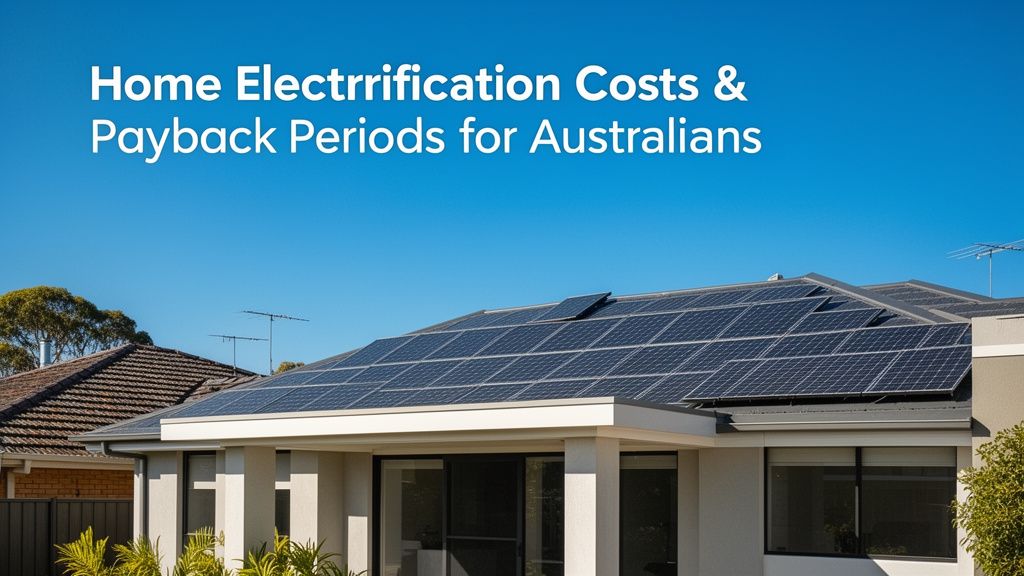
TL;DR: Australian households electrifying their homes typically spend between $15,000 and $35,000 for solar, batteries, and heat pump hot water systems. Payback periods vary, with solar-only systems often breaking even in 3-6 years, while full electrification with a battery can take 7-12 years due to higher upfront costs.
What are the Typical Costs for Electrifying an Australian Home?
Electrifying your home means replacing gas appliances with electric alternatives, powered predominantly by solar energy. For most Australian homes, this transformation usually includes installing a solar PV system, a battery for energy storage, and a heat pump hot water system. The total investment for these key components often ranges from $15,000 to $35,000, depending on system sizes and chosen brands. These figures reflect prices after claiming federal Small-scale Technology Certificates (STCs) for solar and heat pumps, and any available state-based battery rebates. The initial outlay changes based on the scale of your existing gas use and how thoroughly you want to decarbonise your energy consumption.
The Investment in Solar PV and Batteries
A standard 6.6kW solar PV system, suitable for an average Australian family, costs around $5,000 to $8,000 after STCs. For larger households or those planning to power an electric vehicle, a 10kW system might be necessary, pushing the solar cost to $7,000-$12,000 after STCs. Adding a battery significantly increases the upfront cost. A 10kWh to 13kWh home battery system, common for optimising solar self-consumption, typically costs $8,000 to $15,000. This price can be lower in states like Victoria or NSW, which offer additional rebates, effectively reducing the net cost by several thousand dollars for eligible homes. The choice of battery size depends on daily energy usage patterns and how much grid independence you aim for.
Heat Pumps and Other Electric Appliances
Replacing a gas hot water system with an efficient heat pump generally costs between $3,000 and $6,000, including installation. Federal STCs often reduce this price by about $800 to $1,500, making the upgrade more affordable. Many state governments also provide incentives for heat pump installations, sometimes cutting the cost by another $500 to $1,000. Upgrading to an induction cooktop, if you currently use gas cooking, usually costs $1,000 to $4,000 for the appliance itself, plus potential electrician fees for circuit upgrades. Electrifying your heating and cooling with efficient reverse cycle air conditioners can also be part of the package, though many homes already have these.
How Does Solar PV Impact Electrification Payback Periods?
Solar PV directly shortens the payback period for home electrification by generating free electricity and reducing your reliance on grid power. Without solar, the cost savings from switching to electric appliances would only come from the difference in utility rates and appliance efficiency. When you combine electric appliances with a solar system, you power those new appliances with sunshine, drastically cutting down on electricity bills and eliminating gas bills entirely. This significantly accelerates the financial return on your investment.
Calculating Solar-Only Payback
A standalone 6.6kW solar system in a typical Australian home often breaks even in 3 to 6 years. This calculation considers the initial investment after STCs, the average daily electricity consumption offset, and current grid electricity prices (e.g., 30-40 cents/kWh). For example, a system costing $6,000 that saves a household $1,500 per year on electricity bills will pay for itself in four years. Higher electricity usage and rising power prices directly reduce the payback time because the solar system prevents you from buying expensive power from the grid. Feed-in tariffs also contribute, though their value has generally declined to 5-8 cents per kWh in most states.
Payback with Solar and Battery Systems
Adding a battery extends the payback period compared to a solar-only setup, primarily due to the battery's higher upfront cost. A solar and 10kWh battery system costing $18,000 might save a household $2,500 annually by maximising self-consumption and reducing peak-rate grid purchases. This scenario translates to a payback period of approximately 7 to 9 years. State battery rebates can substantially improve this, potentially shaving a year or two off the payback. Batteries offer resilience during blackouts and improve self-sufficiency, but their financial return is typically longer than solar PV alone. The rising cost of electricity and the potential for household energy tariffs to favour self-consumption improve the long-term economics of battery storage.

What Factors Influence the Electrification Break-Even Point?
The break-even point for a fully electrified Australian home depends on several key variables. These include the initial capital outlay, current and future energy prices, household energy consumption patterns, and the availability of government incentives. Each element plays a substantial role in determining how quickly you recover your investment and start seeing net savings. Understanding these factors helps homeowners make informed decisions about their electrification journey.
Energy Prices and Consumption Habits
Higher electricity prices significantly shorten the payback period for electrification. If you pay 35 cents/kWh for grid power and generate your own electricity for free, the savings accumulate faster. Similarly, if your household consumes a large amount of energy, particularly during peak times, the financial benefits of solar and battery storage become more pronounced. Electrifying with efficient appliances like heat pumps, which use less energy than traditional electric or gas alternatives, further reduces consumption and accelerates savings. Conversely, a household with low energy usage will see a longer payback because the absolute dollar savings are smaller, despite the percentage reduction in bills remaining high.
Government Incentives and System Size
Government incentives, such as federal STCs and state-specific rebates for batteries or heat pumps, directly reduce the upfront cost of electrification projects. A $4,000 rebate on a battery reduces the total cost of a solar-plus-battery system by the same amount, cutting years off the payback period. Homeowners should actively research and claim all available subsidies. The size of your solar and battery system also impacts the break-even point. Oversizing a system beyond your needs increases the initial cost without a proportional increase in savings, extending payback. Conversely, an undersized system might not cover enough of your energy demand, leaving you reliant on expensive grid power and slowing the return on investment. Matching system size to your actual and projected energy use is critical for optimal financial outcomes.
Key Takeaways
- Full home electrification (solar, battery, heat pump) costs Australian households $15,000 to $35,000 after incentives.
- Solar PV systems typically break even in 3-6 years, offering the quickest financial return.
- Adding a home battery extends payback to 7-12 years, but increases self-sufficiency and resilience.
- Rising grid electricity prices and available government rebates significantly reduce electrification payback periods.
- Matching your solar and battery system size to your household's specific energy consumption is crucial for optimal financial outcomes.
Read More
For a comprehensive overview, check out our master guide: Read the Full Guide Here.