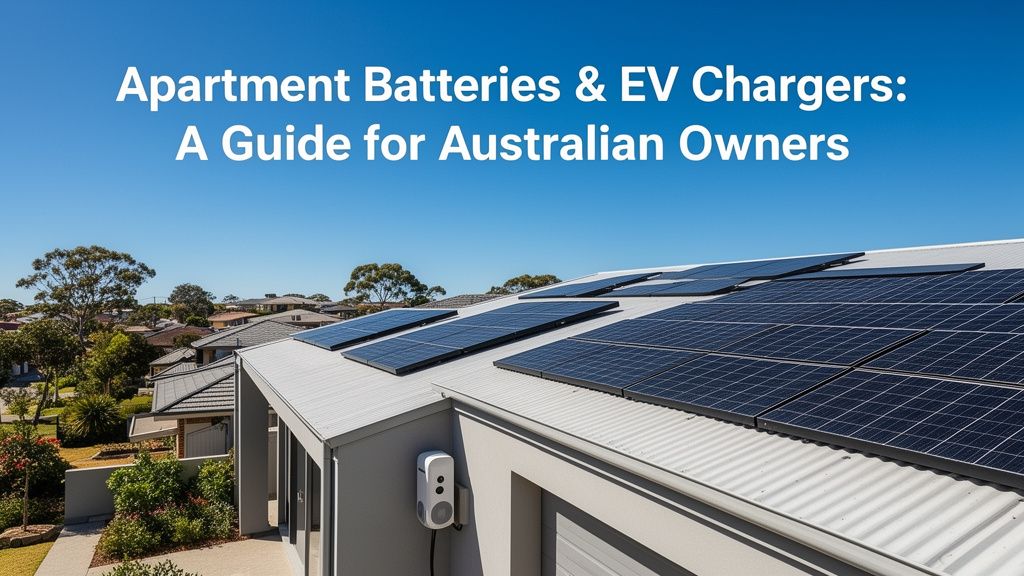
TL;DR: Apartment dwellers can future-proof their homes by embracing shared or individual battery storage and EV charging, overcoming common challenges through smart planning, body corporate engagement, and understanding available technologies. These upgrades enhance sustainability, reduce energy costs, and boost property value in multi-unit dwellings, making them future-ready.
Why Are Batteries and EV Chargers Essential for Apartment Living in Australia?
Batteries and EV chargers are becoming essential for apartment living in Australia due to escalating energy costs, the rapid shift to electric vehicles, and a growing demand for sustainable, resilient homes. As the national grid faces increasing pressure and fuel prices fluctuate, having the ability to store energy and charge an electric vehicle at home transitions from a luxury to a practical necessity. These technologies empower residents to take control of their energy consumption, reduce reliance on grid power during peak pricing, and significantly lower their carbon footprint. Furthermore, properties equipped with these modern amenities are increasingly attractive to tenants and buyers, boosting overall property value in a competitive market. Embracing these innovations ensures apartment buildings remain relevant and desirable in an evolving energy landscape.
Addressing Soaring Energy Costs
Integrating battery storage into apartment buildings directly combats Australia's rising electricity prices. A shared battery system, for instance, can store cheap solar power generated from common area rooftop panels during the day or draw off-peak grid electricity overnight. This stored energy is then deployed during expensive peak demand periods, typically in the late afternoon and early evening, when grid power can cost significantly more – sometimes up to 40-50 cents per kilowatt-hour ($/kWh). For individual residents, this translates to lower power bills and increased energy independence. For the building as a whole, it can reduce common area electricity expenses and potentially create a new revenue stream through participation in virtual power plants.
Meeting the Electric Vehicle Revolution
The accelerating adoption of electric vehicles (EVs) across Australia makes on-site charging solutions indispensable for apartment buildings. While public charging infrastructure is expanding, the convenience, cost-effectiveness, and reliability of home charging are unparalleled for daily commuters. Residents typically charge their EVs overnight or during the day while at home, meaning apartment buildings without adequate charging points will soon struggle to attract and retain EV-owning tenants. Providing this amenity not only caters to current EV owners but also future-proofs the building for the anticipated surge in EV uptake, ensuring it remains a competitive and modern living choice.
What Challenges Do Apartment Dwellers Face When Installing These Technologies?
Apartment dwellers encounter significant challenges when installing batteries and EV chargers, primarily related to body corporate approvals, shared infrastructure capacity, limited space, and equitable cost allocation. Unlike standalone homes, multi-unit dwellings involve common property, complex ownership structures, and the need for collective decision-making, which can slow down or even prevent the adoption of new technologies. Understanding and proactively addressing these hurdles is crucial for successful implementation. Without careful planning and robust communication, these projects can become bogged down in bureaucracy or face resistance from other residents.
Navigating Body Corporate Approvals and Bylaws
The primary hurdle for any significant modification in an apartment building is securing body corporate approval. Most battery and EV charger installations involve common property, such as shared car parks, rooftop space for solar, or electrical infrastructure. This requires presenting a compelling case to the body corporate, demonstrating the benefits, addressing potential concerns (e.g., safety, noise, aesthetics), and often amending bylaws. A clear proposal outlining costs, benefits, and implementation plans is essential. Engaging a specialist consultant who understands both solar/EV technologies and strata law can significantly streamline this process and ensure compliance with all regulations.
Overcoming Infrastructure and Space Hurdles
Many older apartment buildings were not designed with the electrical capacity required for modern energy demands, let alone for multiple EV chargers or large battery systems. Upgrading the main switchboard, wiring, and potentially the grid connection can be a substantial undertaking and expense. Furthermore, finding adequate, safe, and accessible space for battery banks (which can be quite large) and EV charging stations (with their associated cabling) within an already dense urban environment poses a significant challenge. Creative solutions, such as wall-mounted chargers, compact battery units, and utilising underutilised common areas, may be necessary. An electrical engineer's assessment is vital to determine feasibility and identify required upgrades.
What Battery Storage Solutions Are Feasible for Multi-Unit Dwellings?
Feasible battery storage solutions for multi-unit dwellings range from centralised community batteries to individual apartment batteries, each offering distinct advantages for energy management and cost savings. The choice of solution largely depends on the building's physical characteristics, existing infrastructure, and the collective appetite of the residents and body corporate for shared investments. While individual apartment batteries are often limited by space and access to dedicated solar, centralised systems leverage economies of scale and simplify management, making them a more common and often more practical choice for multi-unit living in Australia.
Centralised Community Battery Systems
A centralised community battery system is typically the most practical and cost-effective solution for apartment buildings. This involves a single, larger battery bank – often 30kWh to 100kWh or more – located in a common area like a basement or service room. This system can be paired with a common area solar installation (e.g., on the rooftop) to store excess solar generation, or it can be charged from the grid during off-peak hours at a lower rate (e.g., 15-20 cents/kWh) and discharged during peak times (e.g., 35-50 cents/kWh). The stored energy can then be used to power common areas, or through smart metering, distributed back to individual apartments. A system for a medium-sized apartment building might range from $30,000 to $100,000+ installed, with costs shared among residents.


Exploring Individual Battery Options and VPPs
Individual apartment batteries are less common but can be feasible in specific scenarios, such as new developments designed with in-apartment battery niches or apartments with direct rooftop solar access. These batteries are smaller, typically 5-10kWh, costing around $8,000 to $15,000 installed. While they offer direct control to the apartment owner, they are limited by the individual apartment's electricity demand and often lack the efficiency of larger shared systems. Another option is participation in Virtual Power Plants (VPPs). A VPP aggregates multiple smaller, individually owned batteries (or even shared community batteries) to act as a single, larger power plant. Participants earn credits or payments for allowing their battery to be dispatched by the VPP operator to support the grid during peak demand, offering a financial incentive for battery ownership even in an apartment context.
How Can Apartment Buildings Effectively Integrate EV Charging Infrastructure?
Effectively integrating EV charging infrastructure in apartment buildings requires careful planning, assessing communal versus individual charging needs, and considering smart management systems to handle power demand. The goal is to provide convenient, reliable, and cost-effective charging for residents while avoiding expensive electrical upgrades or overloading the building's existing power supply. A phased approach, starting with a few communal chargers and expanding as demand grows, is often a pragmatic strategy for apartment complexes looking to future-proof their parking facilities.
Implementing Shared or Dedicated Charging Stations
Apartment buildings can opt for shared or dedicated EV charging stations. Shared Level 2 chargers (typically 7-22kW), often located in visitor parking or communal areas, are a cost-effective starting point. These can fully charge most EVs overnight and can be managed with booking systems and pay-per-use apps, with costs around $1,500 - $3,000 per charger, plus installation of supporting infrastructure. Dedicated chargers, installed in individual resident parking bays, offer maximum convenience but require more extensive electrical upgrades to supply power to each bay. A hybrid approach, offering a few shared chargers initially and the option for residents to install dedicated chargers (at their own expense, following body corporate guidelines), balances flexibility with initial investment.
Leveraging Smart Charging and Funding Opportunities
Smart charging technology is paramount for multi-unit dwellings to prevent overloading the building's electrical infrastructure, especially during peak times when multiple EVs might be charging simultaneously. These systems can dynamically manage power distribution, prioritising charging or slowing it down based on overall building load and individual vehicle needs. This avoids costly upgrades to the main power supply. Additionally, Australian state governments sometimes offer grants or incentives to strata bodies for installing EV charging infrastructure. For example, some states have provided rebates or grants to assist with shared charging infrastructure in multi-unit dwellings. Investigating these programs can significantly offset the initial investment, making these essential upgrades more financially viable for apartment communities.
Key Takeaways
- Engage your body corporate early with a detailed proposal outlining benefits and costs for battery and EV charger installations.
- Assess your building's existing electrical infrastructure to understand potential upgrade requirements for new energy technologies.
- Consider centralised community battery systems as a more practical and cost-effective solution for apartment-wide energy storage.
- Implement smart charging solutions for EVs to manage power demand and avoid expensive electrical upgrades.
- Research available state government grants and incentives to reduce the financial burden of installing sustainable infrastructure.
Read More
For a comprehensive overview, check out our master guide: Read the Full Guide Here.


