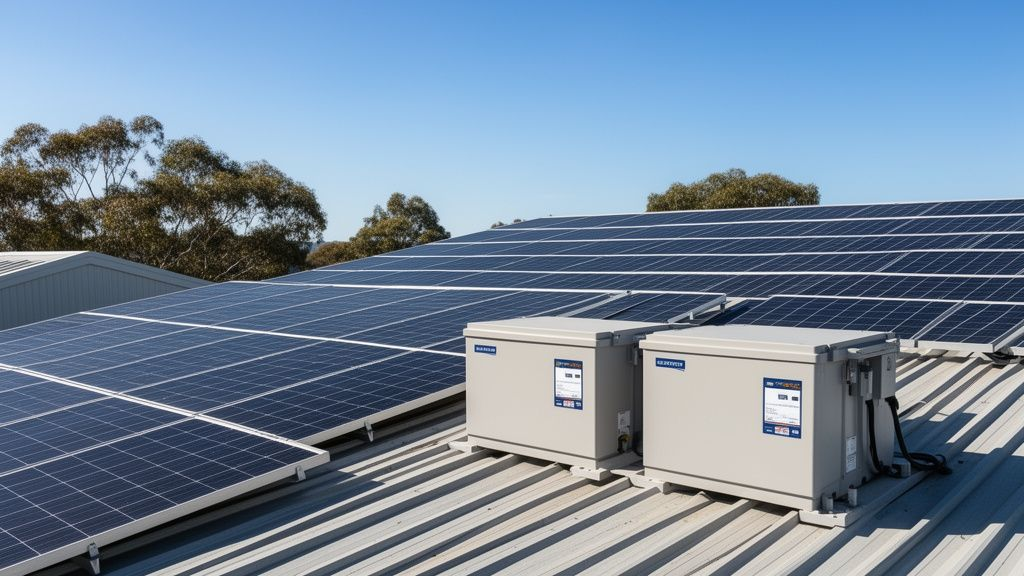
TL;DR: Stand-Alone Power Systems (SAPS) and hybrid solar-diesel-battery setups are increasingly vital for providing reliable, clean energy to remote locations. These systems operate by generating D.C. power from solar panels to charge advanced, scalable battery banks, which is then converted to A.C. power for local consumption. Real-world tenders across Australia and New Zealand emphasize the demand for highly efficient hybrid configurations that optimize fuel efficiency and dramatically reduce dependency on diesel generators, utilizing advanced components from brands like Deye ESS, SAJ, and AlphaESS.
The Fundamentals of Stand-Alone Power Systems (SAPS)
For remote properties, regional agricultural facilities, and off-grid communities, connecting to the main electrical grid is often economically and physically impractical. In these scenarios, Stand-Alone Power Systems (SAPS)—commonly referred to as off-grid systems—provide a highly reliable, self-sufficient energy solution.
According to industry specifications from Solar Link Australia, off-grid SAPS operate via a straightforward but highly efficient thermodynamic and electrical cycle. The system generates power directly from solar photovoltaic (PV) panels. This generated power is stored as Direct Current (D.C.) within a dedicated battery storage bank. To make this stored energy usable for standard appliances and machinery, an off-grid inverter converts the D.C. electricity into Alternating Current (A.C.) power, which is then routed directly to standard wall outlets and distribution boards. This independent cycle ensures a continuous, reliable power supply without relying on external grid infrastructure.
Hybrid Power Systems: Combining Solar, Diesel, and Batteries
While solar-and-battery configurations are highly effective, prolonged periods of low sunlight or exceptionally high energy demands can strain purely solar-reliant off-grid systems. To ensure absolute energy security, modern off-grid engineering frequently utilizes hybrid power systems.
This hybrid approach is highlighted in recent public and private sector procurement activities across Australia and New Zealand. According to data from Australian Tenders, there is active procurement and design-and-construct tendering for hybrid solar-diesel-battery power systems. These tenders specifically call for engineering solutions designed to optimize overall energy efficiency and minimize reliance on expensive, carbon-intensive diesel fuel.
In a typical hybrid configuration, the solar array serves as the primary generator, feeding power to the household or commercial load while simultaneously charging the battery storage bank. The diesel generator acts as a dynamic backup, programmed to automatically start only when the battery bank's state of charge drops below a pre-set threshold or when the load exceeds the maximum output of the inverter. By combining these three technologies, operators ensure 24/7 power reliability while drastically reducing fuel transport costs, generator wear and tear, and localized carbon emissions.


Scalable Battery Technologies for Off-Grid Performance
The viability of any SAPS or hybrid system depends on the durability, safety, and efficiency of its battery storage core. Lead-acid batteries, once the standard for off-grid power, have largely been replaced by modern high-voltage Lithium Iron Phosphate (LiFePO4) chemistry.
Advanced battery systems, such as the Deye ESS Storage Solution, are designed precisely for these demanding, multi-scenario off-grid applications. The Deye system offers a highly scalable high-voltage storage range from 7.68 kWh up to 15.36 kWh, built with an ultra-rigid structure and high-efficiency 16BB cells. It also integrates real-time data monitoring and smart load controls, allowing operators to prioritize critical off-grid loads during low-generation periods. Other prominent choices for robust off-grid configurations include the SAJ HS2 Series Three-Phase Hybrid All-In-One Solution, which minimizes installation space by housing the battery and inverter in a single unit, and AlphaESS’s AC Coupled G3-S5 and G3-B5 systems, which offer long-term reliability and easy integration into existing remote setups.
Implementing Certified Off-Grid Infrastructure
Designing a Stand-Alone Power System requires highly precise load calculations and professional installation. Unlike grid-connected systems, an undersized off-grid system can result in immediate power blackouts. Solar Link Australia, an established Clean Energy Council (CEC) Approved Solar Retailer and New Energy Tech Approved Solar Seller (NETCC) since 2010, emphasizes that off-grid systems must be tailored to the specific energy consumption patterns of each property. To make these capital-intensive systems more accessible, certified installers often offer flexible finance pathways, including "Install Now Pay Later" programs starting from $1.99 per day, helping regional properties transition away from fossil-fuel dependence.
Key Takeaways
- SAPS Operation: Stand-Alone Power Systems generate clean energy via solar panels, store it as D.C. electricity in a battery bank, and convert it to A.C. power for immediate local consumption.
- Hybrid Optimization: Combining solar, diesel generators, and batteries allows off-grid operators to achieve maximum fuel efficiency and uninterrupted 24/7 power.
- Tender Trends: Public and private tenders across Australia and New Zealand are actively prioritizing hybrid solar-diesel-battery systems to reduce diesel fuel dependency.
- Advanced Chemistry: High-voltage LiFePO4 battery systems, such as the Deye ESS (scalable from 7.68 to 15.36 kWh), offer the necessary thermal stability and smart load controls required for off-grid operations.
- Accredited Planning: Off-grid systems demand precise sizing and must be installed by certified CEC/NETCC retailers to ensure safety and system longevity.


