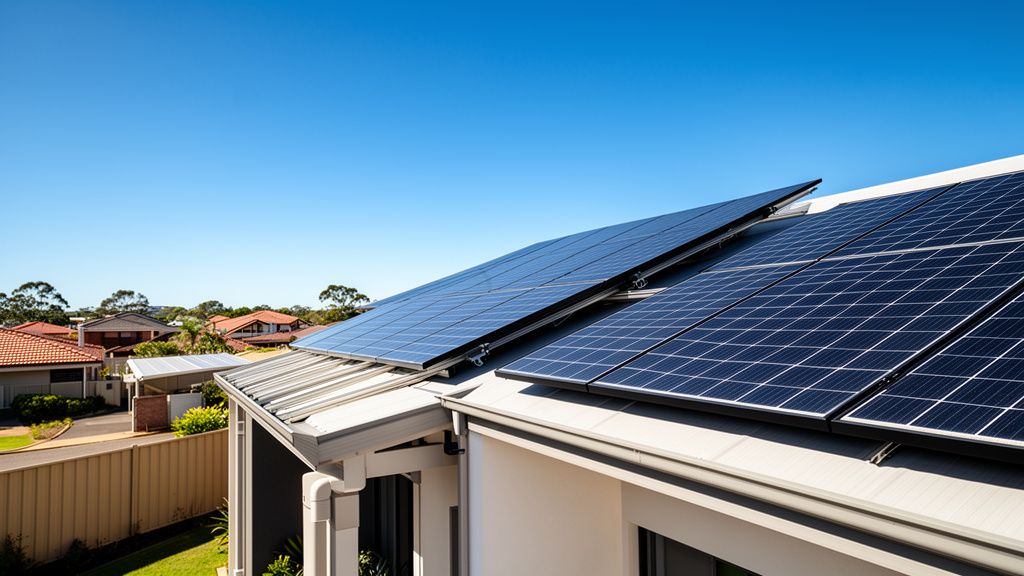
TL;DR: For Australian homes with roof angles not ideal for solar, tilt frames can significantly boost energy generation by optimising panel orientation, while battery backup ensures continuous power supply when generation is low, particularly after sundown or during grid outages.
How Do Tilt Frames Improve Solar Panel Performance on Non-Ideal Roofs?
Tilt frames enhance solar panel performance on non-ideal roofs by physically adjusting the panel angle to face the sun more directly, increasing energy capture throughout the day and year. While a north-facing roof with a pitch around 20-30 degrees is generally considered optimal for year-round solar generation in most of Australia, many homes simply don't have this luxury. Flat roofs, low-pitch roofs, or those primarily facing east or west can see significant drops in efficiency. Tilt frames allow installers to elevate the panels and set them at a more effective angle, essentially mimicking an ideal roof pitch. This simple adjustment ensures the panels receive maximum sunlight exposure for longer periods, rather than just during peak noon hours or specific seasons, leading to a substantial uplift in daily energy production.
The Impact of Optimal Tilt on Energy Production
The angle at which solar panels are installed profoundly impacts their energy output. Panels that are too flat or too steep, or those oriented away from true north, will consistently underperform compared to optimally angled installations. For instance, a flat roof without tilt frames might lose 15-25% of its potential annual energy generation, particularly during winter months when the sun is lower in the sky. East or west-facing panels, while still valuable, produce less overall energy than north-facing ones, but can benefit from tilt to capture more sunlight during their peak morning or afternoon periods. By setting panels at an optimal angle, which is typically close to your latitude for year-round generation (e.g., around 35 degrees for Sydney), tilt frames can recover much of this lost potential, delivering more kilowatt-hours (kWh) back to your home or the grid.
Types of Tilt Frames and Their Application
There are primarily two types of tilt frames used in Australian solar installations: fixed tilt and adjustable tilt. Fixed tilt frames are by far the most common for residential setups, designed to permanently set the panels at a chosen angle – usually one optimised for the best year-round output or a specific seasonal bias (e.g., slightly steeper for winter output). These are straightforward to install on flat roofs, low-pitched roofs, or ground mounts. Adjustable tilt frames, while less common for homes, allow the angle of the panels to be manually changed seasonally, offering maximum flexibility. However, the added cost and effort of manual adjustments mean they are usually reserved for larger commercial projects or specific niche applications where maximising output at all times is paramount.
What Are the Costs and Benefits of Installing Solar Tilt Frames in Australia?
Installing solar tilt frames in Australia typically adds to the upfront cost but offers substantial benefits through increased energy generation, faster payback, and enhanced system efficiency. While the standard cost of a 6.6kW solar system might range from $5,000 to $9,000 fully installed without tilt, adding tilt frames will push this price up. However, for homes where the roof simply isn't suited for standard flush mounting, this additional investment isn't just a luxury; it's often a necessity to make the solar system worthwhile. The increased energy production directly translates into higher savings on electricity bills and/or greater income from feed-in tariffs, significantly improving the overall financial performance of your solar investment over its 25+ year lifespan.
Understanding the Added Investment for Tilt Frames
The added investment for solar tilt frames varies depending on the system size, the complexity of the roof, and the type of frame used. Generally, you can expect an additional cost of $50-$150 per panel, or roughly $500-$1,500 for a typical 6.6kW residential system. This covers the cost of the aluminium or stainless steel framing materials, specialised fasteners, and the extra labour involved in assembling and securing the elevated structure. For very large systems or complex installations on uneven surfaces, these costs could be higher. It’s important to get a detailed quote from your installer that breaks down the additional expenses associated with tilt frames to ensure you understand the full financial commitment.
The Return on Investment from Enhanced Generation
The return on investment from tilt frames comes directly from the enhanced energy generation. By improving your system's efficiency by an estimated 10-25% annually, a 6.6kW system that might otherwise generate 20 kWh per day could instead produce 22-25 kWh per day with optimal tilt. Over a year, this can amount to hundreds, if not thousands, of additional kilowatt-hours. At an average electricity cost of $0.30/kWh (or feed-in tariff of $0.07/kWh), these extra kWh quickly add up, offsetting the initial cost of the tilt frames. This accelerated savings means your solar system reaches its payback period much faster, allowing you to enjoy pure profit from your solar investment for a longer duration.
When Is Backup Power Essential for Australian Homes with Suboptimal Solar Angles?
Backup power becomes essential for Australian homes with suboptimal solar angles to maintain electricity supply during periods of low generation, such as at night, on heavily overcast days, or during grid outages. While tilt frames help maximise production during daylight hours, they cannot make the sun shine at night or through a torrential downpour. Suboptimal angles often mean more pronounced dips in power generation outside of peak sunlight hours. Therefore, a reliable backup power solution, typically in the form of a battery storage system, is crucial to bridge these gaps, ensuring your home has continuous, uninterrupted access to electricity, regardless of solar output or grid availability.
Addressing Intermittent Generation and Night-Time Needs
Homes with suboptimal solar angles often experience more significant fluctuations in daily energy production. For instance, an east-facing system generates strongly in the morning but drops off dramatically by early afternoon, while a west-facing system peaks later in the day. Both scenarios mean a shorter window of high production. Battery storage mitigates this intermittency by capturing excess energy during these peak periods. Critically, batteries also address the universal challenge of night-time energy demand. Once the sun sets, no solar system generates power. A battery stores enough daytime energy to power your home through the night, reducing reliance on expensive grid electricity and maximising your self-consumption, even with tricky roof angles.
The Critical Role of Backup During Grid Outages
Beyond managing daily intermittency, battery storage provides critical backup during grid outages, a feature standard grid-tied solar systems cannot offer. For safety reasons, a typical solar system automatically shuts down when the grid fails, leaving you in the dark even if the sun is shining. However, a solar battery system equipped with a suitable inverter and automatic transfer switch can seamlessly disconnect your home from the grid during a blackout. It then continues to power essential circuits using stored battery energy and any ongoing solar generation. This "blackout protection" is invaluable in areas prone to grid instability, providing peace of mind and ensuring continuity for critical appliances like refrigerators, lighting, and medical devices.


How Do Battery Storage Systems Provide Reliable Backup for Intermittent Solar?
Battery storage systems provide reliable backup for intermittent solar by storing excess energy generated during peak sunshine hours and discharging it to power the home when solar production is low or absent. Essentially, the battery acts as an energy reservoir. When your solar panels produce more electricity than your home is consuming, the surplus is directed to the battery for storage instead of being exported to the grid for a low feed-in tariff. Later, when solar generation drops (e.g., at night, on a cloudy day, or during a blackout), the stored energy is automatically released to power your home, ensuring a consistent and self-sufficient electricity supply.
Sizing and Cost Considerations for Australian Batteries
Choosing the right size battery for your Australian home involves balancing your energy consumption patterns, desired backup duration, and budget. Residential battery capacities typically range from 5kWh to 15kWh. A smaller 5-7kWh battery might cover evening peak usage for a smaller household, while a 10-15kWh unit could provide substantial blackout protection for a larger family. The installed cost of a quality battery system, such as a Tesla Powerwall or an LG Chem RESU, can range from $8,000 to $15,000 in Australia, depending on size and installation complexity. It’s worth noting that some states, like Victoria, offer solar battery rebates which can significantly reduce the upfront investment, making battery storage more accessible.
Seamless Integration for Uninterrupted Power
Modern battery storage systems are designed for seamless integration with your existing or new solar setup, ensuring uninterrupted power. This is typically achieved through a hybrid inverter, which manages both solar generation and battery charging/discharging, or a separate battery inverter. These intelligent systems constantly monitor your home's energy demand, solar production, and grid status. When the grid experiences an outage, the system automatically disconnects and switches to battery power within milliseconds, often so fast you won't even notice. This advanced energy management not only provides backup but also optimises energy flows to maximise self-consumption, reducing your reliance on grid power and helping you make the most of every ray of sunshine, even with less-than-perfect panel angles.
Key Takeaways
- Tilt frames are crucial for optimising solar panel performance on flat, low-pitch, or non-north-facing Australian roofs.
- Investing in tilt frames, typically $500-$1,500 for a 6.6kW system, can boost annual energy generation by 10-25%, leading to faster system payback.
- Battery storage provides essential backup for homes with suboptimal solar angles, ensuring power at night, during cloudy periods, and especially during grid outages.
- A residential solar battery, costing $8,000-$15,000 (before potential rebates), stores excess solar energy for seamless, uninterrupted power when needed.
- Combine tilt frames with battery storage for a robust solar solution that maximises generation and ensures power reliability, even in challenging installation scenarios.
Read More
For a comprehensive overview, check out our master guide: Read the Full Guide Here.