TL;DR: Selecting Canadian Solar panels means matching panel series and specifications to your project's scale and energy needs. Residential installs favour compact, aesthetically pleasing panels, while commercial projects prioritise high-power output and robust design for maximum return on investment.
What makes Canadian Solar panels a good choice for Australian projects?
Canadian Solar panels offer a strong combination of performance, reliability, and value, making them a popular option across Australia. They are a Tier 1 manufacturer, which means they consistently invest in R&D, have a high level of automation in their manufacturing, and demonstrate financial stability. This status gives consumers and businesses confidence in their long-term warranties and product quality. Their range of panels often feature advanced cell technologies like PERC (Passivated Emitter Rear Cell) and half-cut cells, which improve efficiency and reduce the impact of shading.
How do Canadian Solar's technology and warranties benefit different users?
Canadian Solar's commitment to technology means their panels perform well in Australian conditions, including high temperatures. Their multi-busbar technology and robust frame designs ensure durability and good performance even in harsh weather. Most Canadian Solar panels come with a 12-year product warranty and a 25-year linear power output warranty, guaranteeing a minimum of 84.5% power output by year 25. For homeowners, this translates to peace of mind and consistent energy savings over decades. For commercial users, the strong warranty package reduces financial risk and supports long-term return on investment calculations for large-scale installations.
How do residential solar project needs differ from commercial ones?
Residential solar projects typically focus on offsetting household electricity bills, often prioritising aesthetics, roof space optimisation, and a quick payback period. Homeowners generally have limited roof area, lower energy consumption than businesses, and a budget that often considers upfront cost alongside long-term savings. Commercial projects, conversely, aim to significantly reduce operating costs, manage large and variable energy demands, and often integrate with existing infrastructure. These projects usually involve much larger roof areas or ground-mounted systems, demand higher energy outputs, and involve a more complex financial analysis including tax incentives and depreciation.
What are the main considerations for homeowners selecting Canadian Solar panels?
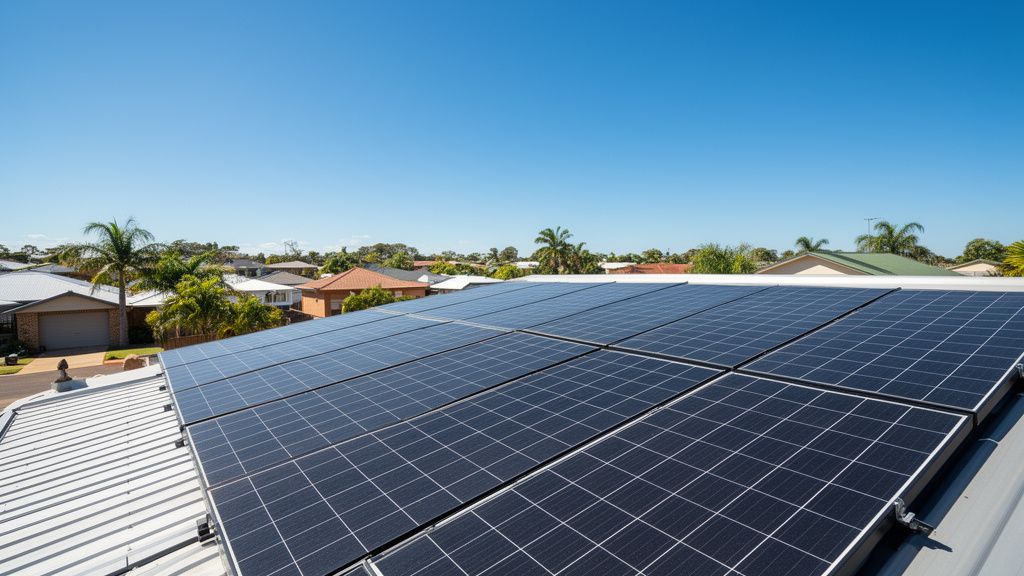
Homeowners usually look for panels that fit their roof size, appear discreet, and deliver sufficient power to cover their daily consumption. A typical Australian home might install a 6.6kW system, requiring around 16-20 panels. Canadian Solar's HiKu and HiKu6 series, offering panel wattages from 370W to 420W, are popular. Key factors include the physical dimensions of the panels to maximise roof coverage, efficiency to generate more power from a smaller area, and the overall system cost, which, after Small-scale Technology Certificates (STCs), might range from $5,000 to $8,000 for a quality 6.6kW system in metro areas.
What factors are critical for businesses choosing Canadian Solar systems?
Businesses prioritise maximising energy generation to reduce substantial electricity overheads and improve their profit margins. Return on investment (ROI) is paramount. Commercial projects often use larger Canadian Solar panels, such as the BiHiKu or HiKu7 series, with wattages exceeding 550W. These projects can scale from 30kW up to several megawatts, covering vast warehouse roofs or industrial properties. Considerations include the long-term performance degradation, ensuring panels can withstand industrial environments, and accessing specific financial incentives like instant asset write-offs or depreciation benefits to enhance the project's financial viability.
Which Canadian Solar panel series suits residential installations best?
The Canadian Solar HiKu and HiKu6 series generally suit residential installations well. These series offer good power output, typically between 370W and 420W, in a standard panel size that fits most residential roofs. Their efficiency rates are competitive, often above 20%, which means homeowners get more power per square metre. The aesthetic appearance is also a factor; the standard black frame and white backsheet or all-black panels integrate cleanly with a home's existing roofline, a preference for many Australian homeowners. These panels are readily available through Australian installers and offer a reliable option for offsetting household electricity costs.
What are the cost implications for residential Canadian Solar systems?
For a standard 6.6kW residential Canadian Solar system, the installed price can vary based on location, roof complexity, and the inverter choice. Typically, homeowners can expect to pay between $5,000 and $8,000 in major Australian cities after factoring in the STC rebate. This price includes the panels, a quality inverter (like Fronius or SolarEdge), installation, and the electrical work. Homeowners should also consider the potential for feed-in tariffs, which in 2024 are often below 5-7 cents per kWh in most states, making self-consumption of generated power more valuable than exporting it to the grid.

Which Canadian Solar panel series is ideal for commercial applications?
For commercial applications, Canadian Solar's BiHiKu and HiKu7 series are often the top choices. These panels feature higher wattages, typically ranging from 550W to 670W, which translates to fewer panels needed for large installations, reducing labour and racking costs. The BiHiKu panels are bifacial, meaning they can generate power from both sides, increasing overall energy yield on flat roofs or ground mounts where light can reflect off the surface below. The robust design of these series ensures they withstand industrial conditions and offer long-term reliability critical for large-scale investments.
How do commercial Canadian Solar projects affect a business's bottom line?
Commercial solar projects using panels like the BiHiKu or HiKu7 can significantly reduce a business's operational overheads by cutting electricity bills. For a business with a 100kW system, annual savings can easily reach tens of thousands of dollars. The substantial reduction in energy costs improves cash flow and makes the business more resilient to future energy price rises. Furthermore, businesses can often claim accelerated depreciation on the solar asset, improving the project's financial attractiveness and shortening the payback period, which can range from three to seven years depending on system size and energy usage.
Key Takeaways
- For residential projects, Canadian Solar HiKu and HiKu6 series offer good aesthetics and efficiency for typical household needs.
- Commercial projects benefit most from high-wattage Canadian Solar BiHiKu and HiKu7 panels to maximise energy output and ROI.
- Always match panel specifications, like size and wattage, to your available roof space and energy consumption patterns.
- Factor in Australian incentives like STCs for residential systems and depreciation benefits for commercial installations.
- Consult with an authorised Australian solar professional to design a system tailored to your specific energy demands and budget.
Read More
For a comprehensive overview, check out our master guide: Read the Full Guide Here.