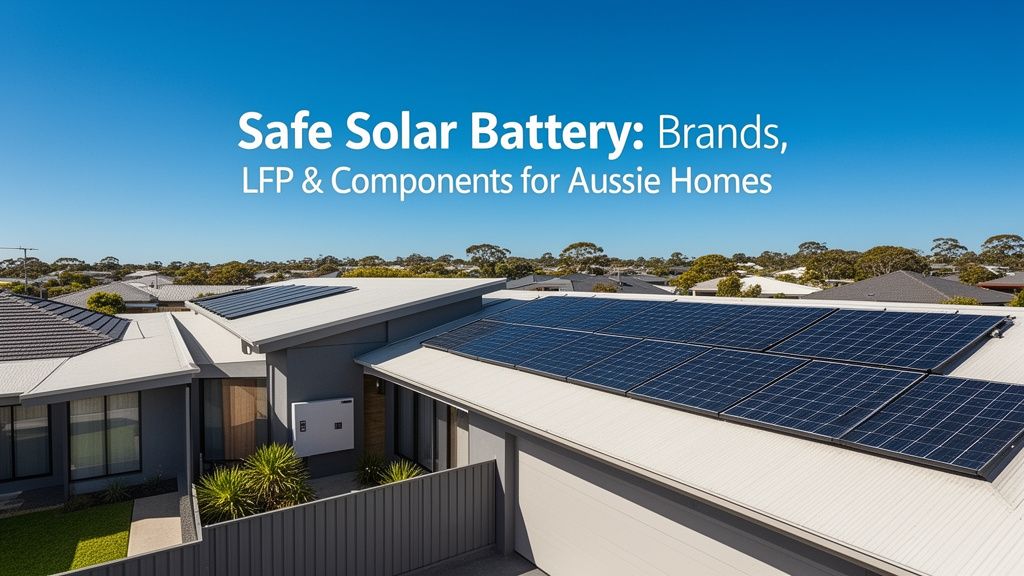
TL;DR: Selecting a safe solar battery for your Australian home involves prioritising reputable brands using Lithium Iron Phosphate (LFP) chemistry due to its inherent stability. Look for systems with advanced Battery Management Systems (BMS), robust thermal regulation, and adherence to Australian and international safety standards to ensure long-term peace of mind and protection.
Why is Battery Safety Crucial for Australian Households?
Battery safety is paramount for Australian households due to the potential risks associated with energy storage, the high temperatures often experienced, and the need for long-term reliability within a residential setting. While modern solar batteries are engineered with safety in mind, understanding the potential hazards and how to mitigate them is essential for any homeowner considering energy storage. An unsafe battery can pose risks of fire or chemical leaks, which, though rare, can have devastating consequences for families and property. Given the significant investment, ensuring the longevity and safe operation of your battery system offers invaluable peace of mind. Furthermore, insurance companies may have specific requirements for battery installations, making compliance with safety standards critical for coverage.
Understanding Potential Risks
The primary risks associated with solar batteries include thermal runaway, which can lead to overheating and fire, and in rarer cases, chemical leaks. These risks are significantly higher with older battery chemistries or poorly manufactured units that lack adequate safety features. Australia's often harsh climate, with extreme summer temperatures, can exacerbate these risks if a battery system isn't designed or installed to handle such conditions. Improper installation, faulty components, or a lack of proper ventilation can all contribute to unsafe operating environments, underscoring the importance of choosing quality products and qualified installers.
The Impact of Australian Climate
Australia's unique climate, characterised by scorching summers and potential for bushfires in many regions, places particular demands on solar battery systems. Batteries operating in high ambient temperatures need superior thermal management to prevent overheating. A battery designed for cooler European climates might not perform safely or efficiently when installed in a Queensland garage or on a Western Australian verandah during a 40-degree heatwave. Choosing brands and models explicitly rated and tested for Australia's climate conditions ensures the battery can maintain safe operating temperatures and deliver consistent performance without degradation or heightened risk.
What Core Battery Technologies Offer the Best Safety Profile?
The safest core battery technology currently available for residential solar storage is Lithium Iron Phosphate (LFP or LiFePO4), primarily due to its stable chemical composition and lower risk of thermal runaway compared to other lithium-ion variants. LFP batteries use an iron-phosphate cathode, which is inherently more stable than the nickel-manganese-cobalt (NMC) cathodes found in some other lithium-ion batteries. This superior stability means LFP batteries are less prone to overheating, even if overcharged or physically damaged, making them the preferred choice for residential applications where safety is a non-negotiable factor. Many leading Australian solar battery brands exclusively use LFP chemistry.
Lithium Iron Phosphate (LFP): The Preferred Choice
LFP batteries offer excellent thermal and chemical stability, which translates directly into enhanced safety. Unlike NMC batteries, LFP cells are less likely to produce oxygen when heated, significantly reducing the risk of fire or explosion. They can withstand higher temperatures and are generally more robust, contributing to a longer lifespan and greater reliability. While their energy density might be slightly lower than NMC, meaning they can be a bit bulkier for the same capacity, the trade-off for superior safety in a home environment is well worth it. Expect LFP batteries to be a significant portion of the system cost, often ranging from $8,000 to $15,000 for a typical 10kWh residential unit, but this investment buys enhanced peace of mind.
Why Avoid Older or Less Stable Chemistries?
Older battery chemistries, such as lead-acid, while inexpensive, are less efficient, have shorter lifespans, and can pose risks due to hydrogen gas emissions or acid leaks. Some early lithium-ion batteries, particularly those with high nickel content, have faced challenges with thermal runaway. While manufacturers have made significant advancements in safety features for all lithium-ion types, LFP remains the gold standard for inherent safety in static residential storage. Choosing less stable chemistries, especially from unverified manufacturers, could introduce avoidable risks and may not comply with Australian installation standards like AS/NZS 5139, potentially complicating insurance or resale.
How Do Certified Brands Ensure Solar Battery Safety?
Certified solar battery brands ensure safety through rigorous testing, adherence to international and Australian standards, comprehensive warranties, and transparent documentation of their products' performance and safety features. Reputable brands invest heavily in research and development to integrate cutting-edge safety technologies and undergo extensive third-party testing to validate their products' resilience under various conditions, including extreme temperatures and electrical faults. This commitment to certification provides homeowners with confidence that the battery system has met stringent benchmarks for safe operation, design, and manufacturing quality.
Australian and International Safety Standards
In Australia, the primary standard for battery energy storage systems is AS/NZS 5139:2019, which outlines the electrical installation requirements for battery systems. This standard is crucial for ensuring that the battery is installed safely and correctly. Additionally, international standards like IEC 62619 (for safety requirements of secondary lithium cells and batteries for industrial applications) and IEC 62133 (for portable applications) are often referenced. A reputable brand will proudly display its compliance with these standards. Always ask your installer about the certifications of the battery and their adherence to AS/NZS 5139 to ensure legal and safe installation. This adherence often adds a small premium to the overall installation cost, perhaps a few hundred dollars, but it's a critical investment in safety.
The Role of Comprehensive Warranties
A robust and comprehensive warranty is a strong indicator of a brand's confidence in its product's safety and longevity. Look for warranties that cover not only performance (e.g., how much capacity the battery will retain after 10 years) but also manufacturing defects and safety-related issues. A typical residential solar battery warranty might be 10 years, covering parts and sometimes labour. Be wary of brands offering unusually short warranties or those with complicated claim processes. A reputable brand will stand behind its product, offering clear terms and readily available support, which is critical for addressing any potential safety concerns that may arise over the battery's operational life.
What Specific Safety Components Should You Look For in a Battery System?
When evaluating solar battery systems, key safety components to look for include an advanced Battery Management System (BMS), effective thermal management, durable enclosures, and integrated disconnect switches. These components work together to monitor, control, and protect the battery cells, preventing potential hazards and ensuring the system operates within safe parameters. Without these critical safety features, even an inherently safe LFP battery could be compromised under certain conditions. Prioritising systems with these integrated protections ensures a higher degree of safety and reliability for your home's energy storage.
The Indispensable Battery Management System (BMS)
The Battery Management System (BMS) is the brain of the battery, continuously monitoring vital parameters such as individual cell voltage, temperature, current, and state of charge. A sophisticated BMS can balance cell voltages, prevent overcharging or deep discharging, and initiate a shutdown if any parameter exceeds safe limits. It's the first line of defence against thermal runaway and other electrical faults. Ensure the battery you choose has a robust, intelligent BMS from a reputable manufacturer. Some premium brands offer advanced diagnostics through their BMS, allowing for proactive maintenance and fault detection, which can add value to the battery's lifespan and safety profile.
Thermal Management and Enclosure Design
Effective thermal management is crucial, especially in Australia's climate. Look for batteries with active or passive cooling systems designed to dissipate heat efficiently. Active cooling might involve fans, while passive cooling relies on clever design and materials. The battery's enclosure should be made from robust, fire-resistant materials and provide adequate IP (Ingress Protection) rating for its intended installation location (e.g., IP65 for outdoor installation). The enclosure protects the internal components from dust, moisture, and physical impact, while also containing any potential issues. Furthermore, integrated rapid shutdown capabilities and easily accessible manual disconnect switches are vital safety features that allow for quick system isolation in an emergency.
Key Takeaways
- Prioritise solar batteries utilising Lithium Iron Phosphate (LFP) chemistry for superior inherent safety.
- Always choose reputable brands that comply with Australian (AS/NZS 5139) and international safety standards.
- Ensure the battery system includes an advanced Battery Management System (BMS) for critical monitoring and protection.
- Look for robust thermal management features and durable, fire-resistant enclosures suitable for Australian conditions.
- Select an installer with a proven track record for safe battery installations and comprehensive product warranties.
Read More
For a comprehensive overview, check out our master guide: Read the Full Guide Here.