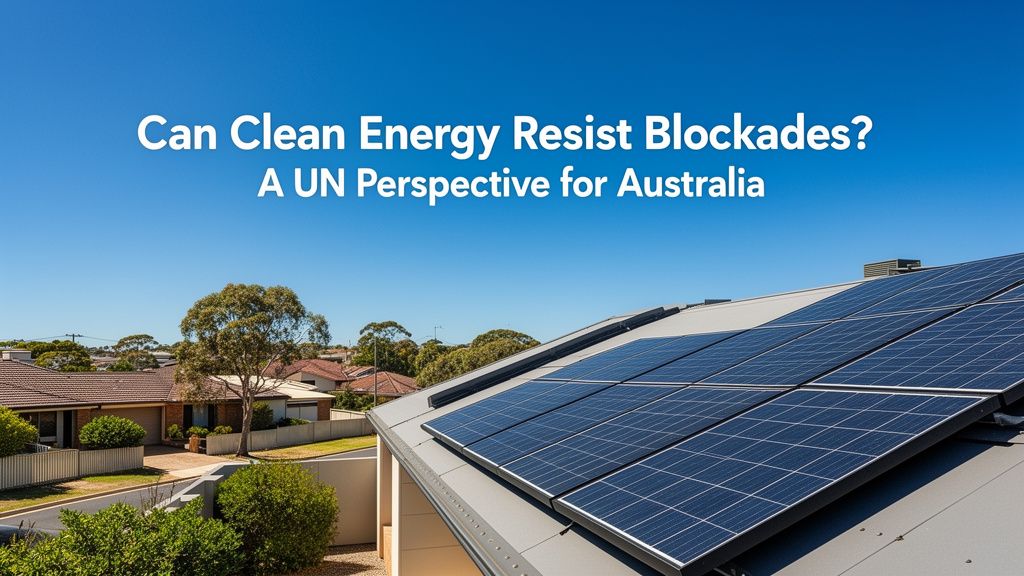
TL;DR: Clean energy systems, especially distributed renewables like solar, offer a significantly greater degree of resilience against geopolitical blockades compared to fossil fuel reliance. While local generation can mitigate external supply disruptions, global dependencies on critical minerals and manufacturing supply chains for clean energy components still present vulnerabilities, a challenge the UN actively addresses in its energy security discussions.
How Does Distributed Renewable Energy Enhance National Resilience?
Distributed renewable energy, particularly solar, inherently boosts a nation's resilience against geopolitical blockades by decentralising power generation and reducing reliance on centralised, often imported, energy sources. Unlike oil or gas, which typically flow through a limited number of pipelines or shipping routes susceptible to disruption, solar power can be generated across countless rooftops and local arrays. This widespread production capability means that even if one area's energy supply is compromised, other regions can continue to generate power, maintaining overall grid stability and reducing the impact of external pressures. For a sun-drenched country like Australia, where the average household can install a 6.6kW solar system for around $5,000-$8,000 after rebates, generating a significant portion of its own power directly reduces vulnerability to international energy market volatility and potential blockades on fossil fuel imports.
Localised Production Mitigates Import Dependencies
The ability to produce energy locally dramatically lessens a nation's dependence on foreign fuel sources, which are often subject to geopolitical whims and supply chain disruptions. When you're generating power from the sun shining on your own turf, mate, you're not sweating over the price of crude oil or whether a shipping lane is being blockaded halfway across the globe. This local control translates directly into greater energy security, ensuring that essential services and industries can continue to operate even during international crises. It shifts the power balance from global markets back to domestic production, providing a buffer against external economic or political pressures that could otherwise paralyse a fossil fuel-dependent economy.
Grid Decentralisation Boosts System Robustness
Decentralising the energy grid through widespread renewable integration creates a more robust and anti-fragile system. Instead of relying on a few large, centralised power stations that could be prime targets for disruption, energy is produced and consumed closer to the source. This distributed architecture means there are more points of failure, yes, but also far more points of resilience. If one local solar farm or rooftop array goes offline, it's a minor blip, not a catastrophic system collapse. This inherent redundancy makes the entire energy infrastructure less susceptible to single points of failure, whether those are accidental outages, cyberattacks, or deliberate blockades aimed at crippling a nation's power supply.
What Are the UN's Concerns Regarding Clean Energy Supply Chain Vulnerabilities?
The United Nations acknowledges that while clean energy offers significant strides towards energy independence, it's not entirely immune to blockades, particularly due to its reliance on complex global supply chains for critical minerals and manufacturing. The shift from fossil fuels to renewables merely changes the points of dependency, rather than eliminating them entirely. Many key components for solar panels, wind turbines, and batteries – such as rare earth elements, lithium, cobalt, and copper – are concentrated in a few geographic locations or processed by a limited number of countries. This creates new strategic vulnerabilities, where control over these essential resources or manufacturing hubs could potentially be leveraged as a form of economic or geopolitical pressure.
Critical Mineral Dependencies and Geopolitical Risks
The extraction and processing of critical minerals required for clean energy technologies are geographically concentrated, leading to potential geopolitical chokepoints. For instance, a significant portion of the world's rare earth elements, vital for wind turbine magnets, is controlled by one nation. Similarly, lithium and cobalt, essential for electric vehicle batteries and grid storage, primarily come from specific regions. The UN views this concentration as a new form of energy security risk. A blockade or disruption in the supply of these minerals could stall clean energy deployment, making nations reliant on external sources vulnerable. This necessitates diversification of mining, processing, and recycling capabilities worldwide to build a truly resilient clean energy future.
Manufacturing Chokepoints and Trade Vulnerabilities
Beyond raw materials, the manufacturing of clean energy components themselves is often consolidated in specific regions, creating additional chokepoints. A large percentage of the world's solar panels and battery cells, for example, are produced in just a few countries. While this has driven down costs and accelerated adoption, it also means that geopolitical tensions, trade disputes, or even natural disasters affecting these manufacturing hubs could have ripple effects across the global clean energy sector. The UN encourages strategic investment in domestic manufacturing capabilities and diversification of international suppliers to mitigate these risks, ensuring that a single nation or a group of nations cannot unilaterally control the pace of the global energy transition.


How Can Australia Strengthen its Clean Energy Independence?
Australia can significantly bolster its clean energy independence by leveraging its abundant renewable resources, investing in local manufacturing, and prioritising grid modernisation. As a continent blessed with some of the best solar irradiance and wind resources on the planet, we're in a prime position to become a global clean energy superpower. However, simply installing more panels isn't enough; true independence requires building out our domestic capabilities across the entire clean energy value chain. This means moving beyond being just a raw materials exporter and developing the capacity to process critical minerals, manufacture solar components, and even produce green hydrogen locally, creating jobs and safeguarding our energy future from external disruptions.
Leveraging Domestic Renewable Resources
Australia's vast solar and wind resources provide an unparalleled foundation for energy independence. By rapidly deploying large-scale solar farms and wind projects, alongside widespread rooftop solar, we can generate far more electricity than we currently consume, reducing our reliance on imported fuels and creating an export industry for clean energy. Imagine a future where Australia is a net exporter of green energy, not just coal and gas. This strategic shift not only benefits our environment but also provides significant geopolitical leverage, transforming us into a more self-sufficient and influential player on the global energy stage. Our potential to produce green hydrogen, for example, offers a path to export clean energy in a stable, transportable form, further securing our economic and energy future.
Investing in Local Manufacturing and Processing
To truly achieve blockade-proof clean energy, Australia must invest heavily in local manufacturing and critical mineral processing. We're rich in the raw materials needed for batteries and solar panels, but too often, these are shipped overseas for processing and manufacturing, only for us to import the finished goods. By establishing domestic capabilities for refining lithium, cobalt, and rare earths, and then using these materials to build batteries and solar components right here on our shores, we can create a robust, independent supply chain. This not only creates thousands of highly skilled jobs but also ensures we're not held hostage by international manufacturing chokepoints, making our clean energy transition truly secure and sovereign.
Key Takeaways
- Distributed renewable energy significantly enhances a nation's resilience against geopolitical blockades compared to centralised fossil fuels.
- The UN acknowledges clean energy's potential for independence but highlights vulnerabilities in global supply chains for critical minerals and manufacturing.
- Australia can boost its clean energy independence by rapidly deploying renewables and investing in domestic processing and manufacturing of clean energy components.
- Diversifying critical mineral sources and manufacturing locations globally is essential to mitigate new geopolitical risks in the clean energy transition.
- Localised energy production reduces reliance on volatile international markets and creates a more robust, anti-fragile national energy grid.
Read More
For a comprehensive overview, check out our master guide: Read the Full Guide Here.


