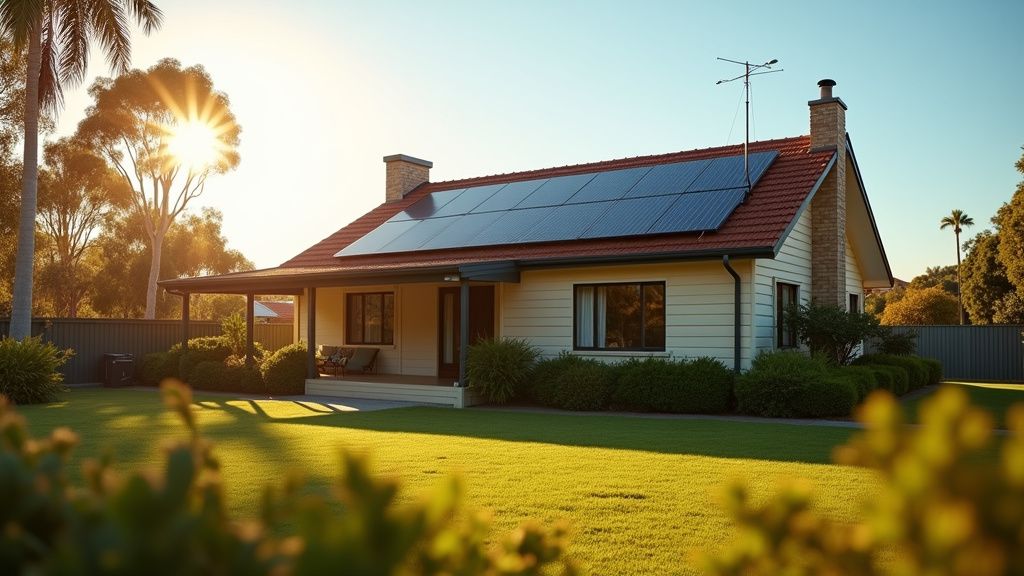
G'day, Aussies! Are you tired of watching your energy bills climb faster than a gecko up a wall? With our abundant sunshine, going solar has long been a smart move for Australian households, and as we look ahead to 2026, it's becoming an even more compelling investment. The technology is evolving, energy costs are still rising, and the push for sustainable living is stronger than ever.
Navigating the world of solar can feel a bit like trying to read a complicated cricket score – lots of numbers and specific terms. But fear not! This guide from SolarInsights is designed to demystify the process, helping you make an informed decision for your home. For an even deeper dive into component choices, check out our Complete Guide.
Why Go Solar in 2026?
The reasons to embrace solar power are more robust than ever:
- Significant Savings: Grid electricity prices continue their upward trajectory. Generating your own power drastically reduces, or even eliminates, your reliance on the grid during daylight hours, slashing those hefty bills.
- Environmental Impact: Reduce your carbon footprint and contribute to a cleaner, more sustainable future for Australia.
- Increased Home Value: Homes with solar panels are increasingly attractive to buyers, often commanding higher resale values. It's a tangible asset that pays dividends.
- Technological Advancements: Panels are more efficient, inverters are smarter, and battery storage is becoming more accessible and cost-effective, offering greater energy independence.
Your Solar Journey for 2026: Key Considerations
1. System Size: Not One-Size-Fits-All
The ideal system size depends on your household's energy consumption, future plans (e.g., electric vehicle, heat pump), and roof space.
- Average Use: A typical Australian family might look at a 6.6kW system, which often involves around 16-20 panels.
- High Use: If you have high energy demands, larger households, or plan for an EV, an 8kW or 10kW system might be more appropriate.
- Future-Proofing: Consider oversizing slightly. It's often cheaper to install more panels upfront than to upgrade later. Review your last 12 months of electricity bills to get a clear picture of your usage.
2. Panel Quality & Technology: The Heart of Your System
Not all panels are created equal. In 2026, focus on efficiency, durability, and warranty.
- Monocrystalline Panels: These are the industry standard, offering superior efficiency and performance, especially in Australian conditions.
- Tier-1 Classification: While not a guarantee of quality, 'Tier-1' generally refers to manufacturers who invest heavily in R&D, have highly automated production, and a strong financial footing – meaning their warranties are more likely to be honoured long-term.
- Warranties: Look for a 25-year performance warranty (guaranteeing a certain percentage of original output after 25 years) and a 10-15 year product warranty (covering manufacturing defects).
3. Inverters: The Brains of the Operation
The inverter converts the DC power from your panels into AC power for your home.
- String Inverters: Most common and cost-effective. They work well for roofs with uniform sunlight.
- Microinverters: Installed under each panel, they optimise each panel independently, ideal for complex roofs or areas with shading.
- Hybrid Inverters: Essential if you're planning to add a battery now or in the future. They can manage both solar generation and battery storage. Choose reputable brands known for reliability and local support.
4. Batteries (Energy Storage): Gaining Momentum
While still a significant investment, battery technology is improving, and prices are becoming more competitive.
- Self-Consumption: Store excess daytime solar power to use in the evening, further reducing grid reliance.
- Blackout Protection: Some battery systems can provide backup power during outages.
- Payback Period: Calculate if the increased self-consumption and potential grid services (if available in your area) justify the upfront cost. Many systems are now "battery-ready," allowing for an easier retrofit later.
5. Installation Quality & Warranties: Crucial for Longevity
Even the best equipment is only as good as its installation.
- CEC Accreditation: Ensure your installer and their designers are Clean Energy Council (CEC) accredited. This signifies adherence to Australian standards and best practices.
- Workmanship Warranty: A good installer will offer a comprehensive warranty (typically 5-10 years) on their work. This covers issues like leaks or faulty wiring.
- Local Support: Choose an installer with a strong local presence and a proven track record.
Government Incentives for 2026: Still Valuable
Australia continues to offer incentives that significantly reduce the upfront cost of solar.
- Small-scale Technology Certificates (STCs): These certificates are the primary national incentive. When you install an eligible solar system, you receive STCs, which are essentially a financial rebate. Your installer usually factors this discount directly into your quote, so you pay a reduced price. The value of STCs gradually declines over time, so while they're still beneficial in 2026, acting sooner rather than later can mean a larger saving.
- State & Territory Programs: Keep an eye on local government websites. Some states and territories offer additional rebates, interest-free loans, or other incentives for solar and battery storage. These vary widely and can change, so always check what's available in your specific area.
The Cost of Solar in 2026 & Payback Periods
While prices fluctuate, expect a quality 6.6kW system, installed, to generally fall in the range of $6,000 to $10,000 (after STC rebate), depending on components and installer. Larger or more premium systems, especially those including batteries, will naturally be higher.
The typical payback period for a well-sized solar system in Australia ranges from 3 to 7 years, though this can vary based on your electricity consumption, feed-in tariffs in your area, and the initial system cost. After this period, the electricity you generate is essentially free!
Choosing the Right Installer
This is perhaps the most critical step.
- Get Multiple Quotes: Don't just go with the first offer. Obtain at least three detailed quotes from different CEC-accredited installers.
- Check Reviews & References: Look for customer testimonials and ask for references.
- Transparency: Ensure the quote clearly outlines all components (panel make/model, inverter make/model), warranties, installation costs, and estimated production.
- Communication: A good installer will take the time to answer your questions thoroughly and explain the entire process.
Ready to Go Green (and Save Some Green)?
Investing in solar for 2026 is a smart, forward-thinking decision for any Australian homeowner. By understanding system size, component quality, incentives, and choosing the right installer, you're not just buying solar panels – you're investing in energy independence, significant savings, and a brighter, more sustainable future. Start your research today, gather those quotes, and get ready to harness the power of the Australian sun!