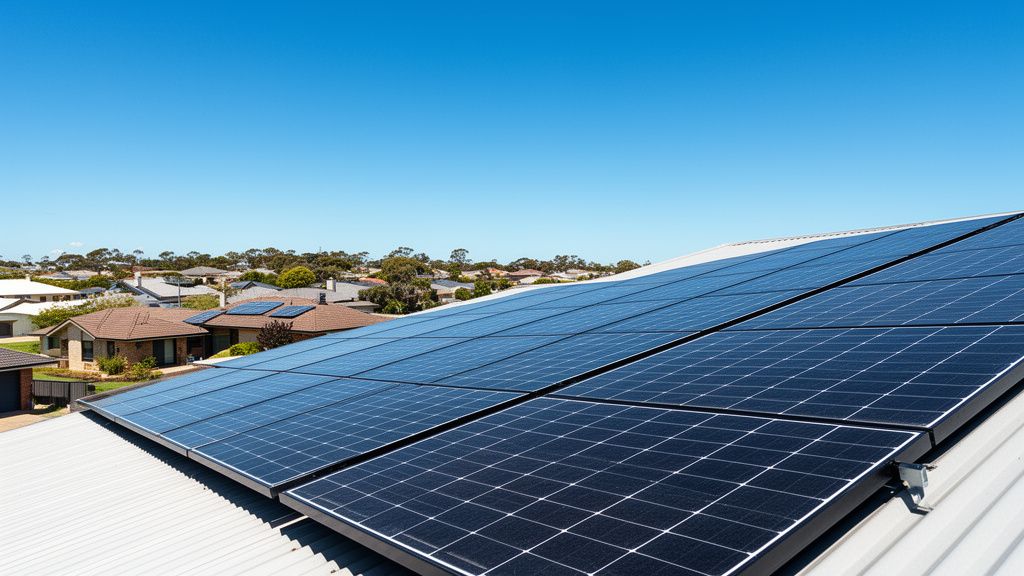
TL;DR: Canadian Solar bifacial panels generate electricity from both their front and rear surfaces, capturing direct sunlight and reflected light. This dual-sided design increases energy output by 5% to 25% compared to traditional panels, offering greater energy production and faster payback periods for Australian homes.
What Makes Bifacial Panels Different from Standard Solar Panels?
Bifacial solar panels gather energy from both sides, a significant upgrade from the single-sided design of conventional panels. Standard panels only convert direct sunlight hitting their front surface into electricity. Bifacial panels feature solar cells on both sides, or a transparent backsheet that allows light to reach the rear of the cells. This lets them capture not only direct sunlight, but also reflected light (known as albedo) from surfaces beneath and around the panels, like light-coloured roofs, ground, or even neighbouring structures. This extra light capture means they produce more electricity over the course of a day. This technology has been around for some time, but manufacturing efficiencies have made it more accessible and cost-effective for residential applications in recent years.
How Does Dual-Sided Generation Boost Output?
The core advantage of bifacial panels comes from their ability to harvest reflected light. When sunlight hits a roof or the ground, a portion of it bounces back up. If a bifacial panel is installed above such a surface, its rear side can absorb this reflected light. The amount of extra power depends heavily on the albedo of the surface underneath; a white roof reflects more light than a dark one, potentially increasing output by up to 25%. Even a light-coloured concrete driveway or a pale decking material beneath a ground-mounted system can contribute to substantial gains. This effectively means more kilowatt-hours generated from the same roof footprint, improving the overall efficiency of your solar investment.
Why Should Australian Homeowners Consider Canadian Solar Bifacial Panels?
Canadian Solar's bifacial panels, like their BiHiKu7 series, deliver higher energy yields and exceptional durability, making them a strong choice for Australian conditions. These panels are engineered to perform reliably under high temperatures, which is a common challenge for solar systems across most of Australia. Their robust double-glass design provides enhanced protection against micro-cracks and potential degradation from environmental factors like wind-blown debris or hail. This added resilience translates to a longer operational lifespan and consistent energy production over the panel's warranty period, which typically runs for 25 to 30 years for performance. Canadian Solar backs its products with a solid warranty, reflecting confidence in their technology and manufacturing quality.
What Energy Output Increase Can You Realistically Expect?
With Canadian Solar bifacial panels, homeowners in Australia can expect an energy yield increase ranging from 5% to 25% compared to equivalent conventional monocrystalline panels. This variation depends on installation specifics like the mounting height, tilt angle, and the reflectivity of the surface below. For example, a system installed on a light-coloured tin roof with optimal tilt might see an additional 15-20% output, while a system on a dark tile roof might achieve a more modest 5-10% gain. Over a year, this means hundreds of extra kilowatt-hours of electricity, reducing your reliance on grid power and offsetting more of your energy bill. The actual figures become particularly noticeable during the long, sunny Australian days.
What are the Costs and Payback for a Bifacial System in Australia?
Canadian Solar bifacial panels typically carry a slightly higher upfront cost per watt compared to standard monocrystalline panels, often around 5-10% more. For a common 6.6kW residential system, this might mean an additional $500 to $1,000 on the total installation price, bringing the average cost to approximately $6,000 - $9,000 before STCs, depending on the installer and other components. However, this marginal extra investment is often recouped quickly through significantly higher energy generation. The increased output translates directly into greater savings on your electricity bill and potentially more credits from feed-in tariffs, accelerating the system's payback period.


Is the Investment in Bifacial Technology Justified?
Absolutely. The higher energy output from Canadian Solar bifacial panels directly impacts your solar system's return on investment. If a standard 6.6kW system in Sydney saves a household around $1,500 annually, a bifacial equivalent generating 15% more power could boost those savings to approximately $1,725 per year. This additional $225 in annual savings can reduce a five-year payback period by several months, or even a year, depending on the initial price difference. When considering a 25-year panel lifespan, the cumulative extra energy production adds up to substantial long-term financial benefits, outweighing the initial higher cost.
Key Takeaways
- Canadian Solar bifacial panels generate electricity from both sides, capturing direct sunlight and reflected light from surrounding surfaces.
- These panels offer a 5% to 25% increase in energy output compared to traditional solar panels, depending on installation conditions.
- The robust double-glass design of Canadian Solar bifacial panels ensures high durability and reliable performance in harsh Australian climates.
- While slightly more expensive upfront, the increased energy generation leads to greater long-term savings and a faster payback period.
- Homeowners can expect significant reductions in their electricity bills and improved overall system efficiency with bifacial technology.
Read More
For a comprehensive overview, check out our master guide: Read the Full Guide Here.


