Electricity bills are a common topic of conversation at BBQs across Australia, and for good reason. They can be a significant household expense. But have you ever wondered if certain age groups bear a heavier burden than others? Specifically, are younger households in Australia finding themselves paying more for their power? It’s a complex question, influenced by lifestyle, housing, financial capacity, and access to energy-saving solutions like solar. Let's dive into the data and dynamics behind electricity consumption across different generations down under.
Understanding the Landscape of Australian Electricity Bills
Before we pinpoint specific age groups, it’s crucial to understand what drives an electricity bill. Factors include the size of the household, the number and efficiency of appliances, heating and cooling habits, time of day usage (especially with time-of-use tariffs), and simply how much time people spend at home. Australia’s climate, with its hot summers and often chilly winters, also means significant energy spikes for air conditioning and heating.
The average Australian household electricity bill can vary wildly by state and season, but quarterly bills typically range from $300 to $800, with larger families or less efficient homes pushing past the $1000 mark in peak seasons. These figures are stark, highlighting why managing energy costs is a priority for everyone.
The Younger Household Scenario (Under 35)
Younger Australians, often in their 20s and early 30s, face a unique set of circumstances. Many are renting, living in apartments or shared houses, which limits their ability to make significant energy-efficiency upgrades or install solar panels. Their lifestyles also play a role:
- Appliance Reliance: This demographic often has multiple personal electronic devices (laptops, gaming consoles, smart devices) constantly charging or in use. While individually low-power, collectively they add up.
- Time at Home: Younger professionals or students might be out of the house during the day, meaning peak evening usage for cooking, entertainment, and laundry. This can hit hard on time-of-use tariffs.
- Rental Limitations: Landlords aren't always motivated to invest in insulation or energy-efficient appliances, meaning younger tenants might be living in less efficient homes.
- Financial Constraints: With mortgages, student debts, or lower starting salaries, there's less disposable income to invest in upfront energy-saving measures, even if they owned a home.
While their total bill might be lower than a large family’s, the cost per person or relative to income can feel disproportionately high. A young couple in a modest apartment might see quarterly bills of $300-$450, which, while seemingly low, can be a struggle on entry-level incomes. Share houses, with more occupants and appliances, could easily push bills to $500-$700 per quarter.
The Middle-Aged Household Scenario (35-60)
This group often represents families with children, living in larger homes they typically own. Their energy consumption patterns reflect this:
- Larger Homes, More People: More rooms to heat/cool, more lights, more devices, and greater demand for hot water and laundry cycles.
- Family Appliance Usage: Multiple teenagers showering, running gaming consoles, constant use of kitchen appliances – the energy load increases significantly.
- Home Ownership Advantage: More likely to have invested in better insulation, modern appliances, and critically, solar power systems.
- Peak Consumption: While adults might be at work, children could be home after school, leading to a longer period of high energy use.
Middle-aged families often face the highest overall electricity bills due to sheer volume of consumption. Quarterly bills for a typical Australian family can easily range from $450 to $800, and much higher in energy-intensive periods or without solar. This group often sees the most direct benefit from solar, as their daytime consumption aligns well with solar generation, and the larger roof space can accommodate bigger systems.
The Older Household Scenario (60+)
Retirees and older Australians often spend more time at home, which influences their energy usage:

- Increased Daytime Usage: Being home more means higher daytime electricity consumption for heating, cooling, cooking, and entertainment. This makes them ideal candidates for solar.
- Thermal Comfort: Older individuals may be more sensitive to temperature fluctuations, leading to increased use of heating in winter and air conditioning in summer.
- Home Efficiency: Many older Australians live in long-owned homes that might be older and less energy-efficient (poor insulation, older windows). However, they also have the autonomy to upgrade.
- Legacy Appliances: Some might still use older, less energy-efficient appliances inherited over time.
Quarterly bills for older households can vary significantly, from $350-$700, depending on home efficiency, health needs requiring specific temperatures, and appliance age. The drive for consistent comfort can push bills higher, but their consistent daytime presence makes solar an incredibly appealing and effective solution for long-term savings in retirement.
Solar Power: The Great Equaliser for All Ages
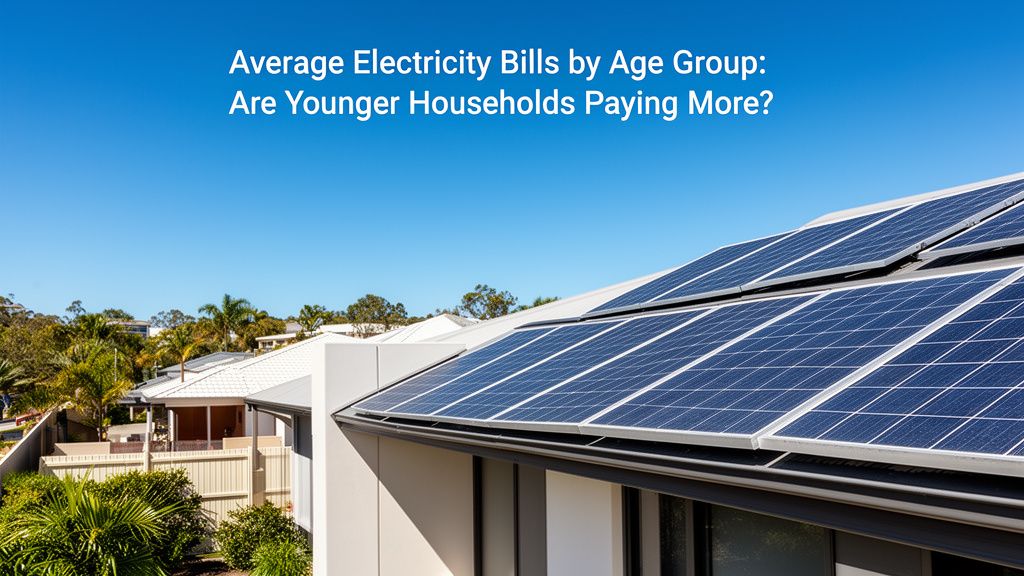
Regardless of your age group, the fundamental truth in Australia is that solar power offers a powerful antidote to rising electricity costs.
- For Younger Households: While renting can be a barrier, advocating for solar-equipped rentals or considering solar for future home ownership is key. When they do buy, solar offers substantial long-term savings, freeing up funds for other life goals. Even small behavioural changes combined with smart energy choices can make a difference.
- For Middle-Aged Families: Solar is a game-changer. Offsetting the high energy demands of a bustling family home, especially during peak daytime hours, means significant savings. Investing in a quality solar system pays for itself, providing financial stability and reducing a major household expense. Battery storage can further enhance savings by powering evening usage.
- For Older Households: With more time spent at home during the day, seniors are perfectly positioned to maximise solar generation. Generating their own power directly reduces reliance on the grid during expensive daytime hours, providing comfort without the hefty price tag. It’s an investment in financial security and peace of mind during retirement.
Australian government rebates (like STCs) and state-specific programs make solar more accessible than ever, helping to ease the upfront cost for all generations.
Beyond Age: Universal Tips for Lower Bills
While age groups present different energy challenges, some strategies are universal:
- Compare Retailers: Don't stick with the first offer. Regularly compare electricity plans to ensure you’re on the best tariff for your usage.
- Energy Efficiency: Invest in insulation, draught-proofing, and energy-efficient appliances where possible. Simple habits like turning off lights and standby power can also help.
- Understand Your Usage: Many energy providers offer apps or online portals to track your consumption. Knowledge is power!
- Consider Battery Storage: For those with solar, batteries maximise your self-consumption and reduce reliance on the grid, especially during peak evening rates.
The Verdict: A Nuanced Picture
So, are younger households paying more? Not necessarily in total dollar value compared to a large family, but they often face unique challenges like rental limitations and income constraints that can make their bills feel disproportionately heavy. Older households, while potentially having lower overall consumption, can also face higher bills due to time at home and comfort needs. Middle-aged families, with their high consumption, often bear the highest total costs.
The good news is that solar power is a powerful solution that empowers every age group to take control of their electricity bills. It's an investment in a sustainable future and immediate savings, bringing financial relief and environmental benefits to all Australians.
Ready to see how much you could save with solar? Get a free, no-obligation quote today and discover a brighter, more affordable energy future.
Read More
For a comprehensive overview, check out our master guide: Read the Full Guide Here.