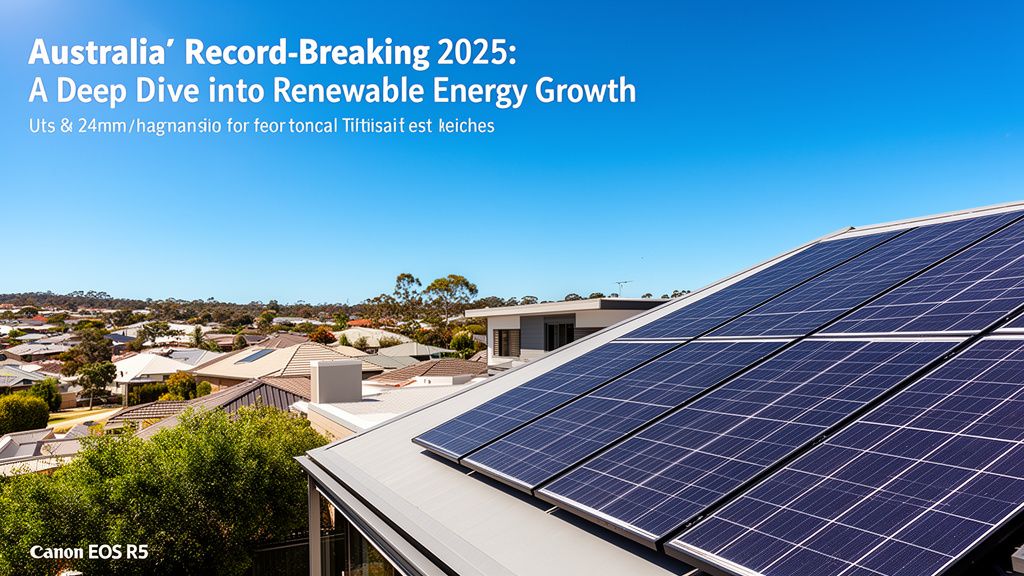
The sun-drenched continent of Australia has always had an undeniable advantage when it comes to solar power. For years, we’ve been harnessing its energy, but 2025 emerged as an absolutely landmark year – a period that shattered all previous records and firmly established Australia as a global leader in renewable energy uptake. From bustling city rooftops to vast outback solar farms, the transformation was palpable, redefining our energy landscape and setting a blistering pace for the decades to come.
This wasn't just another year of steady growth; 2025 was a crescendo, a testament to years of innovation, favourable policy, and an unwavering commitment from Australian households and businesses. The numbers speak for themselves: an unprecedented addition of renewable generation capacity, predominantly solar, pushing Australia closer to its ambitious clean energy targets. It was a year where clean energy wasn't just an aspiration, but a tangible, powering reality.
The Solar Surge: A Year Like No Other
Solar power was undoubtedly the shining star of 2025's renewable energy boom. We saw a monumental surge across all segments. Residential solar installations continued their relentless climb, with millions more Australian homes embracing rooftop panels. The average Australian household, once hesitant about the initial outlay, now recognised the long-term savings, often offsetting a significant portion of their electricity bills and even feeding surplus energy back into the grid for credits. State and federal rebates, coupled with increasingly affordable panel and inverter technology, made the decision even easier, often bringing the net installation cost for a typical 6.6kW system down significantly, making it accessible to many.
Commercial and industrial solar also experienced explosive growth. Businesses, facing rising energy costs, invested heavily in larger rooftop systems and even ground-mounted arrays to power their operations, not only reducing overheads but also showcasing their commitment to sustainability. But perhaps the most visually striking development was the acceleration of utility-scale solar farms. Gigawatts of new capacity came online, transforming vast swathes of land into clean energy powerhouses, feeding entire regions and pushing coal-fired power stations further towards redundancy. These immense projects were often paired with large-scale battery storage, ensuring reliable power even after the sun set.
Beyond the Panels: Storage and Smart Grids
The narrative of 2025 wasn't solely about the proliferation of solar panels; it was equally about the sophisticated infrastructure evolving around them. Battery storage technology, both household and grid-scale, played a pivotal role in making the record solar generation reliable and stable. Australian homes increasingly installed battery systems alongside their solar panels, allowing them to store excess daytime energy for evening use, maximising self-consumption and reducing reliance on the grid. This shift significantly changed how consumers interacted with their energy, empowering them to become prosumers.
On a larger scale, the deployment of massive grid-scale batteries, some boasting capacities in the hundreds of megawatt-hours (MWh), became critical. These 'big batteries' provided essential grid services, stabilising frequency and voltage, and absorbing surplus solar during peak generation times to discharge during periods of high demand. Simultaneously, Australia's electricity grid itself underwent significant modernisation. Smart grid technologies, including advanced metering infrastructure and sophisticated energy management systems, became more prevalent, enabling better integration of distributed renewable energy sources and enhancing overall grid resilience. Virtual Power Plants (VPPs) also gained traction, aggregating thousands of residential batteries and rooftop solar systems to act as a single, large energy resource, responding dynamically to grid needs.


Economic Sunshine: Jobs and Investment Flourish
The clean energy revolution of 2025 was not just an environmental triumph; it was an economic powerhouse. The unprecedented growth in solar and associated industries created tens of thousands of new jobs across the country. From skilled electricians and installers in regional centres to engineers and project managers overseeing multi-billion-dollar solar farms, the demand for green collar labour soared. Manufacturing of components, research and development in solar efficiency, and maintenance of renewable energy assets all contributed to a vibrant new sector of the Australian economy.
This boom also attracted significant local and international investment. Billions of dollars flowed into new renewable energy projects, transmission infrastructure, and energy storage solutions. State and federal governments actively fostered this investment through attractive policies and frameworks, positioning Australia as a prime destination for clean energy capital. This influx of investment translated into increased economic activity, benefiting regional communities and diversifying Australia's economic base beyond traditional sectors.
Policy Powering Progress
The remarkable achievements of 2025 would not have been possible without strong policy leadership. Federal and state governments worked collaboratively, implementing ambitious renewable energy targets and developing clear roadmaps for their attainment. Initiatives like Renewable Energy Zones (REZs) in states such as New South Wales and Queensland accelerated the development of large-scale projects by streamlining approvals and building essential transmission infrastructure.
Financial incentives, including government-backed loans, grants for innovative projects, and continued small-scale technology certificates (STCs) for residential solar, played a crucial role in de-risking investments and making renewable energy more accessible. The regulatory landscape also evolved, adapting to the complexities of a highly decentralised and intermittent energy system, ensuring grid stability and market fairness. This comprehensive policy framework provided the certainty and support needed for the private sector to invest confidently and scale up rapidly.
Environmental Dividends and the Path Forward
The environmental benefits of 2025’s record-breaking renewable energy growth are immense. Australia's carbon emissions saw a significant reduction, contributing directly to global climate change mitigation efforts. Cleaner air, reduced water usage associated with fossil fuel power generation, and a decreased environmental footprint became tangible realities. Australia, a nation previously criticised for its climate policies, began to emerge as a genuine leader in the global energy transition.
While 2025 marked an incredible milestone, the journey isn't over. Challenges remain, including upgrading vast amounts of transmission infrastructure to connect new renewable hubs to population centres, managing intermittency, and ensuring a just transition for communities reliant on fossil fuel industries. However, the momentum from 2025 has set a clear trajectory. Continued investment in research and development, innovative policy, and the unwavering commitment of Australians mean the future of energy Down Under is unequivocally sunny.
Australia's record-breaking 2025 was more than just a strong year for solar; it was a watershed moment, proving that a rapid, large-scale transition to renewable energy is not only possible but economically advantageous. The sun is truly shining on Australia’s energy future.
Read More
For a comprehensive overview, check out our master guide: Read the Full Guide Here.


