TL;DR: Rooftop solar and home batteries are rapidly decentralising Australia's electricity grid, shifting power generation from large central plants to millions of homes. This change boosts grid resilience, reduces reliance on fossil fuels, and helps manage peak demand, creating a more sustainable and flexible energy system for the country.
How does rooftop solar decentralise Australia's energy grid?
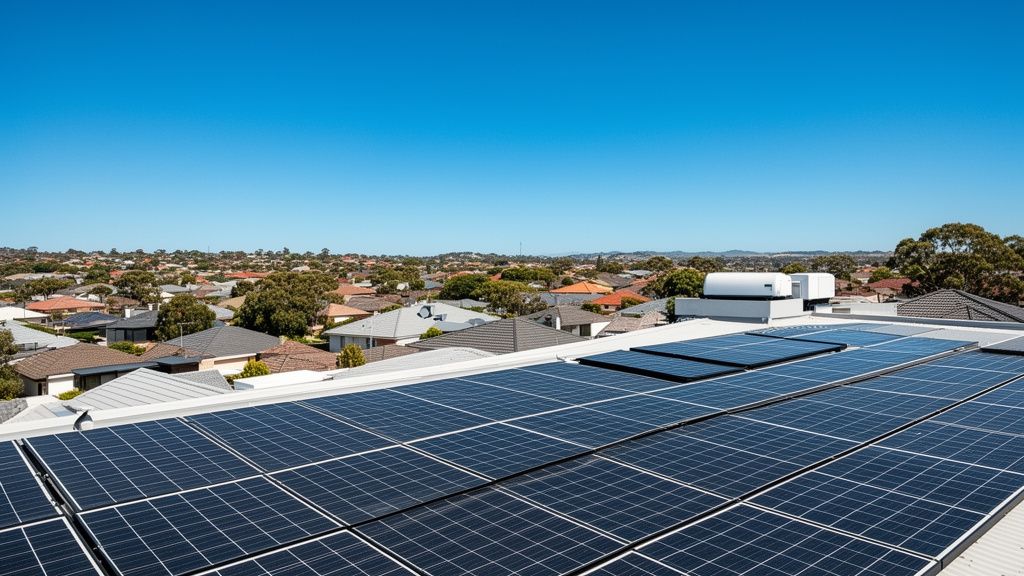
Rooftop solar is transforming Australia's energy grid by decentralising power generation, moving it from large-scale power stations to individual homes and businesses. Over 3.8 million Australian homes now have solar PV systems, making Australia a world leader in household solar adoption. This widespread uptake means power no longer flows predominantly in one direction from a few large generators; instead, millions of small generators feed power directly into the local distribution network. A typical 6.6kW solar system on a Sydney roof produces around 9,000 kWh annually, significantly offsetting the household's daytime electricity needs. This distributed generation reduces demand on the main grid during daylight hours, lessening the strain on transmission lines and reducing the need for expensive, fossil-fuel-fired peaking plants traditionally used to meet daytime energy surges. The system changes from a centralised, hierarchical model to a more robust, interconnected network where power is generated and consumed closer to its source.
What impact does decentralised generation have on grid stability?
Decentralised generation enhances grid stability by distributing energy production across a vast area, making the grid less vulnerable to single points of failure. When one large power station goes offline, it can cause significant disruptions. With millions of solar systems, the loss of a single rooftop system has almost no impact. This distributed model also helps manage local voltage and power quality issues by injecting power directly into low-voltage networks. It reduces energy losses that occur when electricity travels long distances from large coal or gas power plants. While solar's variable nature presents challenges, advanced grid management systems and smart inverters are adapting to integrate this dynamic power source, ensuring the reliability of supply even with fluctuating sunshine.
How are home batteries supporting the green grid transformation?
Home batteries are crucial for the green grid transformation, storing excess rooftop solar generation and providing power when the sun isn't shining. Without batteries, much of the solar power generated during the day, when homeowners are often away, would simply be exported to the grid for a low feed-in tariff. A 10-14 kWh home battery system, like a Tesla Powerwall or a BYD Battery Box, can store enough energy to power a typical Australian home through the evening peak and well into the night. This storage capability drastically increases solar self-consumption, meaning homeowners use more of their own clean energy. Batteries also provide blackout protection, keeping essential appliances running during grid outages, offering households greater energy independence and security. This stored energy helps flatten the 'duck curve' of demand, reducing the steep ramp-up of power needed from the grid as solar generation drops off at sunset.
Can batteries provide stability services to the main grid?
Yes, aggregated home batteries, often through Virtual Power Plants (VPPs), can provide crucial stability services to the main grid. VPPs link hundreds or thousands of individual home batteries together, allowing them to be centrally controlled to respond to grid signals. For example, during unexpected grid instability or sudden spikes in demand, a VPP operator, like AGL or Origin, can discharge small amounts of power from participating batteries back into the grid. This rapid, collective response stabilises frequency and voltage, acting like a fast-response power plant without needing to fire up a traditional generator. These services, sometimes remunerated through network service payments to participating homeowners, add another layer of resilience and flexibility to Australia's evolving energy system. They transform individual home assets into collective grid assets, strengthening the overall energy supply.
What are the economic benefits and future challenges for homeowners?
Rooftop solar and batteries offer significant economic benefits to Australian homeowners, despite evolving regulatory landscapes and reduced feed-in tariffs. Installing a 6.6kW solar system, which typically costs between $6,000 and $9,000 after Small-scale Technology Certificates (STCs), can reduce an average household's electricity bill by 60-80%. Adding a home battery, which costs around $10,000 to $15,000 installed, further enhances savings by maximising self-consumption and reducing reliance on expensive peak-time grid electricity. While feed-in tariffs have dropped, often sitting below 5-7 cents per kWh in 2024, the primary economic driver is now self-consumption. This means using your own generated power rather than selling it cheap and buying it back dear. Payback periods for solar alone are typically 3-6 years, while adding a battery can extend this but often provides greater overall savings and energy security over the system's lifespan. State-based incentives, like NSW's $1400 interest-free loan for batteries or Victoria's Solar Homes rebates, also reduce upfront costs for many.

How do evolving policies affect solar and battery adoption?
Evolving policies at both state and federal levels continue to shape solar and battery adoption. The federal STC scheme remains a key incentive, providing an upfront discount on solar installations. State governments also offer specific programs; for example, South Australia has its Home Battery Scheme, and Queensland provides a Battery Booster rebate. However, network operators are also implementing new rules for grid connections and export limits, particularly in areas with high solar penetration. Some networks limit how much power a household can export at certain times to manage grid congestion. This encourages homeowners to either consume more of their generated power or install a battery to store it, shifting the focus from exporting to self-sufficiency. These policy adjustments drive the market towards more integrated solar and battery solutions, which are better for the grid's long-term health.
Key Takeaways
- Rooftop solar systems are decentralising Australia's electricity grid, turning homes into power generators and reducing daytime demand on traditional power stations.
- Home batteries store excess solar energy, allowing homeowners to maximise self-consumption and reduce reliance on expensive grid power, particularly during evening peaks.
- Virtual Power Plants (VPPs) aggregate home batteries to provide crucial grid stability services, helping balance supply and demand across the network.
- Australian homeowners can achieve significant electricity bill reductions and energy independence by combining solar with battery storage.
- Government incentives and evolving network rules encourage integrated solar-plus-battery solutions, contributing to a more resilient and sustainable energy future.
Read More
For a comprehensive overview, check out our master guide: Read the Full Guide Here.