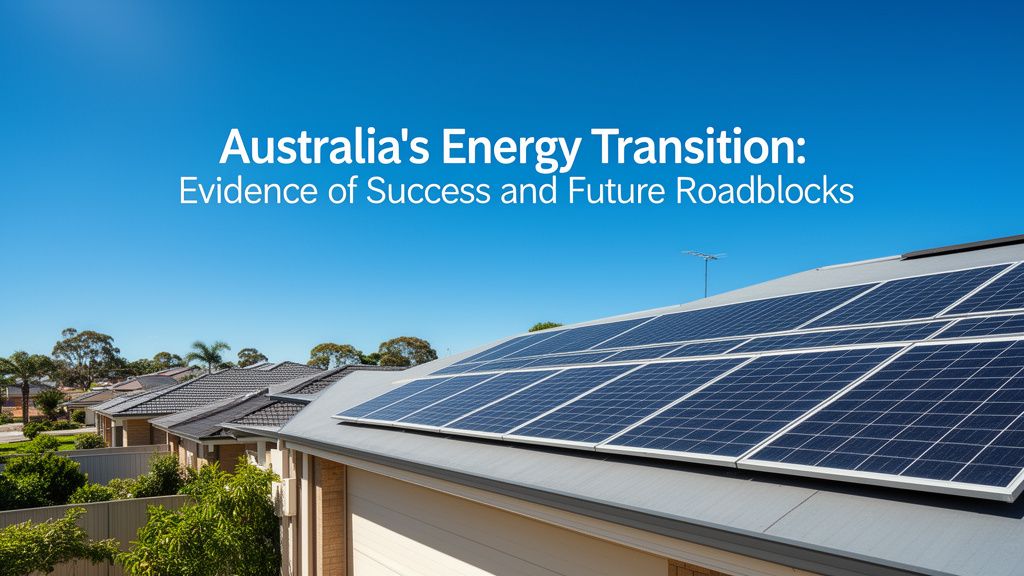
G'day, solar enthusiasts and energy-conscious Aussies! We're living through a truly transformative period in Australia's energy history. The sun-drenched continent is rapidly shifting gears, moving away from its fossil fuel past towards a future powered predominantly by clean, renewable energy. This isn't just wishful thinking; it's a transition already well underway, demonstrating remarkable successes while also revealing a few significant hurdles we’ll need to clear to reach our ambitious goals. Let's shine a light on where we've been, where we are, and what lies ahead for Australia's energy landscape.
Evidence of Success: A Bright and Sunny Outlook
Australia’s renewable energy journey, particularly its embrace of solar, has been nothing short of spectacular. We boast one of the highest rates of rooftop solar penetration in the world, with over 3.8 million rooftop solar systems installed across the country. That's more than one in three homes soaking up the sun's rays and converting them into clean electricity, saving households thousands of dollars on their power bills annually – a typical 6.6kW system, for instance, can set you back anywhere from $4,000 to $8,000 after rebates, offering paybacks in just a few years.
Our grid now regularly sees renewable energy sources, primarily solar and wind, supplying more than 35% of our electricity needs nationally. In states like South Australia, this figure often exceeds 70%, with periods where renewables supply 100% of demand. Large-scale solar and wind farms are cropping up at an unprecedented rate, transforming regional landscapes and creating thousands of jobs in construction, operation, and maintenance. Projects like the Western Downs Green Power Hub in Queensland or the New England Solar Farm in NSW are injecting billions of dollars into the economy and bolstering regional communities.
The economic benefits extend beyond job creation. The influx of cheap renewable energy is helping to put downward pressure on wholesale electricity prices, providing some relief from the volatility seen in previous years tied to global fossil fuel markets. This transition isn't just about environmental stewardship; it's a savvy economic move, positioning Australia as a leader in a global clean energy economy. Our emissions are decreasing, and our reliance on finite, environmentally impactful fuels is steadily diminishing. It's a genuine win-win.
Future Roadblocks: Bumpy Roads Ahead
Despite these incredible achievements, Australia's energy transition isn't without its challenges. The journey to a fully renewable grid presents several significant roadblocks that require strategic planning, substantial investment, and collaborative effort.


Firstly, grid infrastructure is a major pinch point. Our existing transmission network was largely designed for a centralised, fossil fuel-dominated system, not for a decentralised, intermittent renewable one. Building new high-voltage transmission lines to connect remote renewable energy zones (REZs) to major demand centres is crucial. This is a complex, time-consuming, and expensive undertaking, often facing local opposition. The Australian Energy Market Operator (AEMO) projects billions of dollars of investment are needed for projects like Project EnergyConnect and HumeLink to ensure grid stability and capacity.
Secondly, energy storage remains a critical puzzle piece. While rooftop solar is fantastic during the day, the sun doesn't shine at night, nor does the wind always blow when demand is highest. Utility-scale batteries, such as the Hornsdale Power Reserve, have proven their worth, but significantly more storage, including pumped hydro projects like Snowy 2.0, is needed to firm up supply and ensure reliability 24/7. The cost and scale of deploying sufficient storage solutions are considerable.
Regulatory and policy certainty is another ongoing concern. While there’s broad support for the transition, long-term national policy frameworks that provide clear signals for investors and streamline approval processes are vital. Delays and shifts in policy can deter crucial investment. Furthermore, managing the social licence for large-scale renewable projects, ensuring fair compensation for landowners, and addressing community concerns are paramount to avoid protracted disputes.
Lastly, the sheer scale of the transition requires a massive workforce with specialised skills, from electricians and engineers to project managers and cybersecurity experts. Australia faces a potential skills shortage that could slow down the pace of deployment if not proactively addressed through education, training, and migration initiatives. Ensuring grid stability with increasingly high levels of intermittent renewables also demands sophisticated technological solutions and operational expertise.
The Path Forward: Sustaining the Momentum
Australia’s energy transition is a testament to what's possible when innovation meets opportunity. We’ve celebrated tremendous successes, rapidly integrating solar power into our homes and grid, reducing emissions, and creating new economic opportunities. However, the path ahead is not entirely smooth. Addressing the challenges of grid infrastructure, energy storage, policy certainty, and workforce development will be crucial to maintaining our momentum.
The journey requires continued investment, technological innovation, and strong collaboration between governments, industry, and communities. By acknowledging and actively working to overcome these roadblocks, Australia can solidify its position as a global renewable energy powerhouse, delivering a clean, affordable, and reliable energy future for all its citizens. The sun is indeed rising on a new energy era down under, and with smart planning, we can ensure its brilliance lasts.
Read More
For a comprehensive overview, check out our master guide: Read the Full Guide Here.


