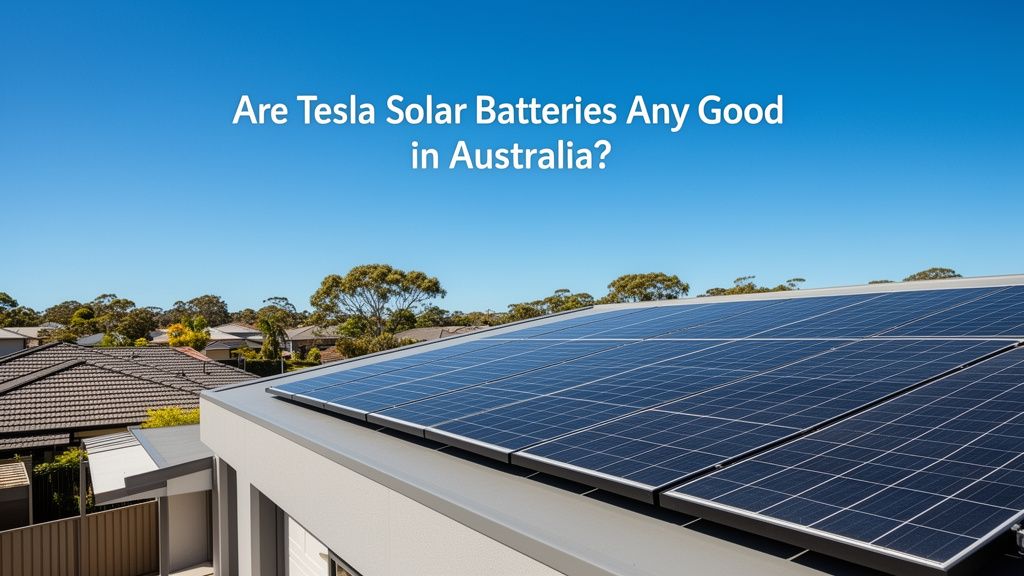
The sunburnt country has embraced solar power with open arms, making Australia one of the global leaders in rooftop solar adoption. But what happens when the sun goes down, or the grid decides to take a breather? That's where solar batteries step in, and one name that consistently sparks interest is Tesla with its Powerwall.
If you’re an Aussie homeowner weighing up your energy storage options, you’ve probably asked: "Are Tesla solar batteries any good in Australia?" Let's dive deep into the Powerwall's performance, cost, and suitability for our unique conditions.
What is the Tesla Powerwall?
At its core, the Tesla Powerwall is a rechargeable lithium-ion battery designed to store energy from your solar panels or the grid, making it available when you need it most. The current iteration, Powerwall 2, boasts a substantial 13.5 kWh of usable capacity and a continuous power output of 5 kW. It’s a sleek, wall-mounted unit that integrates seamlessly with your existing solar setup, bringing a touch of high-tech design to your garage or exterior wall.
Key Benefits for Australian Homes
The Powerwall offers a range of compelling advantages, particularly well-suited to the Australian context.
Energy Independence and Self-Sufficiency
With a Powerwall, you can significantly reduce your reliance on the grid. Instead of sending excess solar energy back to the grid for a modest feed-in tariff, you store it to use at night or on cloudy days. This maximises your solar self-consumption, putting you firmly in control of your energy usage. For many Aussies, the idea of generating and using their own power is incredibly appealing.
Blackout Protection
Australia, especially in regional areas or during extreme weather events, can be susceptible to power outages. The Powerwall provides invaluable blackout protection. When the grid goes down, your home seamlessly switches to battery power, keeping essential appliances running – lights, fridge, internet, and even air conditioning (depending on your setup and energy usage). This peace of mind is a major selling point.
Cost Savings on Power Bills
By storing and using your own solar energy, you draw less electricity from the grid, particularly during peak times when electricity prices are highest. This can lead to substantial savings on your electricity bills over the long term, especially if you're on a time-of-use tariff. While feed-in tariffs have decreased, the cost of grid power continues to rise, making self-consumption strategies more attractive.
Environmental Impact
For environmentally conscious Aussies, the Powerwall helps reduce your carbon footprint by enabling greater use of clean, renewable solar energy. By consuming more of your self-generated power, you reduce the demand for fossil-fuel-generated electricity from the grid.
Specifics for the Australian Climate
Our harsh climate demands robust technology, and the Powerwall is designed with this in mind.
Heat Tolerance
Australia's scorching summers are a real test for electronics. The Powerwall features an advanced liquid thermal management system, similar to those found in Tesla electric vehicles. This actively cools or heats the battery cells to maintain an optimal operating temperature, ensuring efficiency and extending the battery's lifespan, even on a 40-degree Celsius day.
Outdoor Installation Suitability
The unit is weather-resistant and can be installed both indoors and outdoors. Its IP56 rating means it's protected from dust and powerful jets of water, making it perfectly suitable for an Australian verandah or exterior wall installation.
Cost Considerations in Australia
Let's talk dollars, as this is often the biggest hurdle for homeowners.
Upfront Price
A Tesla Powerwall 2 typically costs between $14,000 and $18,000 in Australia, fully installed. This price can vary based on your location, the complexity of the installation, and the installer. This is a significant investment, but it’s crucial to look beyond the sticker price.

Government Rebates and Incentives
This is where the Australian context becomes vital. Several state governments offer generous rebates for solar batteries, which can dramatically reduce the upfront cost.
- Victoria: The Solar Homes Program offers rebates up to $2,950 for eligible households, with the option to apply for an interest-free loan for an amount equivalent to your rebate.
- South Australia: The Home Battery Scheme provides subsidies that vary based on the battery size and energy retailer, potentially saving thousands off the cost.
- New South Wales: While there isn't a direct battery rebate for all, the NSW Empowering Homes program offers interest-free loans for Solar Battery systems to eligible homeowners.
These incentives can make the Powerwall a much more financially viable option, so it’s essential to check your state’s current offerings and eligibility criteria.
Payback Period
The payback period for a Powerwall depends on several factors: your electricity consumption, your existing solar system size, local electricity prices, available rebates, and your feed-in tariff. Generally, with good solar production, high energy usage (especially during peak times), and a decent rebate, you could see a payback period of 7-12 years. Without rebates, it can be significantly longer.
Potential Downsides and Considerations
No product is perfect, and the Powerwall has a few points to consider.
High Initial Investment
Even with rebates, the upfront cost remains substantial. It's a long-term investment that requires careful financial planning.
System Compatibility
While designed to integrate with most solar inverter brands, it's crucial to confirm compatibility with your specific solar system and engage a certified installer. Some setups may require additional hardware or inverter upgrades.
Warranty
The Powerwall 2 comes with a 10-year warranty, guaranteeing that it will retain at least 70% of its capacity after 10 years or a certain number of cycles, whichever comes first. This provides good peace of mind for such a significant investment.
Scalability
While one Powerwall 2 provides ample capacity for many homes, if your energy needs are higher, you can install up to 10 Powerwalls together to create a larger energy storage system.
The Verdict: Is a Tesla Powerwall Any Good for Aussies?
Absolutely, yes – but it depends on your specific circumstances.
The Tesla Powerwall is an excellent solar battery for Australian homes due to its robust capacity, advanced thermal management (perfect for our heat), seamless integration, and strong brand backing. It offers significant advantages in energy independence, blackout protection, and long-term cost savings, especially when factoring in available state rebates.
It's particularly good for:
- Households with large solar systems looking to maximise self-consumption.
- Homes in areas prone to power outages.
- High energy users who want to reduce their reliance on the grid and save on peak tariffs.
- Environmentally conscious individuals keen to reduce their carbon footprint.
However, the high initial cost is a barrier for some. It’s not just about if the Powerwall is good, but if it’s good for you.
Conclusion
The Tesla Powerwall 2 is a premium, high-performing solar battery perfectly capable of handling Australia's unique energy demands and climate. For many Aussie homeowners, it represents a smart investment towards a more sustainable, independent, and secure energy future.
Ready to explore if a Powerwall is right for your home? The best next step is to get a personalised quote and conduct a thorough energy assessment with a reputable solar battery installer. They can analyse your energy usage, existing solar setup, and local rebates to give you a clear picture of the potential savings and payback period for your specific situation.