Riding the Solar Wave: A Deep Dive into Free Midday Power in Australia
For Australians with solar panels, the dream of free electricity isn't just a pipe dream; it's becoming a tangible reality, particularly during those bright, sunny midday hours. But how does this "free power" phenomenon actually work? And can everyone access it? This article delves into the mechanics, benefits, and potential drawbacks of leveraging the sun's energy for midday power consumption in Australia. For an even more detailed overview, check out our Complete Guide.
The Solar Generation Sweet Spot
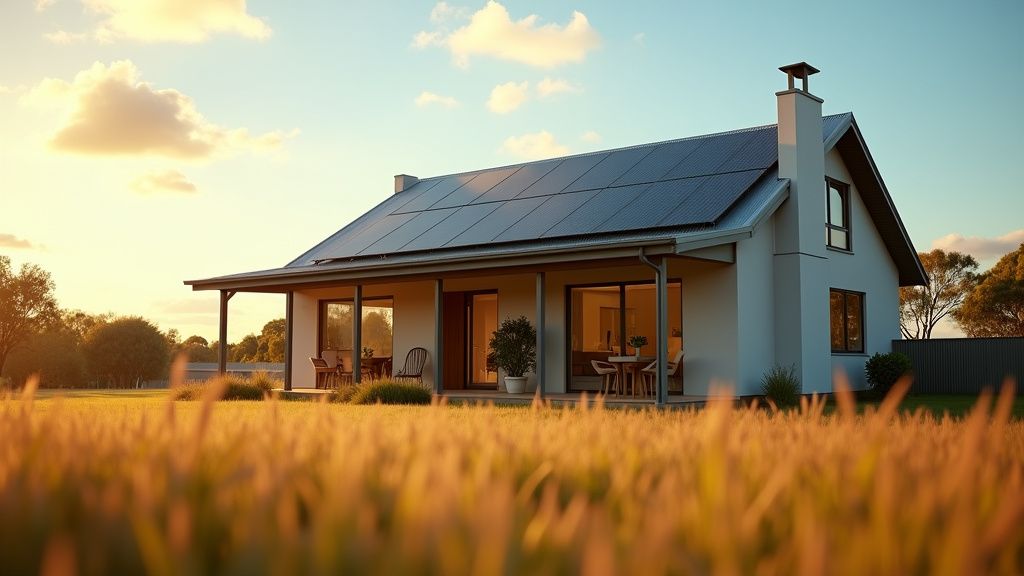
The fundamental principle behind free midday power is simple: solar panels generate electricity when exposed to sunlight. Peak generation typically occurs during the middle of the day, roughly between 10 am and 2 pm, when the sun is at its highest point. During these hours, a well-sized solar system can often produce more electricity than a household is consuming. This surplus energy, rather than being exported back to the grid for a small feed-in tariff (FIT), can be used to power your home's appliances for "free."
The Players in the Game: Solar Systems, Inverters, and the Grid
To fully grasp how free midday power works, it's crucial to understand the key components of a solar system and their interaction with the electricity grid:
- Solar Panels: These convert sunlight into direct current (DC) electricity. The number and size of panels dictate the overall generation capacity of your system. A larger system generally leads to more potential for excess power during peak hours.
- Inverter: This device converts the DC electricity produced by the panels into alternating current (AC) electricity, which is what powers most household appliances. Modern inverters are sophisticated, and some have built-in monitoring capabilities, allowing you to track your energy production and consumption in real-time.
- Electricity Grid: This is the network that transmits electricity from power plants to homes and businesses. When your solar system generates more power than you consume, the excess is typically fed back into the grid, and you receive a feed-in tariff (FIT) – a payment for the electricity you contribute.
The Economics of Free Power: Consume vs. Export
The trick to maximizing "free" power lies in shifting your energy consumption to coincide with peak solar generation. Instead of exporting surplus electricity to the grid for a relatively small FIT (which often ranges from 5 to 12 cents per kilowatt-hour, depending on your retailer and location), it's more financially beneficial to use that electricity yourself.
Here's a breakdown of the economics:
-
Traditional Model (Low Self-Consumption): You use minimal electricity during the day and rely heavily on grid power in the evenings. You export a large portion of your solar energy for a small FIT.
-
Optimal Model (High Self-Consumption): You shift your electricity usage to midday. Run the washing machine, dishwasher, pool pump, and air conditioner during peak solar generation hours. This reduces your reliance on grid power, maximizes your "free" power usage, and minimizes electricity bills.
Strategies for Maximizing Free Midday Power
- Time-Shifting Appliances: As mentioned, run energy-intensive appliances during peak solar hours. Smart appliances and timers can automate this process.
- Electric Vehicle (EV) Charging: If you own an EV, charging it during the day can significantly reduce your reliance on grid power and save you money.
- Hot Water Systems: Electric hot water systems can be programmed to heat water during the day using excess solar power.
- Smart Home Integration: Smart home systems can automatically manage energy consumption based on solar production, optimizing self-consumption.
- Battery Storage: Although a significant upfront investment, battery storage allows you to store excess solar energy generated during the day and use it later, such as in the evening when solar generation is low or non-existent. This dramatically increases self-consumption and reduces reliance on the grid.
Challenges and Considerations
While the concept of free midday power is appealing, there are challenges to consider:
- Cloud Cover: Solar generation is highly dependent on weather conditions. Cloudy days significantly reduce output.
- System Sizing: The size of your solar system needs to be appropriately matched to your energy consumption. An oversized system may generate too much excess power, while an undersized system may not produce enough.
- Lifestyle Changes: Maximizing self-consumption often requires adjusting your lifestyle and habits to shift energy usage to daylight hours.
- Network limitations: Depending on your location and network, exporting excess power back to the grid may be limited.
Is Free Midday Power Right for You?
The suitability of maximizing free midday power depends on your individual circumstances: your energy consumption patterns, lifestyle, budget, and location. If you're willing to actively manage your energy usage and shift your consumption to daylight hours, you can potentially save a significant amount of money on your electricity bills. Consulting with a reputable solar installer and energy advisor can help you determine the optimal system size and strategies for maximizing your free midday power potential.