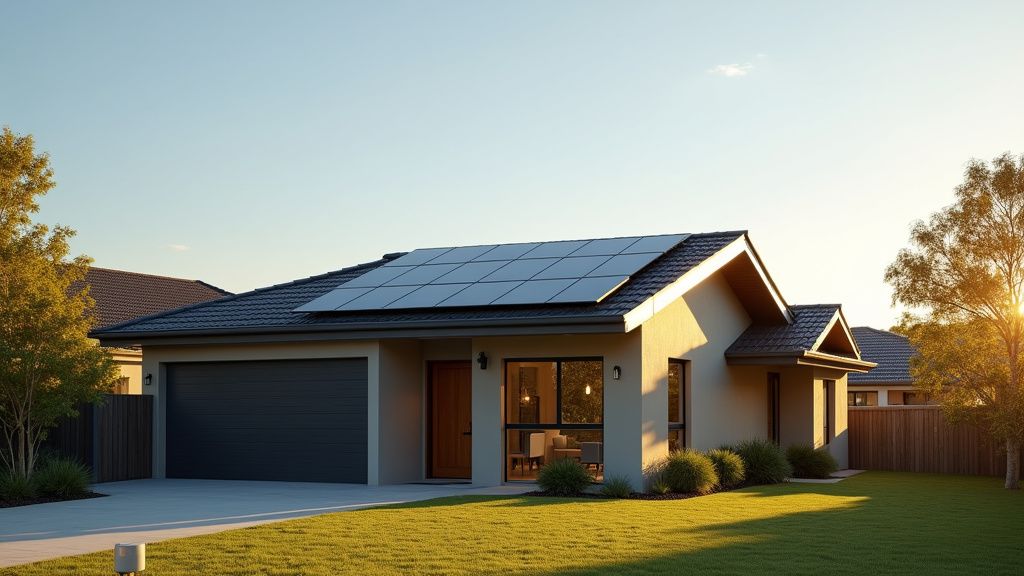
Power Up Your Home: The Lowdown on 6kW and 6.6kW Solar Systems in Australia
G'day, solar enthusiasts! If you're thinking about joining the solar revolution, you're probably hearing a lot about 6kW and 6.6kW solar systems. They're incredibly popular in Australia, and for good reason. Let's break down why these systems are a smart choice for many Aussie households.
Why the Buzz About 6kW and 6.6kW?
In 2026, solar energy is more affordable than ever, thanks to decreasing component costs, government incentives, and feed-in tariffs. A 6kW or 6.6kW system offers a sweet spot for many homes, providing a significant reduction in your reliance on the grid and slashing those electricity bills.
What Does a 6kW/6.6kW System Actually Look Like?
You might be wondering what constitutes a 6kW system. A 6kW system doesn't always mean a 6kW inverter. Often, you'll see a 5kW inverter paired with 6kW or 6.6kW of solar panels. This "oversizing" is a common and recommended practice, which we'll get into later.
The number of panels you need depends on their wattage. For example, with 440-Watt panels, a 6kW system would require about 15 panels, while a 6.6kW system would need 16. Each panel is roughly 1.8 metres by 1.1 metre. To install a system of this size, you'll need approximately 30-32 square metres of roof space, depending on your specific panel.
How Much Power Will It Generate?
On average, a well-positioned 6kW system can generate around 24 kilowatt-hours (kWh) of electricity per day. That's often more than the average Australian household consumes, meaning you can significantly reduce your grid consumption and even get paid for exporting excess power back to the grid through feed-in tariffs.
On a sunny day, many households with a 6kW system find they're virtually independent from the grid from late morning to mid-afternoon. Maximising self-consumption is key to getting the best return on your solar investment. Try to run appliances like washing machines, dryers, and dishwashers during daylight hours to make the most of your solar energy.
What About Cost and Payback?
In early 2026, you can expect to pay between $5,300 and $8,700 for a professionally installed 6kW system using quality components, after factoring in the government solar subsidy. For a 6.6kW system, this is only slightly more, in the range of $5,500 - $9,000.


With a good installation, reasonable pricing, and a focus on self-consumption, you can expect a payback period of around 5-6 years. It's also worth exploring cheap solar financing options, which could potentially make you cash flow positive from day one, with little to no upfront costs.
Why Choose 6.6kW Over 6kW? And What's This "Oversizing" Thing?
If you're on a single-phase electricity supply (which most Australian homes are), opting for at least a 5kW inverter with 6.6kW of solar panels is a particularly smart move. This configuration offers excellent value for money in terms of kilowatts per dollar.
"Oversizing" simply means installing more solar panel capacity than your inverter's rated capacity. It's a safe and increasingly common practice with several benefits:
- Maximising Your Subsidy: The Australian solar subsidy is based on panel capacity, not inverter size, so oversizing allows you to claim the maximum incentive.
- Real-World Performance: Solar panels rarely produce their full rated output due to factors like temperature (panels lose efficiency in heat), dirt, and wiring losses. Oversizing ensures your inverter operates closer to its designed performance level for longer periods.
- Grid Connection Limits: Some electricity networks have a 5kW limit for inverter capacity connected to the grid, making a 5kW inverter with a larger panel array the ideal solution.
Adding those extra panels doesn't significantly increase the overall cost because the installer is already on-site. The primary limitation to oversizing is that installation guidelines typically restrict you to a maximum of 133% panel capacity relative to inverter capacity (5kW x 133% = 6.65kW). It's best to aim for as close to this limit as possible, but never exceeding it.
Is a 6kW or 6.6kW System Right For You?
Ultimately, the best system size for your home depends on your energy consumption, roof space, budget, and local network regulations. But for many Australian households, a 6kW or 6.6kW system offers an excellent balance of affordability, performance, and return on investment. Do your research, get multiple quotes from reputable installers, and start harnessing the power of the sun!


