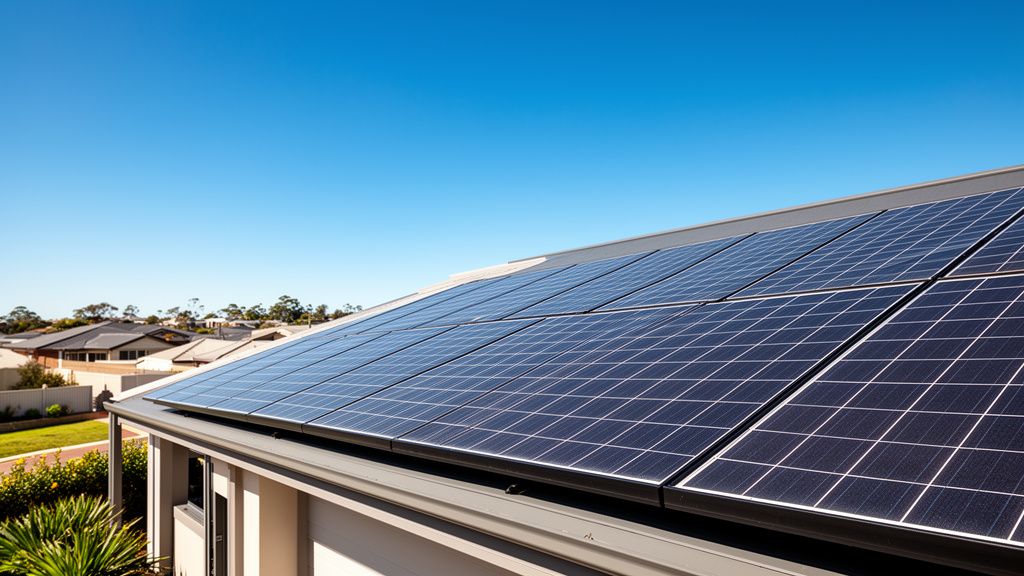
TL;DR: The cost of installing a solar power system in Australia has plummeted by an astonishing 90% since 2010, transforming renewable energy from a niche luxury into an affordable household staple. This massive price reduction stems from rapid advancements in panel technology, global manufacturing scale, and sustained government support, making solar one of the most cost-effective electricity sources available.
What Factors Drove the Astonishing 90% Drop in Solar System Costs?
The dramatic 90% reduction in solar system costs since 2010 is not a single phenomenon but rather the result of a powerful convergence of technological innovation, manufacturing scale, and market competition. Initially, solar panels were expensive to produce, requiring significant manual labour and rare materials. Over the last decade, sophisticated automation in factories, particularly in Asia, has driven down production costs dramatically. This has made solar power not just competitive, but often cheaper than traditional fossil fuel electricity generation, a paradigm shift that few could have predicted a decade ago. For instance, a typical 6.6kW system that might have cost an Australian homeowner upwards of $18,000-$22,000 in 2010 could now be installed for around $5,000-$8,000 after rebates, representing a monumental shift in accessibility and affordability.
Global Manufacturing Scalability and Efficiency
The global ramp-up in solar panel production, primarily led by China, has been a key driver of cost reduction. As demand soared worldwide, manufacturers invested heavily in automated production lines, significantly increasing output while simultaneously reducing the cost per unit. This transition from boutique production to large-scale, automated factories meant that economies of scale kicked in, slashing the labour and material costs associated with each panel. The fierce competition among these large manufacturers further pushed prices down, benefiting consumers globally, including Australian homeowners.
Technological Advancements in Photovoltaic Cells
Beyond manufacturing processes, continuous innovation in photovoltaic (PV) cell technology has advanced significantly. Researchers and engineers have consistently improved the efficiency of solar panels, meaning more electricity can be generated from the same surface area. Simultaneously, the Bill of Materials (BoM) has been optimised, using less expensive or more readily available materials without compromising performance or durability. These advancements lead to a higher power output per panel, which translates to fewer panels needed for a given system size, reducing panel costs alongside associated installation and racking expenses.
How Has Government Policy and Incentives Contributed to Solar Affordability?
Australian government policy and strategic incentives have been instrumental in accelerating solar adoption and making systems more affordable for households and businesses. These schemes didn't just provide direct financial relief; they stimulated market growth, which in turn encouraged competition and allowed the industry to mature and scale. The combination of federal and state-level support has created a stable environment for solar energy, cushioning consumers from initial high costs and encouraging investment in renewable technologies, ultimately helping make solar the mainstream option it is today. Without these foundational policies, the Australian solar landscape would look vastly different.
The Small-scale Renewable Energy Scheme (SRES)
The federal government's Small-scale Renewable Energy Scheme (SRES) is a foundational element of solar affordability in Australia. This scheme provides Small-scale Technology Certificates (STCs) for eligible solar PV systems, which homeowners can then typically assign to their installer in exchange for a direct discount off the system's upfront price. The value of these STCs fluctuates but can significantly reduce the initial outlay, often by several thousand dollars. This rebate system has been critical in bridging the gap between early high costs and current lower prices, making solar an immediate, tangible investment for millions.
State-Based Rebates and Low-Interest Loans
Complementing the federal SRES, various state and territory governments across Australia have offered additional incentives, further sweetening the deal for homeowners. States like Victoria have provided significant rebates and interest-free loans for solar panel installations, while others have offered similar programs for batteries or specific energy efficiency upgrades. These localised initiatives are designed to accelerate regional solar uptake and provide tailored financial assistance, addressing specific local energy goals and further decreasing the net cost of installation for residents within those jurisdictions.
What Does This Cost Reduction Mean for Australian Homeowners Today?
The staggering 90% drop in solar system costs has profound implications for Australian homeowners, fundamentally altering their relationship with energy consumption and expenditure. What was once a long-term investment with a hefty upfront cost is now a readily accessible solution offering immediate and significant financial benefits. Homeowners are now in a stronger position to take control of their electricity bills, reduce their environmental footprint, and increase the value of their properties, making solar power an increasingly essential upgrade rather than a luxury. This affordability ensures that the benefits of clean energy are accessible to a much broader segment of the population.
Improved Return on Investment and Payback Periods
With significantly lower installation costs, the return on investment (ROI) for solar systems has dramatically improved, and payback periods have shrunk considerably. Where it once might have taken 8-10 years or more to recoup the initial investment, many Australian homeowners can now see their solar system pay for itself in as little as 3-5 years, especially when paired with smart energy consumption habits and reasonable feed-in tariffs. This faster payback makes solar an even more attractive financial proposition, providing tangible savings much sooner than ever before.
Increased Energy Independence and Savings
The affordability of solar systems allows homeowners to achieve greater energy independence. By generating their own electricity, they become less reliant on the grid and susceptible to fluctuating retail electricity prices, which have seen considerable increases across Australia. This delivers substantial long-term savings on electricity bills while providing a sense of security and control over household expenses. Installing solar also increases a home's market value, making it a sound financial investment that delivers both environmental benefits and direct economic returns for its owners.
Key Takeaways
- Solar system costs in Australia have dropped by approximately 90% since 2010, making renewable energy highly affordable.
- This cost reduction is primarily due to global manufacturing scale, technological advancements in PV cells, and intense market competition.
- Australian federal (SRES) and state-based incentives have significantly lowered the upfront cost for consumers.
- Homeowners now benefit from shorter payback periods (3-5 years) and improved return on investment.
- Installing solar leads to greater energy independence, substantial savings on electricity bills, and increased property value.