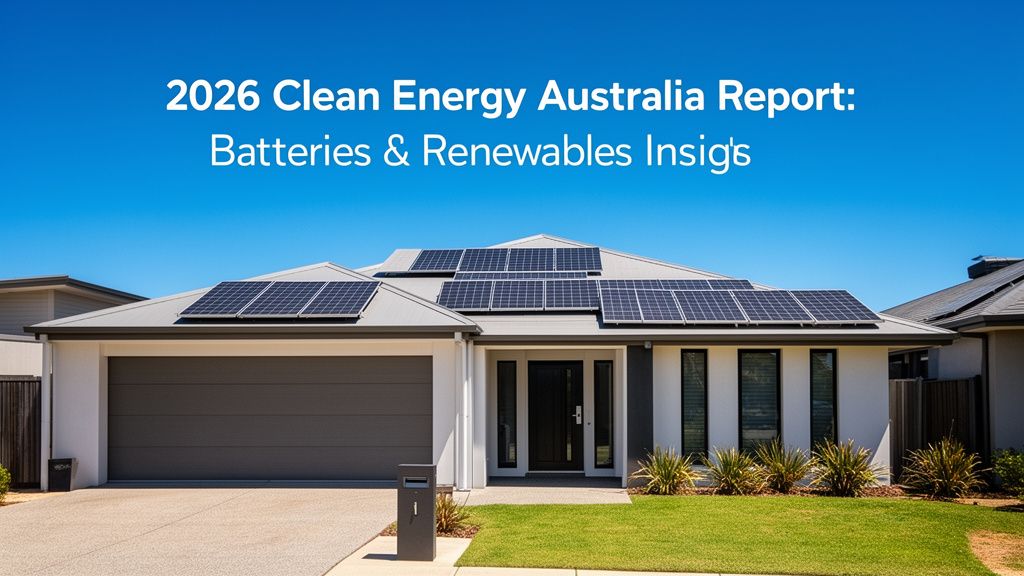
TL;DR: The 2026 Clean Energy Australia Report highlights significant growth in both renewable energy generation and battery storage across Australia. It shows solar and wind power now make up over 55% of the National Electricity Market's supply, with grid-scale and residential batteries becoming essential for grid stability and energy independence.
How Fast Is Australia's Renewable Energy Sector Growing, According to the 2026 Report?
Australia's renewable energy sector continues its rapid expansion, with the 2026 Clean Energy Australia Report confirming an unprecedented rate of new capacity additions in 2025. The report details that solar and wind power combined provided 55.3% of the National Electricity Market's (NEM) electricity supply during 2025, up from 47% in 2024. This growth came from an additional 6.5 GW of new solar and wind capacity connected to the grid. This means every state increased its clean energy contribution, with South Australia consistently running on over 80% renewables for much of the year, and Queensland seeing substantial utility-scale project commissioning. The report stresses that this pace of development puts Australia on track to meet, and potentially exceed, its national emissions reduction targets ahead of schedule. We continue to see strong investment across the country in large-scale projects, alongside sustained enthusiasm for rooftop solar.
Solar Power's Dominance in New Capacity
The 2026 report confirms solar PV remains the largest contributor to new energy capacity. In 2025, over 3.8 GW of new solar was installed across Australia, split almost equally between rooftop solar and utility-scale solar farms. Residential installations continued their steady trajectory, with an average of 30,000 new rooftop systems added each month, driven by households looking to cut power bills and reduce their environmental impact. Most new residential systems now stand around 8kW to 10kW, often paired with battery storage. Large-scale solar farms, particularly in Queensland and New South Wales, added significant megawatts to the grid, benefiting from improved grid connection processes and declining capital costs, which now sit around $0.80 per watt for commercial projects.
Wind Energy's Expanding Role in the National Electricity Market
Wind energy also saw substantial growth, adding 2.7 GW of new capacity in 2025. This includes several major projects brought online in Victoria and New South Wales, where wind resources are strong and grid infrastructure is improving. The report notes that wind power complements solar effectively, often generating more electricity during evenings and winter months when solar output drops. These new wind farms feature larger, more efficient turbines, pushing the average capacity factor above 40%. This reliable, high-volume output makes wind an increasingly important part of Australia's energy mix, helping to balance the intermittency inherent in renewable generation and supporting a stable, lower-carbon electricity supply.
What Are the 2026 Report's Key Findings on Battery Storage Deployment?
The 2026 Clean Energy Australia Report highlights a significant surge in battery storage deployment, both at grid scale and in homes, making it a critical component of Australia's energy transition. The report states that grid-scale battery capacity tripled in 2025, reaching over 4 GW of operational power. Home battery installations also saw a record year, with over 150,000 new residential batteries connected. This rapid uptake is largely due to falling battery prices, improved reliability, and increased consumer awareness of energy independence and managing peak demand charges. Batteries now shape the core of firming renewable supply, providing essential grid services, and offering households greater control over their electricity usage and bills.
Residential Battery Uptake and Price Trends
Australian households are embracing battery storage faster than ever, according to the report. The average 10 kWh home battery system, including installation, now costs around $7,500, down from over $10,000 just two years ago. This price drop, combined with state-based incentives like the Victorian Solar Homes Battery rebate, makes batteries an attractive option. Most homeowners pair a battery with a new or existing solar array, typically reducing their reliance on the grid by 70-90% and often cutting their annual electricity bill by over $1,000. The report forecasts continued strong growth in this sector, expecting half a million Australian homes to have battery storage by the end of 2027.
Grid-Scale Batteries Support National Electricity Market Stability
Grid-scale battery projects have become a necessary part of the NEM's operation, the 2026 report finds. Projects like the original Hornsdale Power Reserve in South Australia and newer, much larger facilities across Victoria and Queensland demonstrate how batteries provide rapid response to grid fluctuations, stabilising frequency and voltage. The total operational grid-scale battery storage capacity reached 4 GW / 8 GWh by the end of 2025, with many more projects in planning or construction. These facilities ensure that excess renewable energy generated during sunny or windy periods can be stored and then discharged when demand is high or generation is low, supporting the integration of even more renewable capacity onto the network.
Key Takeaways
- Australia's renewable energy penetration reached 55.3% of NEM supply in 2025, driven by 6.5 GW of new solar and wind capacity.
- Solar PV remains dominant, adding 3.8 GW in 2025 across residential rooftops and utility-scale farms.
- Wind energy added 2.7 GW, proving important for evening and winter generation, with new, more efficient turbines.
- Grid-scale battery capacity tripled in 2025, reaching over 4 GW, providing essential grid stability services.
- Home battery prices fell to around $7,500 for a 10 kWh system, spurring 150,000 new residential installations.