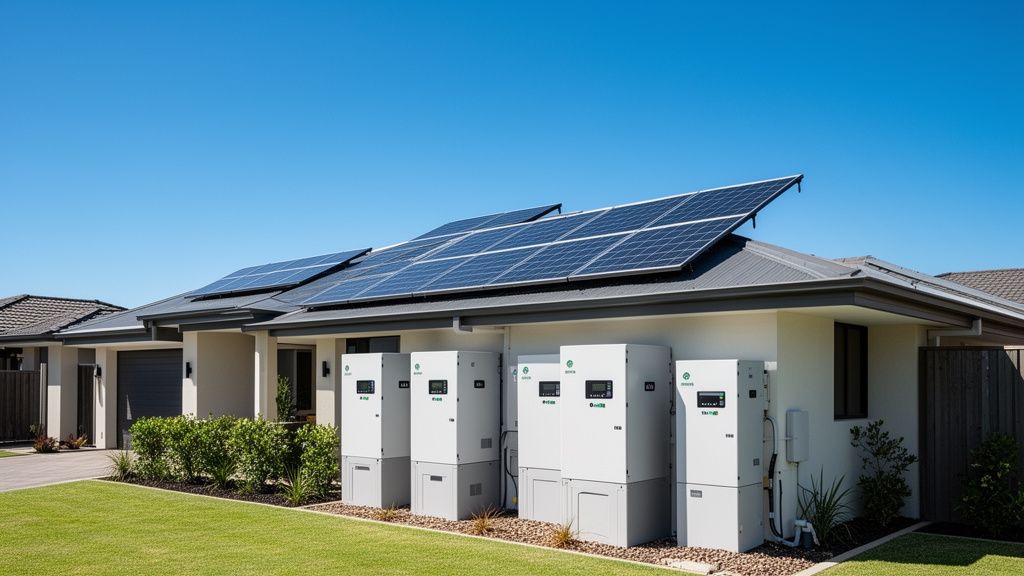
TL;DR: The GoodWe ESA range pairs a hybrid inverter, stackable battery modules and a smart meter, covering 3kW to 30kW. This is an installer's reference: component matching, site requirements, the wiring sequence, and the mistakes that cause commissioning failures. Only a CEC-accredited electrician can legally do this work in Australia.
What the ESA System Consists Of
Three parts that have to be matched to each other before anything gets mounted.
The inverter. The EHA and BHA-G20 series covers 3kW to 10kW for residential work. The ETA and BTA-G20 series runs 5kW to 30kW for larger homes and light commercial. Smaller jobs typically use the GW3K-EHA-G20 or GW3.6K-BHA-G20; the top of the range is the GW29.999K-ETA-G20 or GW30K-BTA-G20, with the odd 29.999kW rating existing purely to stay under a 30kW approval threshold in some network areas.
The batteries. Stackable modules: GW5.1-BAT-D-G20/G21 at 5.12kWh, GW6.0-BAT-D-G20 at 6kWh, GW8.3-BAT-D-G20/G21 at 8.32kWh, and GW9.0-BAT-D-G20 at 9kWh. Modules stack to reach the capacity the household needs.
The meter and dongle. A GMK110, GM330 or GMK330 smart meter measures voltage and current at the switchboard. A WiFi/LAN Kit-20 or 4G Kit-G20 dongle handles monitoring uplink.
The G20 and G21 suffixes matter. Battery modules of different generations are not always interchangeable within a stack, and mixing them is a common source of communication faults at commissioning. Confirm the module revision against the inverter firmware before you order.
Safety and Compliance
Only CEC-accredited installers can carry out this work. That is a licensing requirement, not a recommendation, and it also governs whether the system attracts rebates and whether the warranty stands.
Full PPE: insulated gloves, safety glasses, non-slip footwear.
Isolate everything before you touch a terminal. Grid, PV strings and the battery itself. Then verify zero volts with a meter rather than trusting the isolator. A battery DC bus stays live after the AC side is dead, and that is what catches people.
Battery-Specific Hazards
Do not short the terminals, do not expose modules to direct sun or extreme heat during staging, and do not open a sealed module for any reason. A damaged lithium module is not a field repair.
Store modules at partial charge if they are sitting on site before installation, and keep them off a concrete floor in winter. Both affect cell health before the system has run a single cycle.
Site Preparation
Environment
Check the 2026 manual for the exact ambient temperature and humidity limits for the model you are fitting, and site the equipment accordingly.
Out of direct sun. Away from corrosive gases and liquids. Dust is a genuine concern in rural installs and shortens fan life considerably. A garage wall on the south or east side is usually the best available compromise in Australian conditions.
Structure
Weight is the constraint people underestimate. A 10kW inverter with a 9kWh battery stack exceeds 100kg. That is not going on plasterboard with plugs.
Find the studs or fix to masonry. On a stud wall, the mounting bracket has to catch at least two studs, and if the stack is deep you may need a noggin or a backing board rated for the load. Check the manual's clearance figures around every side of both units, because those clearances are ventilation requirements rather than access suggestions, and violating them is the most common cause of thermal derating in summer.
Kit Check
Before you start: inverter, battery modules, smart meter, dongle, and every cable and bracket on the deliverables list. Check the battery modules for case damage and confirm the revision codes match what the design specified.
Missing or mismatched parts discovered halfway through a wiring run means a second visit. Report discrepancies before you begin, not after.
Wiring Sequence
Everything below assumes AS/NZS 3000 compliance and whatever additional rules your local network operator imposes. Isolate at the main switchboard and confirm dead first.
1. DC from the array. Land the PV strings on the inverter's DC inputs, watching polarity. Most ESA inverters carry multiple MPPT trackers, so keep strings of differing orientation or shading on separate trackers rather than paralleling them. Confirm string open-circuit voltage sits inside the inverter's window at the coldest expected ambient, not at the temperature on the day.
2. Battery to inverter. Power cables plus the communication cable, CAN or RS485 depending on the model. Torque every battery terminal to the figure in the manual. Under-torqued battery terminals heat up under load and are a real fire risk; over-torqued ones crack the post.
3. AC to the switchboard. The inverter's AC output goes to the board through correctly sized breakers and RCD protection. If the installation includes backup supply, the essential-loads circuit is separated here, and getting that split wrong is the single most common redo on battery storage jobs.
4. Smart meter. Wire the meter to measure total site import and export, which usually means CTs on the main incomer rather than on the solar circuit. A meter installed on the wrong side of the board will report backwards and the system will export when it should charge. Then run the meter's communication cable back to the inverter.
5. Dongle. Plug the WiFi, LAN or 4G module into the inverter's communication port and commission it against the monitoring platform.
Before You Leave Site
Verify CT direction under live load rather than assuming it from the wiring. Force a charge and a discharge cycle and watch the meter readings track correctly.
Set the grid protection profile for the correct region. An inverter left on a default export limit or the wrong regional setting will either trip repeatedly or breach the connection agreement, and neither shows up until the customer calls.
Hand over the monitoring login and show the owner where the battery isolator is. They need to be able to shut it down without you.
Key Takeaways
- Only CEC-accredited electricians can install GoodWe ESA systems, with full PPE and complete isolation of grid, PV and battery before any terminal work.
- Match battery module revisions (G20 against G21) to the inverter firmware before ordering; mismatches surface as communication faults at commissioning.
- A 10kW inverter with a 9kWh stack exceeds 100kg, so mount to studs or masonry and treat the manual's clearances as ventilation requirements.
- Wire in order: PV strings, battery power and comms, AC to the board, smart meter on the main incomer, then the dongle.
- Verify CT direction under live load and set the correct regional grid protection profile before handover.
