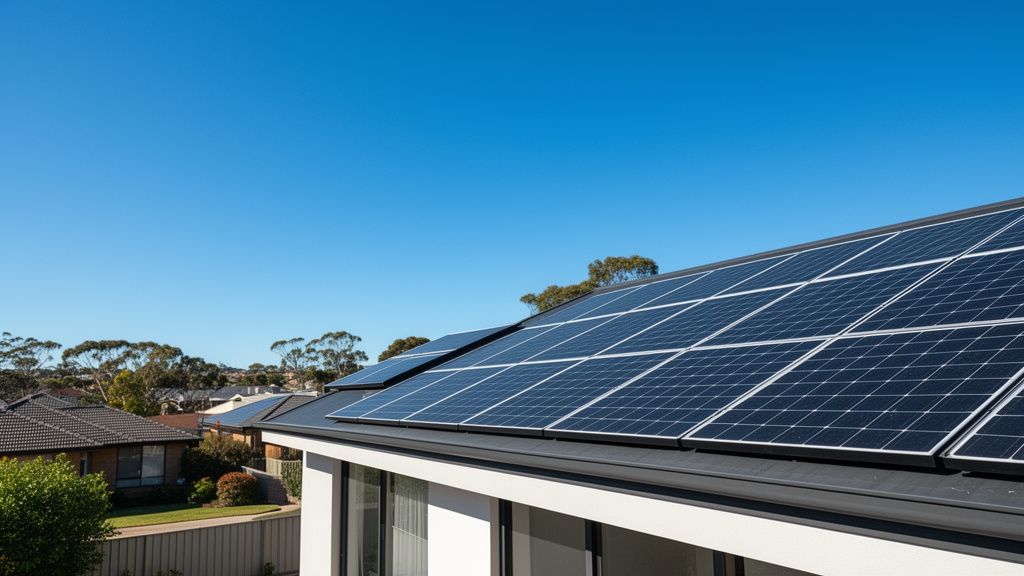
Australia's Sunny Divide: Political Wrangling Over Renewable Subsidies
Australia, the sun-drenched continent, has some of the world's highest rates of rooftop solar adoption. Our vast plains and clear skies make us an ideal candidate to lead the global renewable energy charge. Yet, this incredible potential has often been overshadowed by persistent political controversies surrounding renewable energy subsidies. What should be a unifying national goal has frequently become a battleground, leaving consumers, investors, and the industry grappling with uncertainty.
The Early Spark: Generous Beginnings
In the early 2000s, as the world began to seriously consider climate change and the need for cleaner energy, Australian governments - both state and federal - introduced a range of incentives to kickstart the renewable energy sector. High feed-in tariffs (FiTs) were particularly popular, offering households a generous payment for every kilowatt-hour of solar electricity they exported back to the grid. Some states offered FiTs as high as 60-65 cents per kWh, far exceeding the cost of electricity itself.
These subsidies were instrumental. They lowered the upfront cost of solar installations, making them accessible to average Aussie families. The goal was clear: to create a market, drive down technology costs through economies of scale, and build a new industry. And it worked. Millions of homes across the country installed solar panels, transforming our energy landscape. The cost of solar PV systems plummeted by over 80% in a decade, largely thanks to global demand spurred by such early incentives.
The Subsidy Squeeze: Public Backlash and Political Shifts
However, the very success of these early schemes sowed the seeds of controversy. The generous FiTs, while effective, were increasingly seen as unsustainable. Non-solar households argued they were unfairly subsidising their solar-equipped neighbours, leading to a "solar tax" narrative that gained traction in some media outlets and political circles.
As the cost of solar technology dropped dramatically, the original rationale for such high subsidies diminished. Governments, facing pressure to balance budgets and respond to public sentiment, began to scale back and even retrospectively cut these incentives. This triggered significant outcry. Homeowners who had invested based on long-term promises felt betrayed, and businesses in the nascent solar industry faced immense uncertainty, with many forced to close their doors.
This period was marked by a sharp ideological divide in Canberra. While some politicians championed renewable energy as an economic opportunity and an environmental imperative, others expressed skepticism, often highlighting the cost of subsidies and advocating for the continued reliance on traditional fossil fuels like coal. Renewable energy became a political football, kicked between parties vying for votes, rather than a subject for bipartisan, long-term strategic planning.
The Cost of Policy Instability
The constant chopping and changing of renewable energy policy has had tangible negative consequences. Investor confidence, necessary for large-scale energy projects like wind farms and solar farms, was severely shaken. Without stable policy signals and a clear regulatory framework, investors became hesitant to commit billions of dollars to new projects, fearing that a change of government or policy could undermine their returns.
This instability slowed Australia's transition to a cleaner energy grid. While rooftop solar boomed, the development of large-scale renewable projects and necessary grid upgrades lagged, leaving our energy system vulnerable to price shocks and increasing our reliance on ageing fossil fuel infrastructure.
The Economic and Environmental Case for Support
Despite the controversies, the fundamental economic and environmental arguments for strategic government support for renewables remain strong.
Firstly, traditional energy markets often fail to account for the "externalities" of fossil fuels - the hidden costs of pollution, health impacts, and climate change. Subsidies can help level the playing field, reflecting the true cost and benefits of different energy sources.
Secondly, every major energy transition throughout history has involved significant government investment and policy support. This is not unique to renewables. Other nations, including major economic players, continue to offer substantial incentives to build their clean energy industries and secure their energy future.
Finally, the renewable energy sector is a significant employer, creating thousands of jobs in manufacturing, installation, maintenance, and research. Strategic support builds this job growth, contributing to a diversified and future-proof Australian economy. For example, the current Small-scale Technology Certificates (STC) scheme, while less controversial than earlier FiTs, assists in reducing upfront costs for homeowners installing solar panels or solar water heaters. Similarly, state-based initiatives like the Victorian Solar Homes program offer rebates that help families save thousands of dollars, making solar more accessible.
Looking Ahead: Towards Bipartisan Certainty
Australia has made incredible strides in renewable energy, largely driven by the sheer will of its citizens to embrace solar. However, the political landscape has too often been an obstacle rather than an enabler.
What is needed now is long-term, bipartisan agreement on an energy transition strategy. This means less political point-scoring over past subsidies and more focus on future-proofing our grid, investing in storage and transmission, and using Australia's natural advantages in renewable resources.
The market has matured significantly, and many renewable projects are now competitive without the need for massive subsidies. However, targeted support for emerging technologies, grid modernisation, and fair market mechanisms will always be necessary. By moving beyond the subsidy controversies and embracing a stable, forward-looking policy framework, Australia can truly harness its solar potential, delivering cheaper, cleaner, and more reliable power for all its citizens, not just for some.